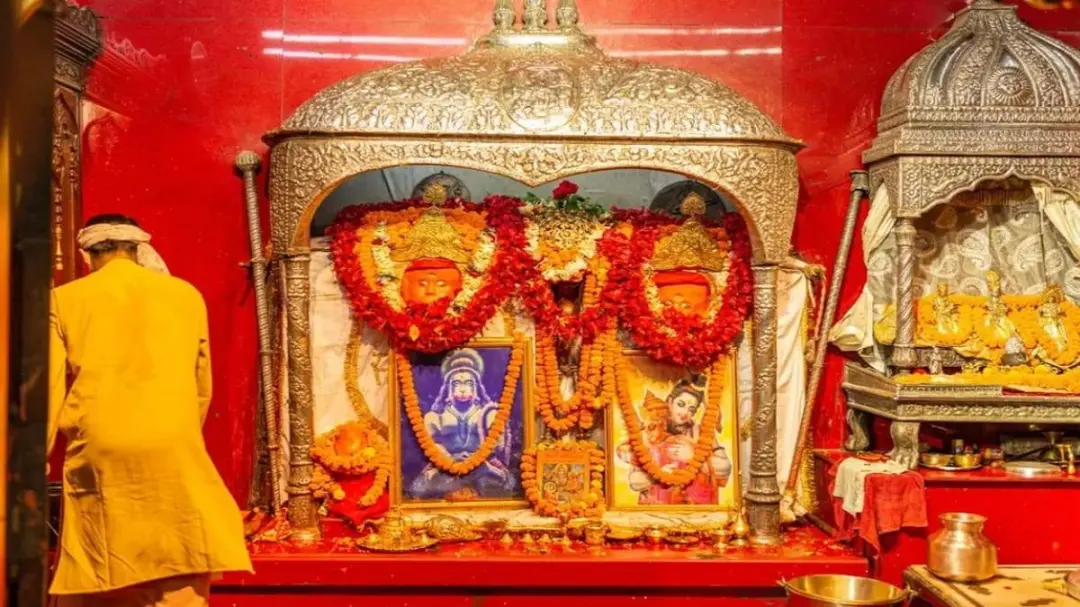
Patna City’s famous Chhoti Patna Devi Temple is set to undergo changes in its form and facilities. Plans have been prepared to improve facilities for devotees, strengthen worship arrangements and introduce religious education, including a proposed 51-kilogram silver throne for Maa Chhoti Patna Devi and a Vedic school on the temple premises. Major changes to the temple are planned by 2027.
Chhoti Patna Devi Temple is among Patna’s ancient and prominent religious sites. Its identity is associated not only with religious faith but also with historical and tantric traditions. Tantric practices are considered to have particular importance in the beliefs associated with the temple. Devotees have been visiting the temple from different parts of the country for a long time.
The development plan aims to connect the temple with modern facilities while continuing its religious traditions.
One of the proposed changes is the preparation of a silver throne for Maa Chhoti Patna Devi. The throne will be made using 51 kilograms of silver, and the idol of Maa Chhoti Patna Devi will be placed on it.
Preparations are being made for the design and construction of the throne. The temple management intends to develop the site while maintaining its religious dignity and traditional character.
The redevelopment plan also includes a proposal to establish a Vedic school on the temple premises. The objective is to take religious education and Vedic traditions to the next generation.
Arrangements could be developed at the Vedic school to provide students with education related to Vedic studies and Indian religious traditions. This could give the temple an additional identity as a centre of religious education alongside its role as a place of worship.
The proposed Vedic school is being linked to the temple’s ancient traditions. The religious identity of the Patna area is longstanding, and the temple has its own distinctive traditions of worship. An institution for Vedic education could therefore expand the scope of religious activities associated with the temple.

An important objective of the temple’s development is also to provide better facilities for devotees. Large numbers of devotees visit the temple during festivals and special occasions. During such periods, crowd management, entry and exit arrangements, worship facilities, cleanliness and security can become challenges.
The redevelopment plan also places emphasis on improving these aspects.
The religious beliefs associated with Chhoti Patna Devi Temple give it a special place among Patna’s prominent Shakti Peeths. People travel from distant places to have darshan of Maa. The number of devotees increases during Navratri, Durga Puja and other special religious occasions. Expansion of facilities could bring changes for devotees visiting the temple.
Changes to the temple could also affect the development of the surrounding area. Promotion of religious tourism could benefit local shopkeepers, flower and garland sellers, prasad businesses and other small traders.
If facilities at the temple improve and the number of devotees arriving from outside increases, the local economy could also gain momentum.
Another aspect of the development plan is the preservation of the temple’s historical and traditional character. The modernization of an ancient religious site requires new facilities to be developed without affecting its original identity.
The proposed changes will therefore need to take the temple’s architecture, religious traditions and historical importance into account.
The 51-kilogram silver throne could become an attraction for devotees while adding to the temple’s religious grandeur. The security of the silver throne will also be an important responsibility for the temple management, requiring strengthened security arrangements.
The launch of a Vedic school could lead to new activities in the field of religious education. Students would require facilities for study, accommodation, food and other necessities.
If the plan is fully implemented, an organised centre related to Vedic education could be developed on or around the temple premises.
The temple’s association with tantric traditions and the proposed introduction of Vedic education would bring another dimension to its religious activities. The temple’s existing tantric traditions would continue, while a new arrangement for Vedic studies would be developed.
The target is to complete the temple’s development plan by 2027. Construction, redevelopment and facility-related work could move forward in phases in the coming months. Devotees could receive new facilities gradually as different parts of the plan are completed.
Basic facilities such as seating arrangements, cleanliness, drinking water, security and crowd control will need to be strengthened. Their importance increases with the number of devotees visiting religious sites, particularly during Navratri and other major festivals.
Development of the temple premises will also require coordination between the local administration and temple management. With large numbers of devotees visiting the site, responsibilities related to traffic management, parking and security will increase.
Special arrangements may be required to control crowds on nearby roads and lanes.
The temple’s development could also promote religious tourism in Patna. There could be a possibility of developing a religious tourism circuit connecting Mahavir Temple, Patna Devi Temple and other historical and religious sites in the city. This could further strengthen Patna’s religious identity.
The temple’s association with tantric traditions gives it a distinct identity among religious sites. Practitioners and devotees interested in tantric traditions visit the temple on special occasions.
Alongside development, documentation and preservation of this historical religious tradition could also be important.
With new facilities, religious events at the temple could also expand. Regular recitations, religious rituals and Vedic study activities could be conducted through the Vedic school, allowing religious activities to continue throughout the year.
Local people are also connected to the temple’s development plans. Traders in the surrounding area expect that an increase in the number of devotees could benefit their businesses. Local residents would also require better roads, cleanliness and traffic management.
If the surrounding area is organised along with the development plan, people living outside the temple premises could also benefit.
The redevelopment of any large religious site involves challenges at several levels. Care will need to be taken to ensure that worship arrangements for devotees are not affected during construction. Protecting the ancient structure from damage and ensuring that new construction remains consistent with the original architecture will also be important.
The 51-kilogram silver throne will have particular importance from a security perspective. CCTV surveillance, entry controls, deployment of security personnel and other security measures will need to be strengthened.
With large numbers of devotees present, vigilance will need to be increased to prevent theft or disorder.
If the proposed changes are completed by 2027, the experience at Chhoti Patna Devi Temple could be different from the present. Devotees would receive improved facilities, the idol of Maa Chhoti Patna Devi would be placed on a new silver throne, and the Vedic school could establish a new centre for religious education.
The development plan will involve maintaining a balance between modern facilities and the temple’s ancient religious traditions. If the development work is completed while preserving the temple’s historical identity, Chhoti Patna Devi Temple could further strengthen its position as a prominent religious and cultural centre of Patna.
Overall, the Chhoti Patna Devi Temple, which is associated with tantric traditions, is set to undergo a period of planned changes. The 51-kilogram silver throne, Vedic school and improved facilities for devotees are among the plans for giving the temple a new form. If the proposed plans are completed by 2027, the ancient temple in Patna City could become a prominent centre not only of religious faith but also of Vedic education and religious tourism.