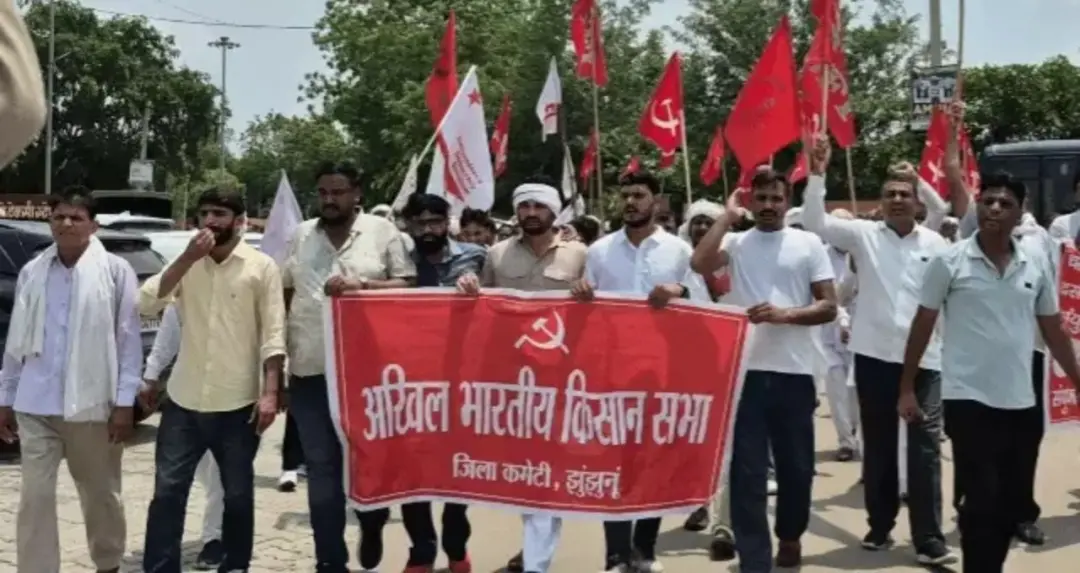
CPI(M), SFI and other left-wing organisations held a protest at the Jhunjhunu district headquarters against the Central government’s policies and what they described as an anti-farmer agreement with the United States. The protesters surrounded the district collectorate, raised slogans and later gave collective arrests as part of the ‘Jail Chalo’ movement.
The protest began at Teacher Bhawan, from where workers associated with CPI(M), the Students’ Federation of India (SFI) and other left-wing organisations marched on foot towards the district collectorate. During the march, protesters raised slogans against the Central government’s policies and the alleged agreement with the United States.
The protesters highlighted issues related to agriculture and demanded that the government protect farmers’ interests. Security arrangements were increased as the march approached the collectorate. A large number of police personnel were deployed in and around the collectorate premises to maintain law and order.
When the protesters reached the main gate of the district collectorate, the situation became tense. Police had installed barricades to prevent the protesters from entering the premises.
The protesters gathered near the barricades, raised slogans against the government and voiced their demands. Tension continued between the police and protesters for some time. The administration appealed to the protesters to remain in the designated area and maintain security arrangements. Some workers attempted to move forward, prompting police intervention.
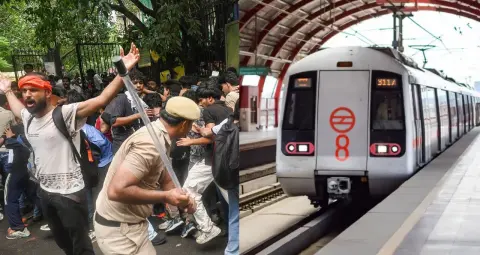
During the protest, some SFI office-bearers and left-wing leader Mahipal Poonia climbed the police barricades. Protesters attempted to cross the barricades and move forward.

Police officers and personnel intervened and brought the leaders and workers down from the barricades. Police deployed at the site attempted to control the protesters and secure the collectorate premises. Sloganeering and protests continued for some time.
Left-wing leader Mahipal Poonia questioned the Central government’s policies during the protest. He alleged that agreements being made with the United States could be harmful to the agricultural sector and farmers.
Poonia said the government should prioritise farmers’ interests and should not proceed with any agreement that could have a negative impact on Indian agriculture. Describing the alleged agreement with the United States as anti-people and anti-farmer, he demanded its immediate cancellation.
According to him, workers from different parts of the district joined the movement over the issue and decided to give collective arrests.
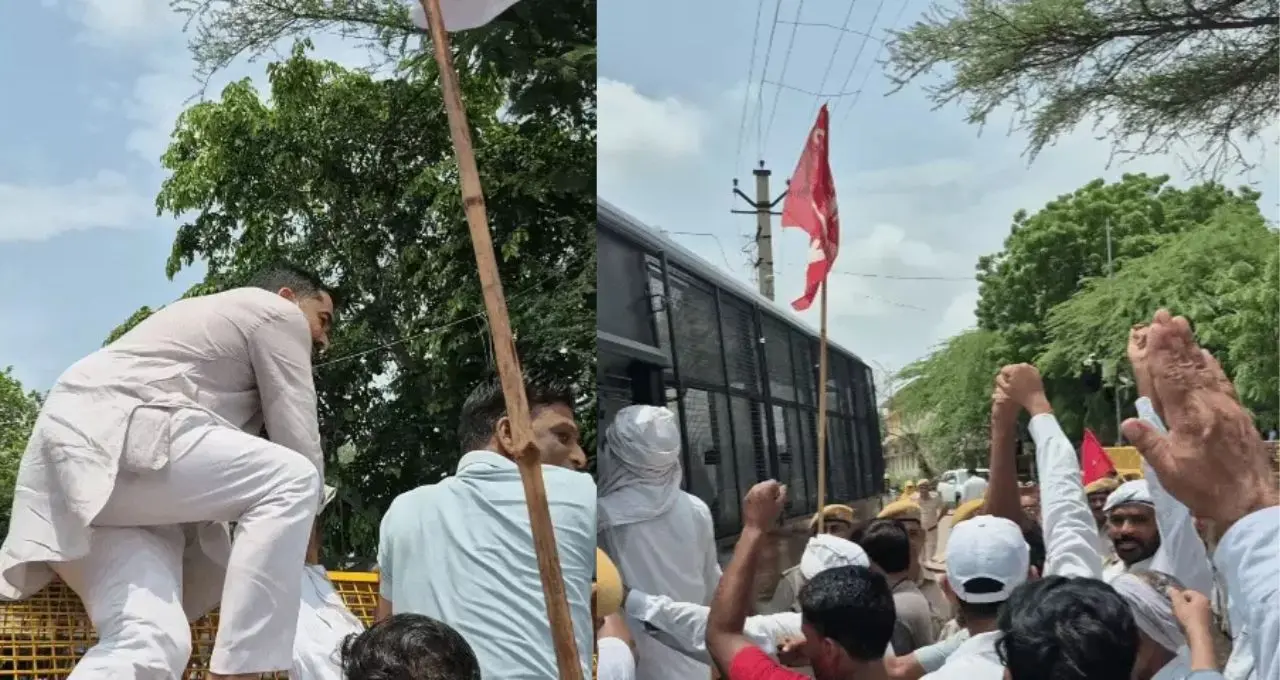
The protest and sloganeering continued outside the collectorate premises for some time. Police then began taking workers and student leaders participating in the protest into custody.
The protesters described the arrests as part of their ‘Jail Chalo’ movement and gave collective arrests. Police took those detained to two large buses parked outside the collectorate. Workers were escorted to the buses in the presence of police officers.
The detainees were subsequently taken away in the buses. The administration focused on maintaining law and order during the protest. According to the available information, police personnel had already been deployed around the collectorate premises.
Left-wing parties and their affiliated student organisations have continued to criticise the Central government over issues related to agricultural policies, farmers’ incomes, agricultural produce prices, debt and international trade agreements.
Farmers’ issues were also central to this protest. The protesters said agricultural and farmers’ interests should be given adequate importance in international trade agreements.
They alleged that greater access for foreign agricultural products to the Indian market could adversely affect domestic farmers in terms of prices and market competition.
Police had made security arrangements in advance in view of the protest at the administrative premises. A police force was deployed under the leadership of Deputy SP Gopal Dhaka.
The barricades were intended to prevent protesters from reaching sensitive parts of the collectorate premises. Police moved the protesters back after they attempted to advance.
Additional personnel and vehicles were arranged because of the presence of a large number of people during the protest. The police also focused on maintaining control over the protesters and protecting the government premises.
Protesting leaders said they would continue opposing any agreement with the United States that they consider harmful to farmers and the agricultural sector. They demanded that the Central government formulate policies keeping farmers’ interests in mind.
The left-wing organisations also said that the views of farmers’ organisations and stakeholders associated with the agricultural sector should be included in decisions concerning farmers.
The protest at the district collectorate was part of opposition by left-wing and other organisations to the Centre’s agricultural and trade policies. The protest ended with collective arrests, while the leaders indicated that the movement could continue if their demands were not met.