Air pollution levels in the capital Delhi showed some improvement on Monday compared to Sunday. The Air Quality Index (AQI) has decreased and has now moved from the 'very poor' category to the 'poor' category.
New Delhi: The Air Quality Index (AQI) in the capital Delhi recorded some improvement on Monday compared to Sunday. While the air quality had reached the 'very poor' category on Sunday, it decreased on Monday and moved into the 'poor' category. According to the Air Quality Early Warning System for Delhi, the national capital's AQI was recorded at 266 on Monday morning, which falls under the 'poor' category. This change is certainly a positive sign towards controlling pollution levels, but air quality remains a concern.




According to the Air Quality Early Warning System for Delhi, the capital's AQI was recorded at 266 on Monday morning, which falls under the 'poor' category. On Sunday, it was close to 315, which falls under the 'very poor' category. This decrease is considered a positive sign towards controlling rising pollution levels.
Air Quality in Different Areas of Delhi
According to data from the Central Pollution Control Board (CPCB), the Air Quality Index in major areas of Delhi was recorded as follows:
- Alipur: 275
- Anand Vihar: 320
- Ashok Vihar: 301
- Aya Nagar: 178
- Bawana: 195
- Burari: 216
- Chandni Chowk: 337
- DTU: 272
- Dwarka Sector-8: 288
- IGI Airport T3: 153
- ITO: 253
- Jahangirpuri: 316
- Lodhi Road: 182
- Mundka: 281
- Najafgarh: 232
- Narela: 284
- Punjabi Bagh: 276
- RK Puram: 295
- Rohini: 299
- Sonia Vihar: 296
- Vivek Vihar: 318
- Wazirpur: 308
These figures clearly show that most areas of the capital remain in the 'poor' to 'very poor' categories. Air quality remains very poor in areas like Chandni Chowk, Anand Vihar, and Vivek Vihar.
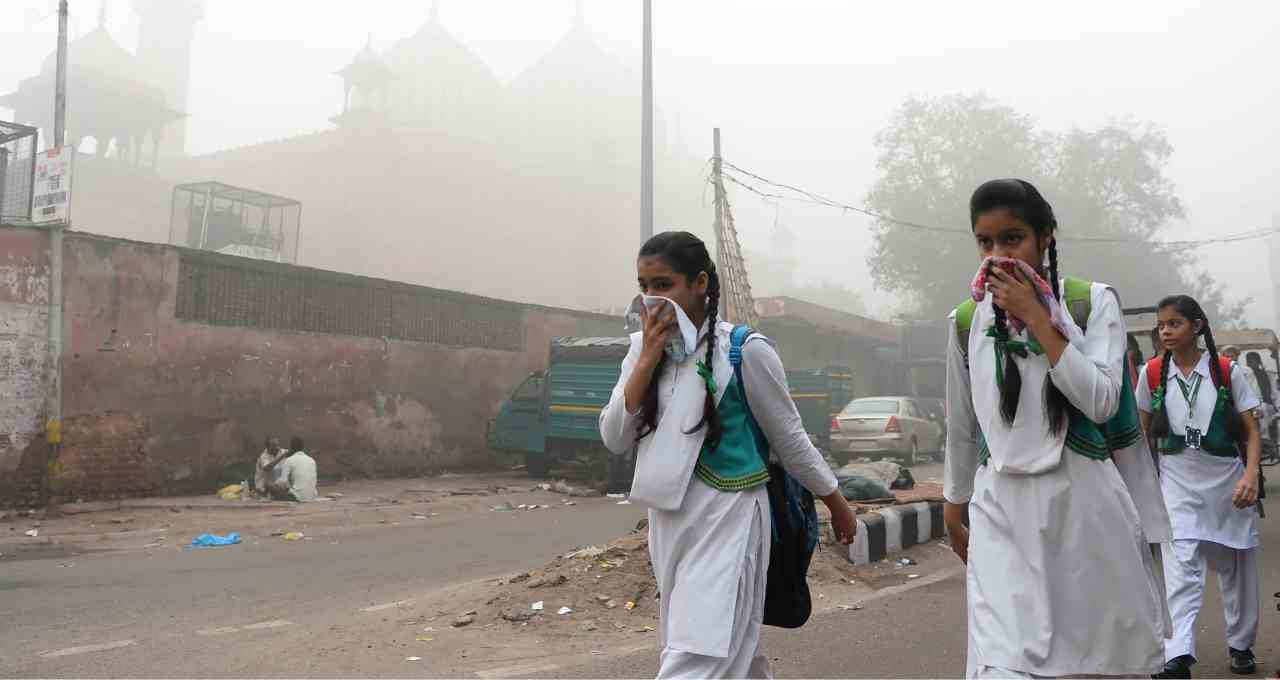
What does the Air Quality Index indicate?
AQI or Air Quality Index is a standard way to measure the level of pollution in the air. Its classification is as follows:
- 0-50: Air is clean, no health effects
- 51-100: Satisfactory, safe for general health
- 101-200: Moderate, sensitive groups need to be cautious
- 201-300: Poor, risk for people with respiratory problems
- 301-400: Very Poor, harmful to health even for general public
- 401-500: Severe, life-threatening situation for people
Currently, most areas in Delhi are within the 201-400 range, which suggests that the air is posing health risks ranging from moderate to severe. Children, the elderly, and people suffering from respiratory diseases may be particularly affected.