The proposed interim trade deal between India and the United States is being viewed as significant for India’s economy. The agreement is expected to provide tariff relief, support export growth, strengthen supply chains, and create opportunities in high-technology sectors, with potential long-term benefits for Indian industry.
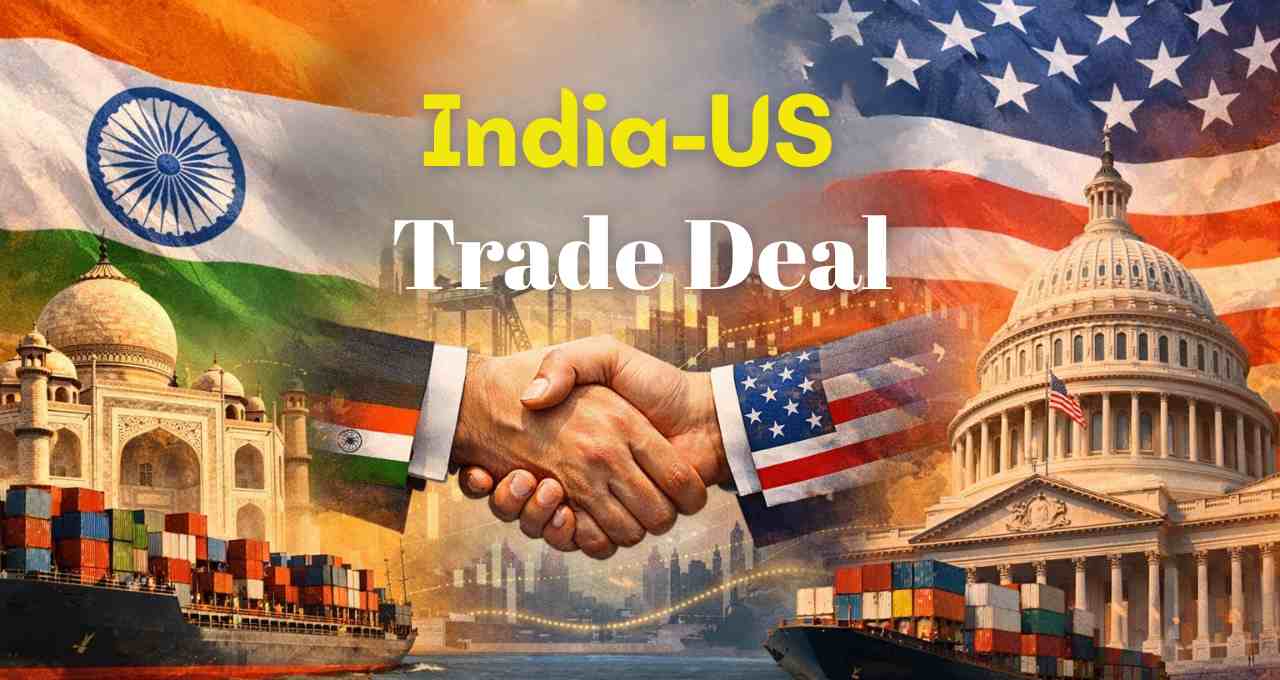
India and the United States have agreed on the framework for an interim trade agreement, which is positioned as a step toward a proposed comprehensive bilateral trade agreement targeted for February 2025. The understanding has been reached between the Government of India and the US administration with the stated objective of reducing tariffs, securing supply chains, and strengthening economic cooperation. India has agreed to reduce duties on selected US industrial and agricultural products, while the United States has indicated possible tariff relief for Indian sectors such as pharmaceuticals, gems and jewellery, and aircraft components to support trade and investment.




Under the framework, India has agreed to lower or remove tariffs on a range of US industrial and agricultural products, including animal feed, dry grains, nuts, fruits, soybean oil, alcohol, and spirits. According to the government, this is expected to lower input costs for domestic industry and reduce production expenses.
In return, the United States has signalled that, following the interim phase, reciprocal tariffs imposed on key Indian sectors such as generic medicines, gems and diamonds, and aircraft components could be removed. This could provide relief to Indian exporters in the US market and support export growth.
The framework also covers sensitive sectors such as steel, aluminium, and auto parts. The two sides have agreed to consider the removal of certain US duties imposed under Section 232 and to provide India with a preferential quota for auto parts. A review of tariffs under ongoing US investigations into pharmaceuticals will also be undertaken.
India has additionally assured a review of non-tariff barriers related to medical devices, information and communication technology products, and agricultural imports. Both countries will hold discussions over the next six months on adopting international or US standards and testing norms to facilitate and accelerate trade processes.
According to Commerce and Industry Minister Piyush Goyal, the agreement is intended to address not only trade but also economic security and supply chain strengthening. The framework includes cooperation on investment screening, export controls, and responses to non-market policies of third countries.
A key element of the understanding is India’s purchase commitment. Over the next five years, India is to purchase US goods worth $500 billion, including energy, aircraft, technology products, precious metals, and coking coal. The framework also outlines plans to expand trade in high-technology sectors such as GPUs and data centre equipment.