India's higher education sector is rapidly establishing a global identity. Modern policies inspired by the legacy of ancient Nalanda and Takshashila, improved rankings, and increasing participation of foreign students indicate that India is moving towards becoming a global education hub once again.
India Higher Education Growth: India’s higher education system has entered a new era where ancient knowledge traditions and modern reforms are progressing together. This change is visible across the country, especially within the university system and at the policy level, driven jointly by the central government and educational institutions. Increasing enrollment around 2025, improved global rankings, and a growing presence of foreign students demonstrate why India is considered the future global education destination.
From Ancient Glory to Modern Preparation




India was once a center of education for the entire world due to universities like Nalanda, Takshashila, and Vikramshila. Students from Asia, Europe, and the Middle East came to these institutions to acquire knowledge. Today, efforts are being made to revive that heritage with a modern framework. The new Nalanda University in Rajgir, Bihar, is a prime example of this, which the government considers a bridge between ancient glory and future needs.
Currently, the higher education market is consistently growing. According to the AISHE Report 2024-25, GER (Gross Enrolment Ratio) has seen continuous improvement, and under NEP 2020, the target is to increase it to 50 percent by 2035. Simultaneously, the number of foreign students studying in India is also increasing, indicating that the country is gradually becoming a global education destination.
World Rankings and Growing Interest from Foreign Students
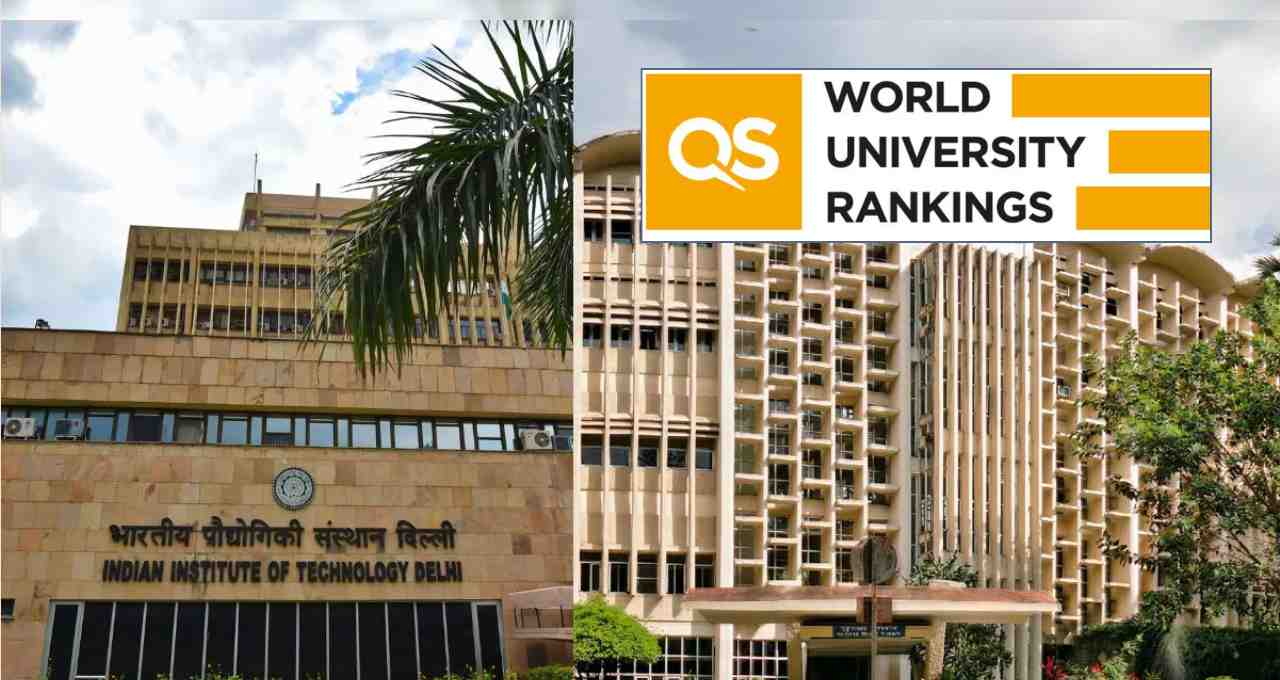
The presence of Indian universities in world rankings is strengthening. In the QS World University Rankings 2026, more than 50 Indian universities are included, whereas this number was very limited a decade ago. Institutions like IIT Delhi, IIT Bombay, and IIT Madras are consistently improving their global position. In the Times Higher Education Rankings as well, India has emerged as the country with the most institutions after the United States.
Alongside this, foreign students are being attracted to India through initiatives like ‘Study in India’. Affordable fees, better quality education, and global interest in subjects like Indian culture, yoga, and Ayurveda are becoming India’s strengths. NITI Aayog estimates that the number of foreign students studying in India could reach 5 lakh by 2047.
NEP 2020 and Digital Education Will Change the Game
The National Education Policy 2020 is considered the biggest reform of the Indian education system. Decisions such as multidisciplinary courses, flexible degree structures, emphasis on research, and permission for foreign university campuses have brought significant changes to the system. IITs and IIMs are opening their campuses abroad, while many foreign universities are investing in India.
Digital education is also a crucial link in this transformation. Platforms like SWAYAM, DIKSHA, and the National Digital University are enabling students from remote areas to connect with higher education. AI and EdTech are being used to make courses more practical and aligned with global standards.