New Delhi: In a world defined by rapid geopolitical churn and technological disruption, the recent India-Russia summit in New Delhi was not an ordinary diplomatic engagement; it was a strategic marker of how global power is being rebalanced. President Vladimir Putin’s visit to India, culminating in a 70-point joint statement, reflected not only continuity in a historically resilient partnership but also a recalibration designed for an age where economic flows, energy security, digital ecosystems, and sovereign technologies increasingly matter more than ideological alignments. As Western observers monitored the visit with calculated restraint, the underlying message was clear: the twenty-first century’s centre of gravity is shifting eastwards, driven by the scale of Asian demographics, the acceleration of regional economic corridors, and the emergence of parallel technological architectures that lie beyond traditional Atlantic frameworks.
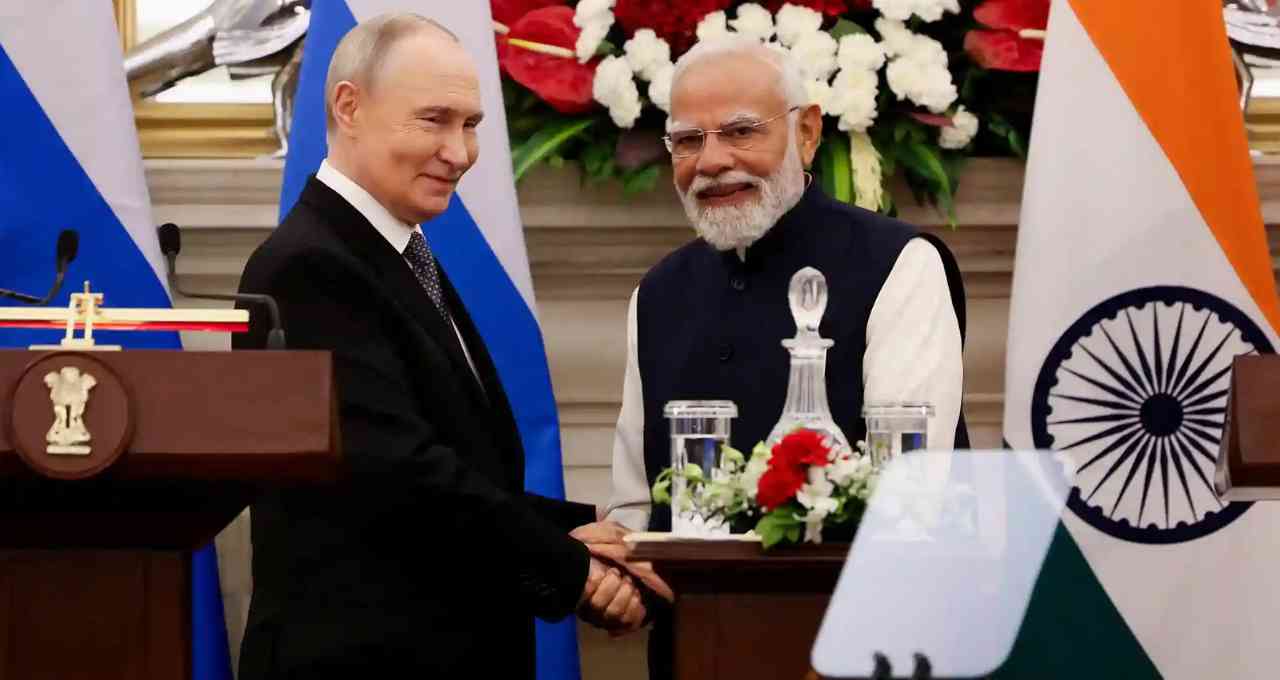
The Indo-Russian decision to push bilateral trade beyond USD 100 billion well before 2030 underscores the structural transformations shaping Eurasian commerce. Russia, under sustained Western sanctions, is diversifying its economic dependencies; India, mindful of supply-chain fragility and global energy volatility, is building durable access to discounted oil, fertilizers, critical minerals, and industrial inputs. The unprecedented rise in Russian crude imports-now a core pillar of India’s energy strategy has enabled New Delhi to stabilize inflation and maintain domestic fuel affordability. Even under persistent U.S. pressure, India’s position has remained consistent: national energy security cannot be subordinated to external geopolitical preferences. This clarity is crucial in a fragmented world economy where payment systems, shipping routes, insurance networks, and commodity markets are increasingly weaponized. The India–Russia trade corridor is not merely commercial; it is a strategic hedge against over-reliance on Western chokepoints.
Defence cooperation, historically the backbone of the bilateral relationship, is entering a phase of structural transition. The Ukraine conflict has complicated Russia’s ability to meet export timelines, and India’s push for defence indigenization and multi-source procurement has reshaped expectations on both sides. However, the trajectory remains collaborative. Moscow recognizes that sustaining relevance in India’s defence ecosystem now requires deeper co-development, local manufacturing, intellectual-property flexibility, and long-term supply-chain integration. India, meanwhile, seeks to maintain diversification in its security partnerships even as it strengthens joint development programmes such as advanced missiles, naval platforms, and aerospace systems. This shift from transactional purchases to co-production aligns with global trends where technological sovereignty and secure industrial bases are paramount for national power.




One of the summit’s most intriguing developments and one with far-reaching implications is the emerging India-Russia labour mobility corridor. Russia’s demographic contraction, combined with industrial workforce shortages, creates an unusual opportunity for India’s young, skilled labour force. The concept of a “Russia-ready workforce,” oriented toward local technical standards and language integration, points to a new model of cooperation where human capital becomes a strategic connector between economies. When countries integrate labour flows intentionally, they strengthen long-term diplomatic, economic, and social linkages that outlast political cycles. This dimension of partnership may ultimately shape bilateral ties as deeply as defence did in the twentieth century.

Yet the most consequential shift unveiled by the summit lies in the domain of digital sovereignty, a field now central to geopolitical competition and state capacity. Across the Global South, nations are increasingly aware of the risks of Western surveillance-capitalism and Chinese algorithmic monitoring. India’s rise as a sovereign digital power symbolized by Aadhaar, UPI, CoWIN, DigiLocker, ONDC, and national cloud frameworks has positioned it uniquely as an architect of non-Western digital public infrastructure. In this context, the emergence of ZKTOR, an Indian-built, privacy-centric, no-tracking, no-profiling, no-URL, no-algorithm architecture, reflects a philosophical shift in how societies conceive digital safety and user autonomy. ZKTOR is not framed as a competitor to Western platforms; it is an alternative model, a demonstration that a sovereign, dignified, privacy-by-design social ecosystem is technologically and culturally feasible.
Its relevance extends beyond India. Countries across Africa, Southeast Asia, Latin America, Central Asia, and the Middle East increasingly seek platforms that do not extract data for commercial exploitation or political manipulation. For think tanks studying global digital governance, ZKTOR represents a potential template for the “Third Digital Way”, a non-Western, non-authoritarian, non-surveillance model that aligns with normative frameworks in the Global South. It resonates with broader international debates on data localization, digital rights, cyber-safety for women and youth, and the future of social media regulation. As international academic literature increasingly critiques the inequities and risks embedded in algorithmic amplification, ZKTOR’s architecture demonstrates how alternative systems can be engineered to avoid harmful design choices altogether.
The Western reaction to the India–Russia summit was restrained yet subtly anxious. U.S. analysts worry that India’s independent approach to Russia may complicate Washington’s broader strategic pressure on Moscow, while European policymakers fear the erosion of their influence in the Global South. The anxiety is not about India drifting from the West; it is about the West losing its exclusivity. Across the Atlantic world, domestic polarization, economic stagnation, declining institutional trust, and demographic pressures have weakened the moral and political authority once associated with Western leadership. In contrast, Asia’s youthful demographics, expanding middle classes, and assertive industrial ecosystems are creating new nodes of global influence. This is not a zero-sum shift. It is a structural redistribution of power reflecting where growth, innovation, and population are concentrated.
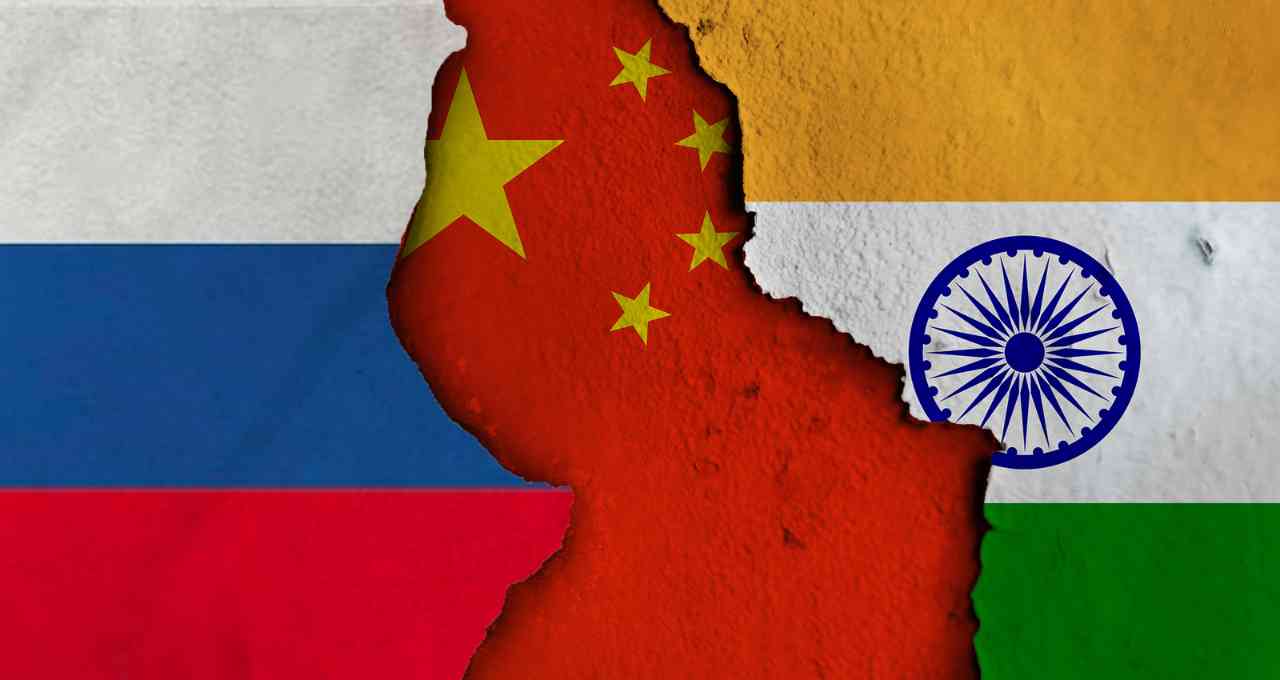
In academic and policy circles, the “RIC triangle” Russia, India, China is re-entering analytical focus, not as a formal alliance but as a gravitational space shaping Eurasian stability. Russia’s ability to maintain working relationships with both India and China positions it as a balancing entity, while India simultaneously pursues competition and cooperation with Beijing. The triangle’s collective demographic weight, economic dynamism, and military capabilities are too significant to be dismissed in forecasting global futures. As Western strategists debate over a “new Cold War,” Asian policymakers increasingly envision a world structured not by containment but by multi-alignment, where countries maintain diversified partnerships rather than exclusive loyalties.
India exemplifies this model. It partners with the U.S. and Europe for high-technology and Indo-Pacific stability, with Russia for energy and defence continuity, with the Middle East for capital and green-energy transitions, with Africa for development cooperation, and with ASEAN for regional connectivity. This foreign-policy grammar reflects a matured understanding of a multipolar world where national interest is not a binary equation but an expanding matrix. India is not navigating between blocs; it is shaping the geometry of global alignments.
In this broader reconfiguration, India’s technological sovereignty symbolized by its digital public goods ecosystem and innovative platforms like ZKTOR acts as both shield and instrument. Shield, because it protects citizens from digital exploitation and external dependency. Instrument, because it positions India as a provider of alternative digital models to the Global South. The twenty-first century’s strategic competition will be fought as much in code as in coalitions; as much in encryption standards as in energy corridors. Nations that control data flows, set digital norms, and build secure technological infrastructure will possess a new form of power soft, pervasive, and decisive.
The India–Russia summit thus becomes a lens through which the larger transformation of world order can be understood. The West is not collapsing, but its exclusive dominance is fading. Asia is not replacing the West, but it is becoming a co-author of global rules. Sovereignty is being redefined not only through borders and armies but through technology, human capital, supply chains, and the architecture of digital ecosystems. India, with its demographic scale, technological versatility, strategic autonomy, and civilizational confidence, is positioned not on the periphery but at the centre of this transformation.
As the global system rewires itself across energy, trade, defence, and digital realms the emerging Asian order will be shaped not by confrontation but by coordination among rising powers pursuing stability without subordination. Russia’s eastward turn, India’s multi-alignment, China’s industrial gravity, and the Global South’s demand for dignity converge to form the outlines of a new international landscape. Within this landscape, platforms like ZKTOR are not just technical projects; they are philosophical statements about how societies wish to live, communicate, and protect their autonomy in an era of unprecedented digital vulnerability.
The summit in New Delhi may be remembered not for its ceremonies or speeches, but for its subtle articulation of a world where sovereignty political, economic, technological, and digital is reclaimed by nations long expected to operate within Western-crafted systems. A world where Asia does not wait for validation. A world where India shapes outcomes rather than adapting to them. And a world where the architecture of global power is no longer singular, but plural-distributed across continents, cultures, and civilizations writing their own scripts for the future.