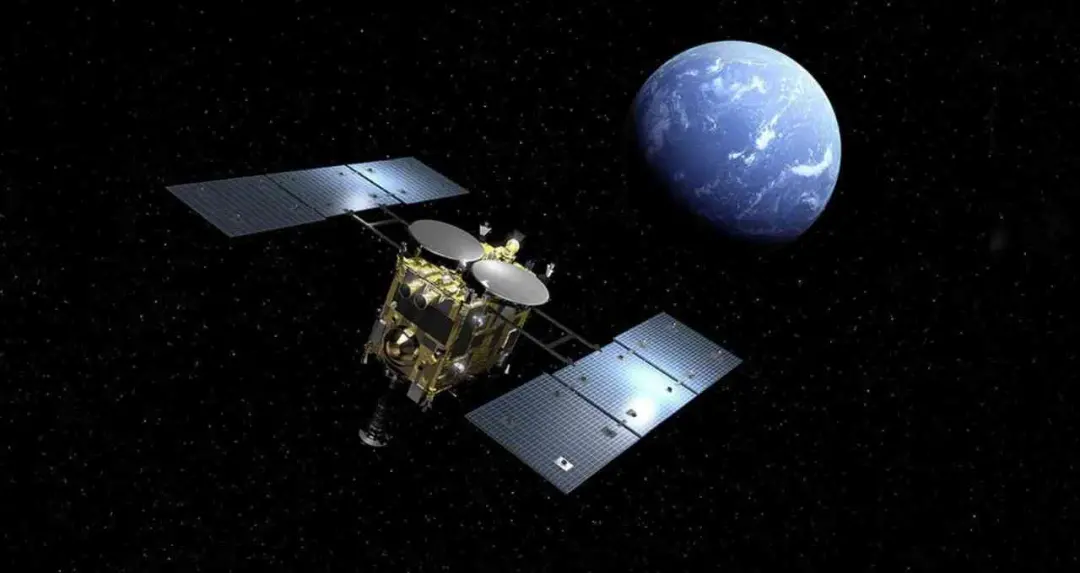
Japan's Hayabusa2 spacecraft is scheduled to conduct a high-speed flyby of the Torifune asteroid on July 5 as part of its extended mission. The objective is to test new autonomous navigation technology, study the asteroid, and collect scientific data that could support future planetary defence preparations.
The Japan Aerospace Exploration Agency (JAXA) is preparing for Hayabusa2 to pass extremely close to the Torifune asteroid on July 5. During the flyby, the spacecraft will travel within approximately 1 to 10 kilometres of the asteroid at a speed of about 5.3 kilometres per second. The mission is regarded as one of the most technically challenging active asteroid missions because of the close approach and high-speed scientific observations.
Hayabusa2 previously collected samples from the Ryugu asteroid and safely returned them to Earth. The spacecraft is now continuing operations in deep space under its extended mission to study another asteroid.

Torifune, previously known as 2001 CC21, is a near-Earth asteroid approximately 450 metres wide. Scientists currently have limited information about its size, surface, composition, and formation, making the flyby an important scientific opportunity.
During the mission, Hayabusa2 will use its onboard cameras and scientific instruments to study the asteroid's surface, shape, texture, and chemical composition. Scientists estimate that Torifune may resemble Itokawa, the asteroid studied by Japan's first Hayabusa mission, although its actual structure could be entirely different.
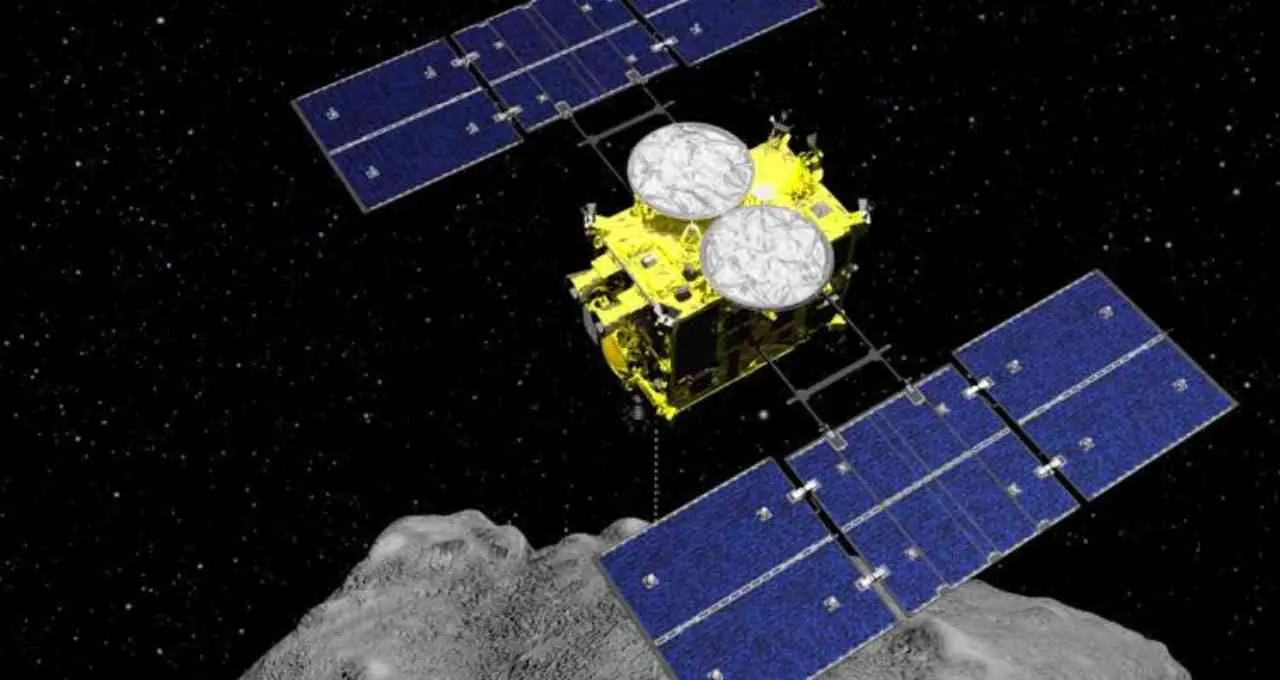
Some experts believe Torifune could be a "Contact Binary," meaning it may have formed through the gradual merger of two smaller bodies. If confirmed, the finding could provide new information about the formation and evolution of small celestial bodies.
The Hayabusa2 flyby is intended not only for scientific research but also to evaluate technologies relevant to future planetary defence missions. Rapid and accurate assessment of an asteroid during a high-speed encounter is considered essential for future scenarios involving potentially hazardous asteroids.
If a large asteroid were to pose a threat to Earth, scientists would need to determine its trajectory, size, density, and composition within a limited timeframe. The Hayabusa2 flyby serves as a practical test of technologies required for such missions. Similar technologies could also contribute to improving future asteroid deflection missions such as NASA's DART.
The mission will also test the spacecraft's autonomous navigation system. Maintaining a precise trajectory without human intervention despite the high-speed encounter will be a key technical demonstration.
Hayabusa2's mission will continue after the Torifune flyby. During its extended mission, the spacecraft has already carried out scientific observations related to zodiacal light and exoplanets.
Its next major target is the asteroid 1998 KY26, which it is expected to reach in 2031. Measuring only about 11 metres across, the asteroid could become one of the smallest ever studied by a spacecraft. Scientists are also exploring the possibility of a landing on the rapidly rotating object.
If the extended mission is successful, Hayabusa2 will further strengthen its position among the longest-running and most successful asteroid exploration missions, while providing scientific data and technical experience for future asteroid missions related to Earth's defence.