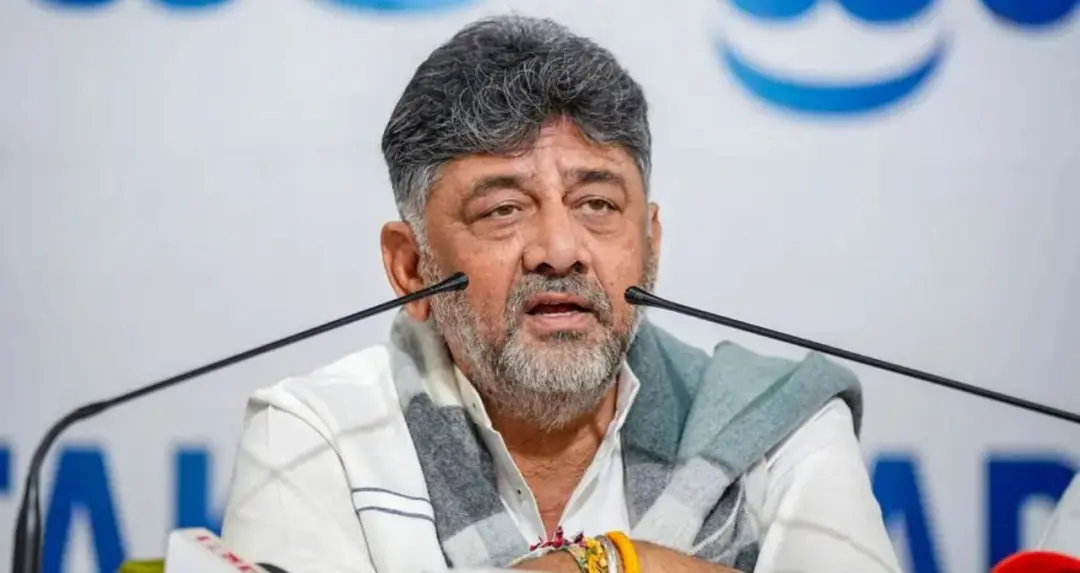
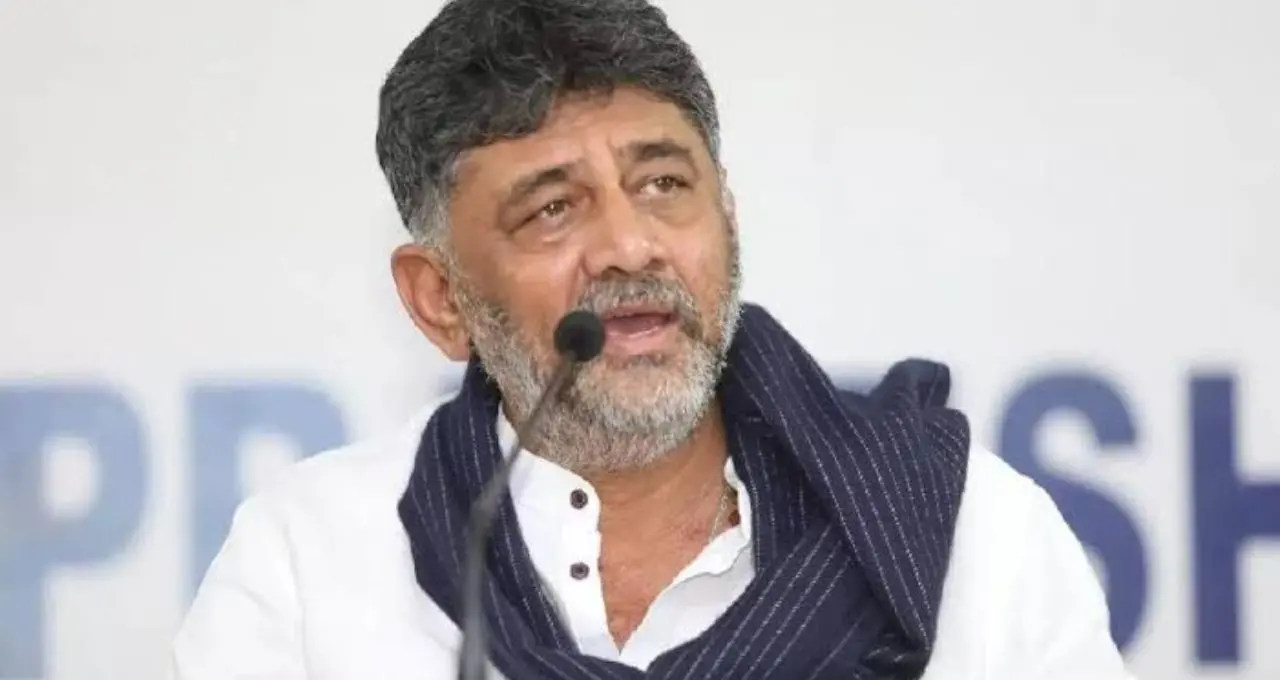
Karnataka Chief Minister D.K. Shivakumar has said that only the first two stanzas of the national song Vande Mataram will be sung at government and public functions in the state. Supporting the Congress decision, he said his government stands firmly with the party’s ideology and established position on the issue. Shivakumar made the statement at an India Today event on August 26, 2026.
Shivakumar said he believes in his party’s ideology and would stand by the decision taken by the Congress. He said the full version of Vande Mataram had been sung at an Independence Day event without his knowledge. According to him, only the first two stanzas will be sung at government functions in Karnataka in accordance with the Congress’s position.
He also said Karnataka is a state of diverse communities and India is a country comprising diverse communities. Shivakumar accused the BJP of pursuing appeasement politics and said the Congress believes in taking all sections of society along. His remarks came amid an intensifying political dispute between the Congress and BJP over the singing of Vande Mataram.
The Congress Working Committee’s August 19 decision is central to the dispute. The party’s top decision-making body stated that only the first two stanzas of Vande Mataram would be sung at Congress programmes. The party linked its decision to a Congress decision taken in 1937 and said it was following a historical tradition.
Congress leaders have argued that during the freedom movement, a specific arrangement concerning the public singing of Vande Mataram was established among leading figures of the time, including Mahatma Gandhi, Jawaharlal Nehru, Rabindranath Tagore, Subhas Chandra Bose and Sardar Vallabhbhai Patel. The Congress has said that the practice of singing the first two stanzas at its programmes is linked to that historical decision.


The current political dispute over Vande Mataram intensified after Independence Day programmes on August 15. The BJP accused the Congress of disrespecting the national song. BJP leaders questioned a video of an event at the Congress headquarters and alleged that the party leadership was uncomfortable with the singing of the full song.
The Congress rejected the allegations. The party said the full version of Vande Mataram was sung at the Congress headquarters and that there had been no attempt to stop it. Congress general secretary Jairam Ramesh rejected the BJP’s allegations and said Sonia Gandhi’s gesture was not intended to stop the song but was related to arranging a chair for Congress president Mallikarjun Kharge, who had been standing for a long time.
The dispute subsequently expanded beyond party programmes to the format of the national song at government functions and the new guidelines issued by the central government.
The central government issued new guidelines in 2026 concerning the official singing of Vande Mataram. The Home Ministry’s January 28, 2026 guideline prescribed a protocol for the official six-stanza version of the national song. The duration of the official full version was stated to be approximately 3 minutes and 10 seconds.
All India Radio subsequently began broadcasting the full six-stanza version of Vande Mataram from March 26, 2026. Earlier, its morning broadcasts generally used a version containing the first two stanzas, lasting about 65 seconds. Following the government’s new directive, the full version was included in official broadcasts.
Under the government protocol, when both Vande Mataram and the national anthem are presented at an official ceremony, the national song is presented first, followed by the national anthem. The protocol emphasises adherence to the prescribed format and official version at government functions.
Amid the dispute over Vande Mataram, Parliament passed the Prevention of Insults to National Honour (Amendment) Bill, 2026. The Bill was passed by the Rajya Sabha on July 29 and by the Lok Sabha on July 30. The amendment subsequently became law and brought the national song within the scope of legal protection similar to that provided to the national anthem.
The law provides that a person who intentionally prevents the singing of the national song or causes disruption at an assembly engaged in such singing may face imprisonment of up to three years, a fine, or both. The legal provision focuses on intentionally stopping the singing or causing disruption at the assembly.
The law does not specify that merely failing to sing all six stanzas of Vande Mataram constitutes an offence. The legal provisions primarily make the act of stopping the singing or disrupting the singing punishable. Therefore, there is a legal distinction between singing two stanzas and intentionally preventing the singing.
Following the Congress decision to sing two stanzas, the BJP accused the party of political appeasement and compromising on an issue linked to national sentiment. Union Home Minister Amit Shah also criticised the Congress decision and linked it to appeasement politics.
The Congress, meanwhile, has linked its position to its historical decision and party ideology. The party has said that singing the first two stanzas is not the result of a new decision but follows the tradition established in 1937.
Shivakumar’s statement places Karnataka at the centre of the dispute. The difference between the central government’s official protocol and the Congress position for its political programmes has become a subject of public debate.
Shivakumar has made clear that the Karnataka government supports singing only the first two stanzas of Vande Mataram at government and public functions in accordance with the Congress decision. Vande Mataram is closely associated with India’s freedom movement and national history, and its format of presentation has become part of a wider political and legal debate.