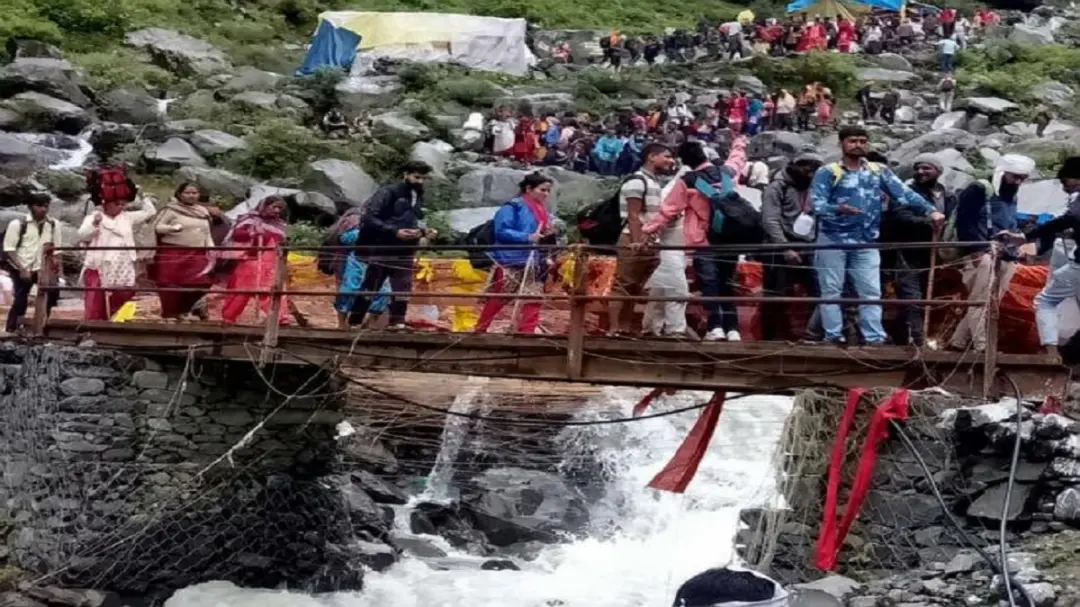
The Manimahesh Yatra in Himachal Pradesh’s Chamba district begins today, with a daily limit of 5,000 devotees. Registration and a fitness test have been made mandatory for those participating in the pilgrimage. The Manimahesh Lake and Kailash Mountain are the main religious destinations of the yatra.
The administration has placed emphasis on devotee safety and crowd management this year. Only a maximum of 5,000 devotees will be permitted to proceed on the yatra each day. Devotees will have to complete the prescribed registration and fitness process before being allowed to continue.
The fitness test has been introduced to assess whether devotees are physically capable of undertaking the high-altitude and difficult mountain route. The pilgrimage involves travelling on foot beyond Bharmour towards Manimahesh Lake. The route includes steep climbs and narrow trails, while cold conditions and sudden weather changes can add to the difficulty.
The administration has prepared 5 base camps along the yatra route. These camps will provide necessary facilities and security arrangements for devotees. Health services and information related to the pilgrimage will also be available at the base camps.




The main religious occasion during the Manimahesh Yatra is the Chhota Shahi Snan, which will be held on 4 September this year. A large number of devotees are expected to reach Manimahesh Lake on the occasion. The administration has strengthened preparations for crowd management and security ahead of the event.
The Manimahesh Yatra is among the major religious pilgrimages in Himachal Pradesh. Devotees from different parts of the country visit the site to worship Lord Shiva, take a holy bath in Manimahesh Lake and have darshan of Kailash Mountain. The pilgrimage requires devotees to cover a difficult mountain route on foot.
Movement of devotees has increased in Chamba and Bharmour even before the start of the yatra. The administration has assigned responsibilities to different departments for security arrangements, healthcare facilities and crowd management along the route.
The daily limit of 5,000 devotees has been set to control excessive crowding on the mountain route. Managing the number of people travelling at one time is also intended to facilitate route monitoring and rescue operations during emergencies.
The administration has advised devotees to pay particular attention to their physical fitness before undertaking the pilgrimage. Elderly people, young children and those with health-related difficulties have been advised to consider their physical capacity before travelling. Conditions at high altitude, including reduced oxygen levels and sudden changes in weather, can create difficulties.
Health department and administrative teams will remain deployed to respond to emergencies along the route. Devotees have been advised to monitor weather conditions and follow instructions issued by the administration.
Reaching Manimahesh Lake is considered physically demanding because of the several-kilometre uphill walk and difficult mountain terrain. The fitness test has therefore been made an important part of this year’s pilgrimage arrangements.
The administration has also appealed to devotees not to dispose of plastic or waste in the open. Devotees have been advised to maintain cleanliness around the mountain area and Manimahesh Lake, avoid damaging the natural environment and dispose of waste only at designated locations.
The largest gathering is expected during the Chhota Shahi Snan on 4 September. Security arrangements will be strengthened on the day, with the administration prepared to regulate devotee movement and respond quickly to any emergency.
Weather conditions may pose a challenge during the pilgrimage. Mountain areas remain exposed to incidents such as rainfall and cloudbursts. Devotees have been advised to stay at a safe location during adverse weather and follow administrative instructions.
The arrival of devotees from different states for the Manimahesh Yatra also supports religious tourism in Chamba district. Local shopkeepers, hotel operators, taxi drivers and other businesses benefit economically during the pilgrimage, which also creates employment and business opportunities locally.
This year’s arrangements include a daily limit of 5,000 devotees, mandatory registration and fitness testing, with the administration focusing on crowd management, health and safety. The 5 base camps are intended to help provide necessary facilities to devotees along the route.
The Chhota Shahi Snan on 4 September is expected to draw a large number of devotees. According to religious belief, bathing in Manimahesh Lake and having darshan of Lord Shiva hold special significance, leading thousands of devotees to visit Manimahesh during the occasion.
The administration has completed preparations to conduct the yatra in an organised manner. Devotees have been advised not to undertake the pilgrimage without registration, to complete the fitness process and to follow the prescribed rules.
The Manimahesh Yatra begins today, with the Chhota Shahi Snan scheduled for 4 September. The arrangements include permission for 5,000 devotees per day, 5 base camps and a mandatory fitness test.