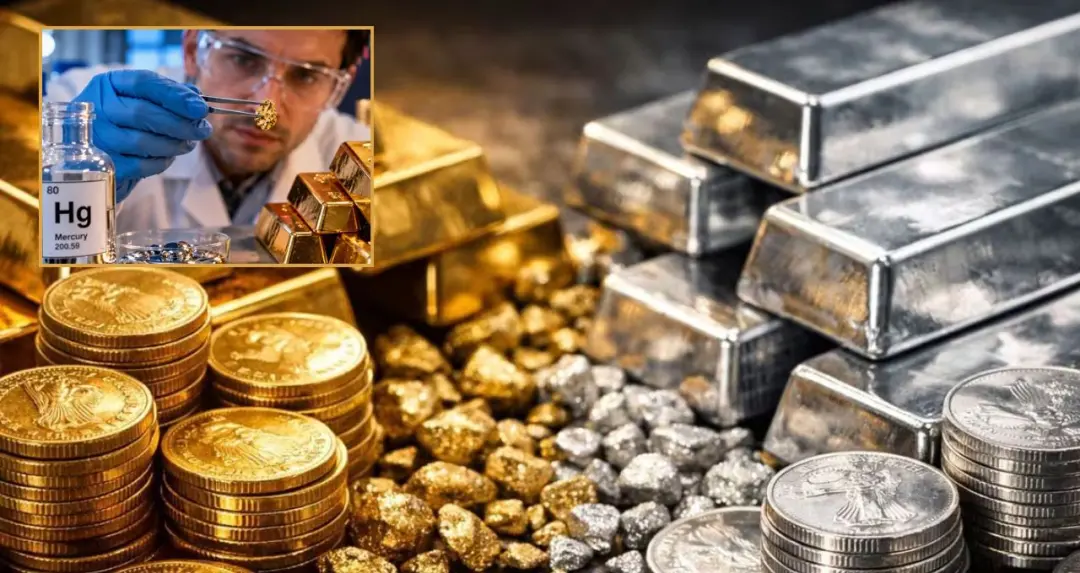
San Francisco-based Marathon Fusion claimed on October 21, 2026, that it had produced stable gold from mercury using nuclear technology in an experiment conducted in September. According to the company, its experiment achieved a production rate ten times higher than a record reported by the European Organization for Nuclear Research (CERN) in 2025. However, the company has not disclosed the total quantity of gold produced or the cost of the process. The claim has also not been independently verified.
Marathon Fusion shared details of its experiment on social media, stating that its technology achieved a production rate ten times higher than the record reported by CERN in 2025.
The company also released some scientific measurements indicating that gold had been produced from a specific form of mercury. However, the available information does not establish the total quantity of gold generated during the experiment.
The claim has yet to receive independent scientific confirmation. Consequently, the reported results do not establish that the technology is capable of producing gold on a commercial scale.
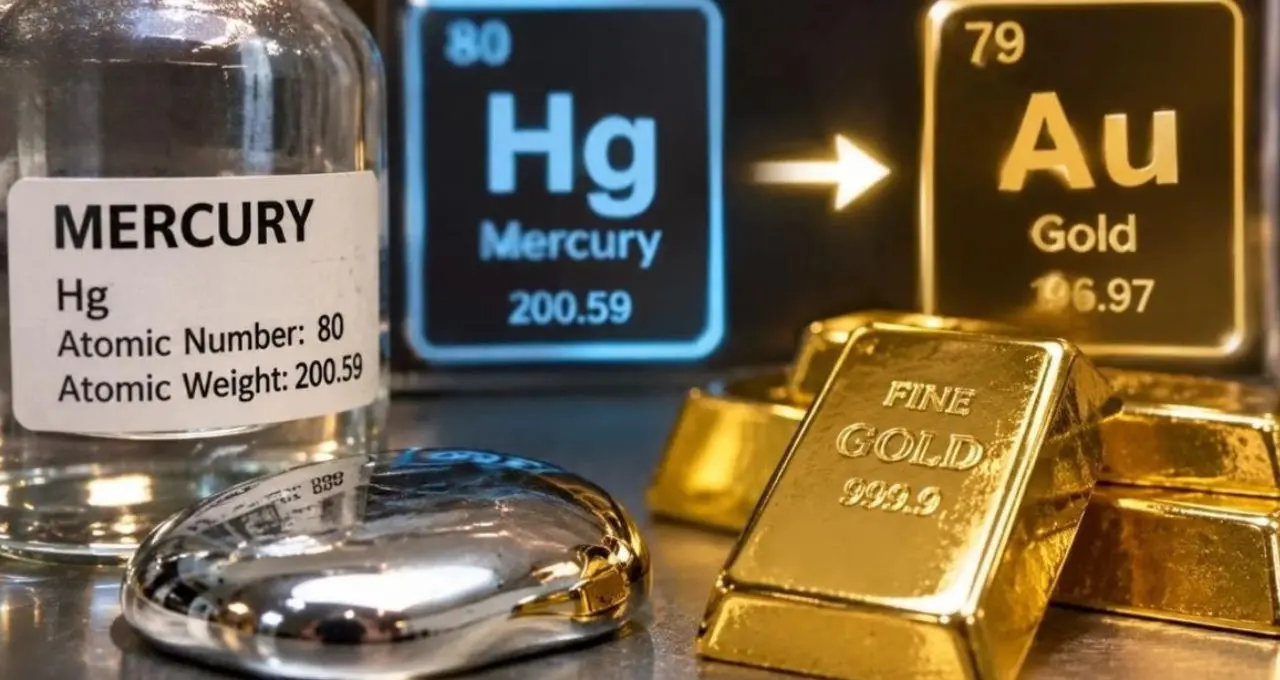
The technology being developed by Marathon Fusion is known as nuclear transmutation, a process that changes one element into another by altering the structure of its atomic nucleus.




Under the proposed process, nuclear fusion first generates high-energy neutrons. These neutrons interact with the mercury isotope Mercury-198, potentially producing radioactive Mercury-197.
Mercury-197 subsequently decays into Gold-197, a stable isotope of gold.
Mercury does not become gold directly through nuclear fusion. Instead, neutrons generated by fusion facilitate the transformation. The conversion itself occurs through nuclear transmutation.
In July 2025, Marathon Fusion's scientists uploaded a research paper to arXiv estimating that a suitably designed fusion power plant could potentially produce approximately two tonnes of gold annually for every gigawatt of thermal power.
The estimate is based on computer simulations. The company has not demonstrated production at this scale at an operating commercial plant.
The company has also discussed a small reactor with a proposed fusion capacity of one kilowatt. This is one-millionth of a gigawatt, making it difficult to extrapolate laboratory-scale results directly to industrial production.
In 2025, CERN reported that approximately 86 billion gold nuclei had been produced in the Large Hadron Collider between 2015 and 2018.
Despite the large number of nuclei, their combined mass was only 29 picograms, an amount too small to be visible to the naked eye.
CERN's experiment was not designed for commercial gold production. Its objective was to study the behaviour of atomic particles.
Marathon Fusion has not specified which measurement or benchmark from CERN's work it used to calculate its claim of a tenfold higher production rate.
One of the principal challenges for the technology is obtaining mercury with the required isotopic composition. Mercury-198 accounts for approximately 10% of naturally occurring mercury, while Marathon Fusion's calculations consider the use of mercury containing up to 90% Mercury-198.
Mercury is toxic, and handling it in large quantities would require specialised safety arrangements.
Radioactivity presents another challenge. The production process could generate other radioactive materials alongside gold. According to the company's simulations, the resulting mixture could take several years to reach certain safety criteria. Additional costs would be associated with purification and safe storage.
Marathon Fusion estimates that future fusion power plants could generate additional revenue by selling gold produced alongside electricity.
However, it remains unproven whether the process can produce gold in quantities and at a level of purity suitable for commercial sale.
Assessing the technology's commercial viability will require the company to disclose comprehensive experimental data, production costs and gold-purity measurements. Independent scientific evaluation will be necessary to establish whether the process can move beyond laboratory research and become a commercially viable method of gold production.