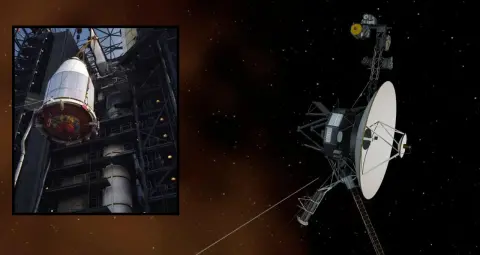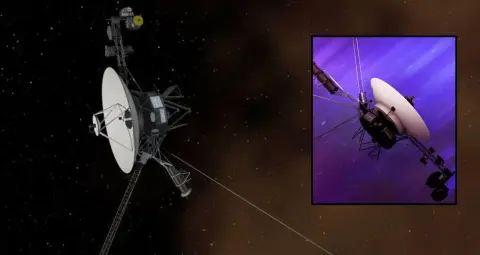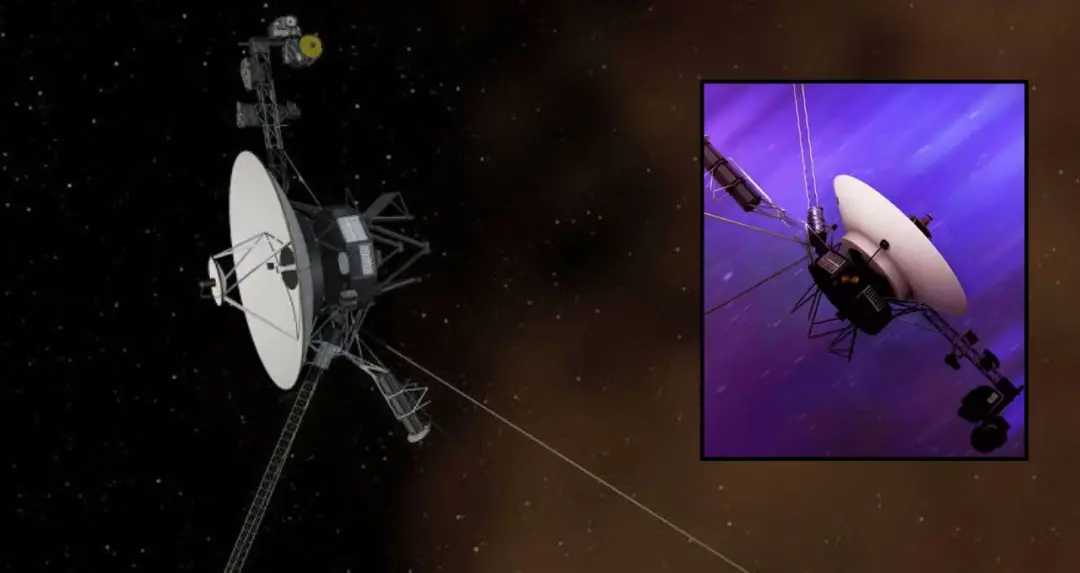
ASA's Voyager 1 spacecraft is set to achieve a historic milestone on Wednesday, November 18, 2026, when it reaches approximately 25.9 billion kilometres from Earth. It will become the first human-made spacecraft to reach a distance of one light-day from Earth, meaning radio signals sent between the spacecraft and Earth will take approximately 24 hours to travel in either direction.
Launched nearly 49 years ago, Voyager 1 continues to provide scientists with valuable information about the distant regions of space.
NASA's Voyager 1 mission is approaching another significant milestone in space exploration. According to scientists, the spacecraft will reach approximately 25.9 billion kilometres from Earth on November 18, 2026, becoming the first human-made spacecraft to travel such a distance.
According to NASA, Voyager 1 is expected to cross the one-light-day distance threshold at approximately 3:46 p.m. Indian Standard Time.
A light-day refers to the distance light travels in 24 hours. At this distance, radio signals transmitted from Earth will take approximately 24 hours to reach Voyager 1. Similarly, information transmitted by the spacecraft will take around 24 hours to reach scientists on Earth.




If scientists send a command to the spacecraft and wait for its response, the entire communication process could take at least 48 hours.
Maintaining communication with Voyager 1 despite the enormous distance is a significant achievement in science and engineering. NASA uses its Deep Space Network for this purpose. The network's powerful antennas receive weak radio signals transmitted by spacecraft operating in distant regions of space.
NASA launched Voyager 1 on September 5, 1977. Its initial mission was to study the outer planets of the Solar System, particularly Jupiter and Saturn.
The spacecraft transmitted images and scientific data about both planets and their moons to Earth. These observations provided scientists with new information about planetary atmospheres, magnetic fields and natural satellites.
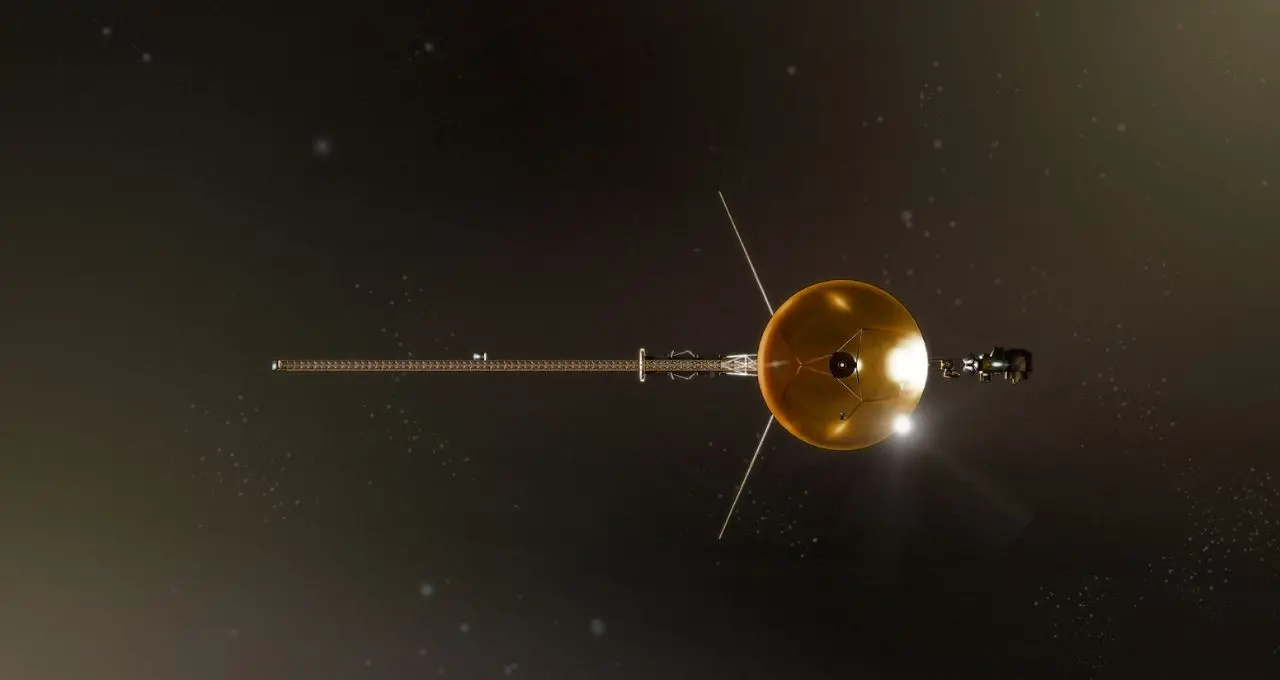
Voyager 1 continued its journey after completing its initial mission. In 2012, it crossed the outer boundary of the heliosphere, the region influenced by charged particles emitted by the Sun, and entered interstellar space.
Interstellar space refers to the region between stars. Conditions in this region differ from those within the Solar System. Data collected by Voyager 1 has helped scientists improve their understanding of these differences.
Another notable feature of the spacecraft is that it was built using technology developed nearly five decades ago. Despite its age, some of its scientific instruments continue to transmit useful information to Earth.
One of the most significant aspects of the Voyager 1 mission is not just the distance it has travelled but also its ability to provide scientific data over several decades.
As technologies and scientific theories have developed over the years, researchers can revisit older data to investigate new questions and improve their understanding of space.
Information collected by the spacecraft is being used to study the boundaries of the Solar System, particles in space, magnetic fields and conditions in interstellar space.
However, keeping Voyager 1 operational is becoming increasingly challenging for NASA. The spacecraft uses radioisotope thermoelectric generators to produce electricity, but their available power is gradually declining over time.
To conserve electricity, scientists have had to switch off some of the spacecraft's instruments. Technical problems involving its ageing electronic systems and communication equipment also remain ongoing challenges.
Despite these difficulties, scientists are working to keep the mission operational for as long as possible. Voyager 1 continues to provide information about a region of space that no other human-made spacecraft has reached.
The spacecraft's milestone demonstrates the continued role of technology developed decades ago in supporting long-term scientific exploration.