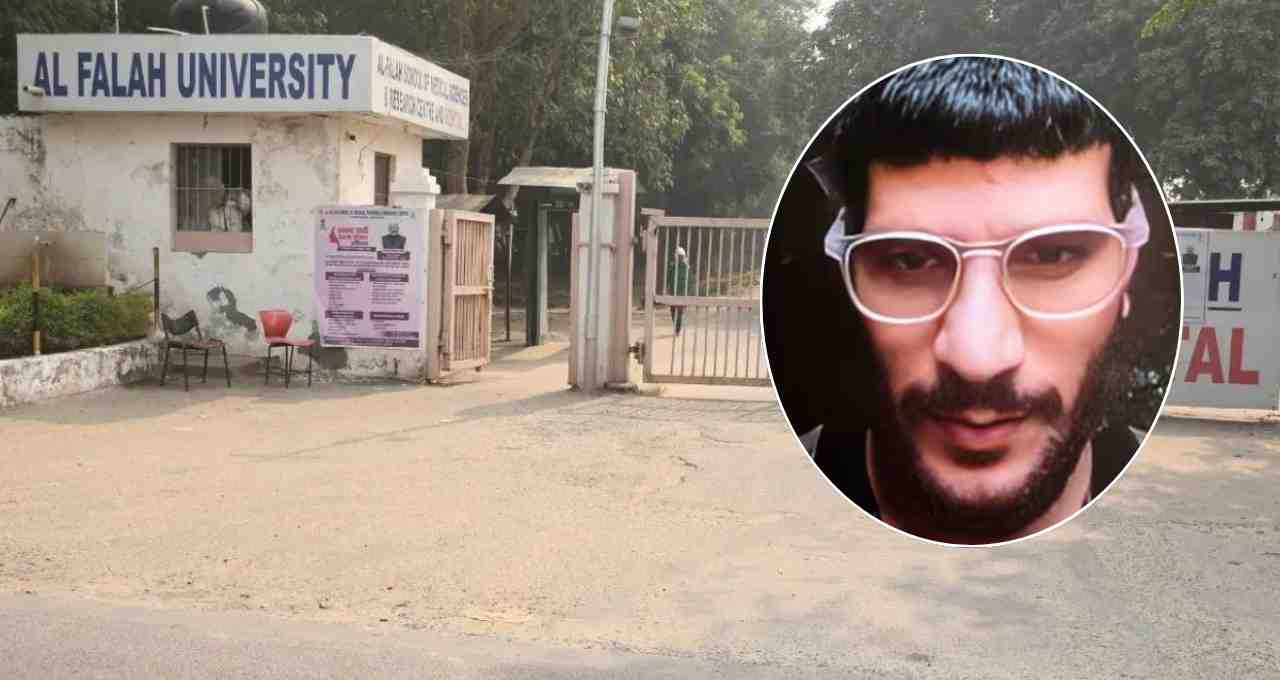
Dr. Umar un Nabi, apprehended in the Delhi blast case, was found to be involved in terrorism despite his academic career. The connection of many educated individuals like Yakub Memon and Osama bin Laden, alongside Umar who was an Assistant Professor at Al-Falah University, to radical networks has become a serious cause for concern. This incident once again raises the question of why some people turn to the wrong path despite having higher education.
Network Of Educated Terrorists: Investigations into the blast near Delhi's Red Fort Metro Station revealed that Assistant Professor Dr. Umar un Nabi was the main conspirator behind the attack. Investigative agencies stated that he taught at Al-Falah University and had completed his MBBS from a medical college in Srinagar. The matter became serious when it was discovered that he had been in contact with a terrorist network for a long time. This incident has once again raised the question of why educated individuals become part of radical organizations and why discussions about institutional oversight have become necessary.
Umar un Nabi's Education and Terrorist Connection




According to the investigation, Dr. Umar was an Assistant Professor in the General Medicine department at Al-Falah University. Prior to this, he had completed his MBBS from Government Medical College, Srinagar. Given his academic record, no one had imagined that he could be part of such a conspiracy. An i20 car was used in the blast, which compelled security agencies to delve deep into his network.
Umar's case once again fuels the debate on how some individuals fall under the influence of radical organizations despite receiving education. Agencies believe he had been in contact with this network for a long time and was also leveraging his profession for it.
Yakub Memon and Osama
Yakub Memon, convicted in the 1993 Mumbai blasts, was considered the most educated member of his family. He was a chartered accountant and could have had a successful professional career, but due to bad company and networks, he embarked on the path of terrorism.
The case of Osama bin Laden also shows a similar pattern. Born in Riyadh, Laden obtained a degree in Public Administration from King Abdulaziz University in Jeddah. In his early days, he spoke of developing Arab society, but later he formed Al-Qaeda and expanded terrorism across the world. He was killed in a US operation in 2011, but the impact of his network is still seen in many countries today.
Why Universities Are Questioned
Umar un Nabi's case has reignited discussions on the oversight of universities and professional institutions. Often, even educated individuals come into contact with radical organizations, necessitating increased vigilance from security agencies. In such cases, it becomes crucial to examine what circumstances push students or professionals in this direction.
Security agencies believe that radicals often aim to recruit highly educated youth into their networks because they can prove technically and strategically useful. This is why investigations are no longer limited to incidents but extend to the background, connections, and activities of institutions.