A 24-year-old student from Patna’s Kankarbagh area was found dead on a railway track near Rajendra Nagar Terminal four days after she went missing, prompting allegations from her family of cyber fraud, threats under the guise of “digital arrest” and suspicious financial transactions. According to the family, more than ₹1.5 lakh was transferred from the student’s father’s bank account to different accounts. The circumstances surrounding her disappearance and death, the alleged threats and the financial transactions remain to be established through investigation.
The student left home on the morning of October 5, between approximately 10 am and 11 am, telling her family that she was going near the National Institute of Technology (NIT) for work related to a form. When she did not return, her family initially assumed she had been delayed by work. As the hours passed without any information about her whereabouts, relatives attempted to contact her and began searching for her through friends, acquaintances and other possible contacts.
After failing to locate her, the family filed a missing-person complaint at Kankarbagh police station on October 6. Relatives said they repeatedly contacted the police and shared information related to the student’s mobile number. They wanted investigators to examine her phone location, call records and other technical evidence to establish where she had gone and whom she had contacted.
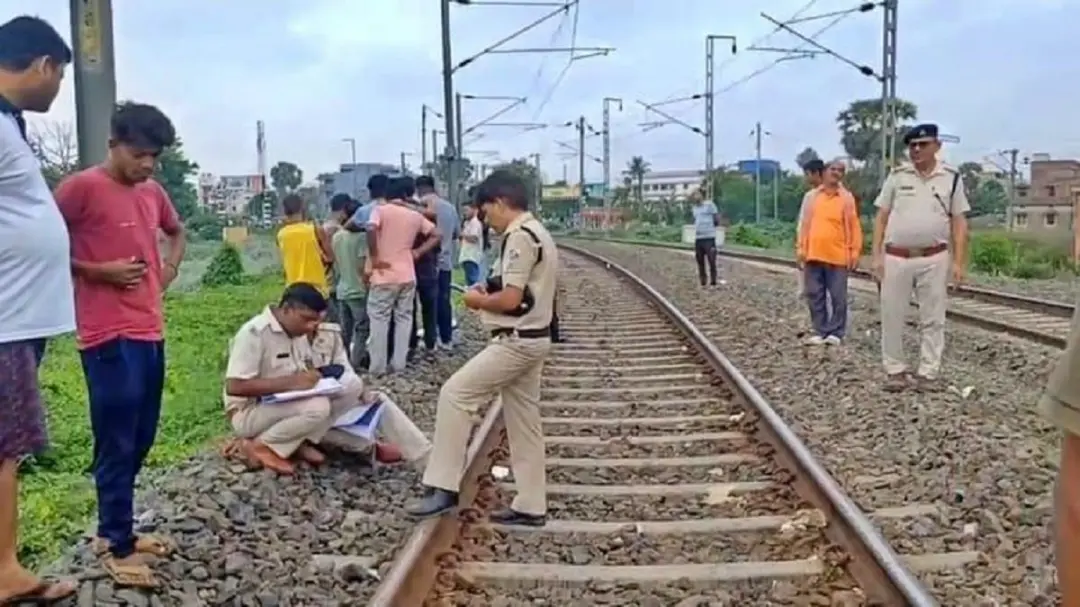
Four days after she went missing, the family received information that a body had been found on the railway track near Rajendra Nagar Terminal. The body was identified as that of the missing student. Her death has raised questions about the events between her departure from home and the discovery of her body.
The family has alleged that the student received calls from different phone numbers and that the callers demanded money, threatening to cause further trouble if the demands were not met. According to relatives, the callers allegedly applied pressure in the name of loan repayment and recovery. They also reportedly claimed to be contacting her from Dubai or other states.
The family said the student had been distressed by the calls and the financial pressure. However, the identities of the callers, their actual locations and their motives have not been established. It also remains unclear whether the callers identified themselves as officials of a government department or investigative agency.
One of the central allegations concerns the use of “digital arrest” tactics to intimidate the student. In such cyber fraud schemes, perpetrators may impersonate police officers, investigative agency personnel or government officials to convince victims that they are involved in a criminal case or face imminent arrest. They may demand that victims remain on calls, avoid contacting family members or refrain from disclosing the matter to others.




Perpetrators may also use threats of arrest, imprisonment, reputational damage or harm to family members to exert pressure. In some cases, they use video calls, fake identification documents or backgrounds resembling government offices to make their claims appear credible. Victims may then be pressured into transferring money to accounts specified by the callers.
In the Patna case, the precise nature of the alleged threats and whether the callers invoked any purported legal investigation or arrest remain unclear from the available information. Investigators will need to establish what was communicated to the student, whether any fake notices or messages were sent and whether the money demands were linked to claims of an investigation or possible arrest.
According to the family, more than ₹1.5 lakh was transferred from the student’s father’s bank account to different accounts. The transactions have become a key area requiring examination to determine when the money was transferred, which accounts received it and what payment channels were used.
Banking records could be examined alongside the student’s call logs and messages to establish whether the transfers occurred shortly after calls from suspicious numbers. Investigators could also examine the identities of the account holders, subsequent transactions and other potentially suspicious activity to determine whether the funds reached an organised cybercrime network.
Cyber fraudsters sometimes use bank accounts belonging to other individuals to route money obtained through fraudulent means. Such accounts are commonly referred to as mule accounts. Funds may be transferred through multiple accounts, making it harder to identify the people who organised the fraud. Establishing the identity of the recipient account holder alone may therefore be insufficient; investigators would also need to determine who controlled the account and where the money went subsequently.
The fact that money was transferred does not, by itself, establish who demanded it or whether any individual was involved in the student’s death. The circumstances and purpose of the transactions remain subject to verification.
The student’s family has also questioned the police response. Her brother alleged that relatives remained in contact with the police after filing the missing-person complaint and shared information about her mobile number. They wanted the police to examine her location data and call records to determine her movements and contacts.
The family believes effective steps should have been taken promptly to locate her. The available information, however, does not establish what action the police took after receiving the complaint, when technical investigations began or which leads were verified.
Assessing the family’s allegations will require a review of the complaint, the timeline of police action and the relevant investigation records. These details would help establish whether any lapse occurred during the search for the student.
A second body, that of a young man, was also found on the railway track near the student’s body, according to the available information. His identity had not been confirmed at the time of the report.
Investigators will need to establish the man’s identity and determine whether he knew the student. Their mobile phone records, contact histories, movements before the incident and other available evidence could help establish whether the two were connected.
The discovery of both bodies in the same area does not, by itself, establish a direct link between the deaths. CCTV footage from cameras near the railway track, statements from people in the surrounding area and mobile phone location records could help reconstruct the events preceding the discovery. The causes of death would need to be established through post-mortem reports and other relevant evidence.
The student’s mobile phone may provide important evidence. Investigators could examine her call history, WhatsApp messages, SMS messages, emails and other digital records to identify people who contacted her and determine whether she received repeated threats or demands for money.
Any suspicious phone numbers could be investigated, while messages relating to financial demands could help corroborate or refute the family’s allegations. Digital evidence would need to be collected and analysed appropriately to preserve its integrity and ensure that relevant information is not overlooked.
The banking records, communications and timeline of the student’s disappearance will need to be examined together to establish whether the alleged cyber fraud was connected to the events preceding her death.
The incident has also highlighted the importance of recognising alleged digital-arrest fraud. Individuals who claim to be police officers or representatives of investigative agencies and threaten immediate arrest over a phone or video call should have their identities independently verified through official channels.
There is no legal procedure under which a person can be placed under “digital arrest” through a phone or video call. Demands to transfer money into a private bank account in the name of an investigation should be treated with suspicion. Individuals should avoid sharing bank details, one-time passwords, passwords or other confidential information with unknown callers.
Anyone who becomes a victim of cyber financial fraud should inform their bank as soon as possible. In India, cyber financial fraud can be reported through helpline number 1930 and the National Cyber Crime Reporting Portal at cybercrime.gov.in. Transaction receipts, bank account details, suspicious phone numbers, messages and screenshots can help support a complaint.
Family members and trusted contacts can also play a role when someone appears distressed by repeated unknown calls, is afraid to discuss the matter or is being pressured to transfer a large sum of money. Cybercrime victims may be instructed by perpetrators to avoid contact with their families. Providing support and helping them seek assistance can reduce isolation and help them make informed decisions.
The central questions in the Patna case remain unanswered: what happened after the student left home, whether she was threatened by cybercriminals, whether the money transferred from her father’s account was connected to the alleged fraud, who made the calls, whether the young man found nearby was connected to the incident and whether any lapse occurred in the search following the missing-person complaint.
Investigators will need to examine the timeline of the student’s disappearance, mobile phone activity, banking transactions, alleged threatening calls and the circumstances in which both bodies were found. Any involvement of a cybercrime network or other individuals would need to be established through evidence before legal action is taken. Similarly, any alleged lapse in the response to the missing-person complaint would require an impartial review.
The student’s death has left her family seeking answers about the circumstances of the incident and the possible role of the alleged callers. A review of digital evidence, banking records, police action and post-mortem findings will be necessary to establish the facts. Until the investigation establishes what happened, the family’s allegations must remain distinct from verified findings.