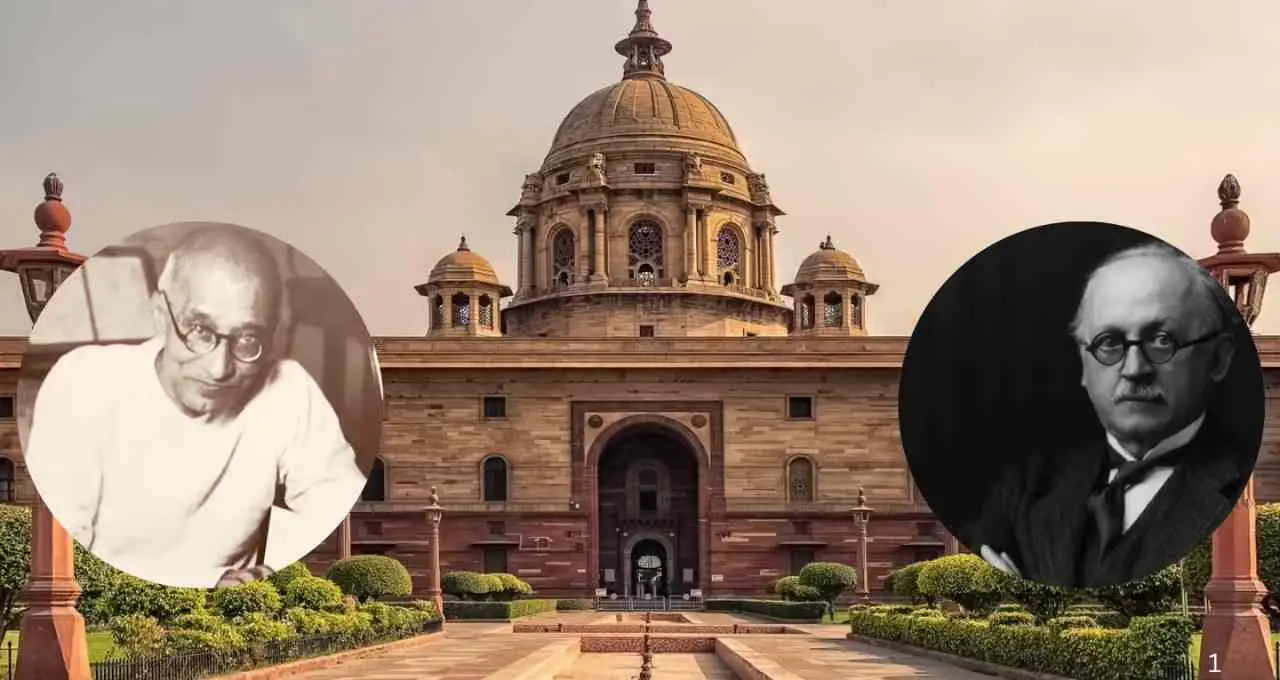
The President of India, Droupadi Murmu, on Monday unveiled a statue of C. Rajagopalachari at Rashtrapati Bhavan in the national capital during the ‘Rajaji Utsav’, replacing the statue of British architect Edwin Lutyens.
The event was held at Rashtrapati Bhavan in New Delhi. The statue of C. Rajagopalachari, also known as Rajaji, has been installed in place of the statue of Edwin Lutyens.


Prime Minister Narendra Modi described the initiative as an “adbhut pahal” in a post on social media platform X related to Rashtrapati Bhavan. He stated that ‘Rajaji Utsav’ is an inspiring effort to highlight Rajaji’s multifaceted contributions to nation-building. The Prime Minister urged citizens to participate in the celebration and draw inspiration from Rajaji’s life.
Earlier, on February 22, during his radio programme Mann Ki Baat, the Prime Minister said that India is moving beyond a colonial mindset and colonial symbols and is honouring its cultural roots and national heroes.
In his remarks, he referred to the ‘Panch Pran’ pledges announced during the ‘Azadi Ka Amrit Mahotsav’, stating that one of the key pledges is freedom from a colonial mindset. The change at Rashtrapati Bhavan was described as a step in that direction.
C. Rajagopalachari was the first and only Indian Governor-General of independent India and served in the position from 1948 to 1950. He was a freedom fighter, thinker, lawyer and writer. He played an active role in the Indian national movement and later advocated for good governance and ethical politics in independent India. His public life was marked by restraint and independent thought. He regarded public office as a means of service rather than privilege.
Edwin Lutyens was the architect of New Delhi during the British period and designed several prominent buildings, including Rashtrapati Bhavan, formerly known as Viceroy’s House.