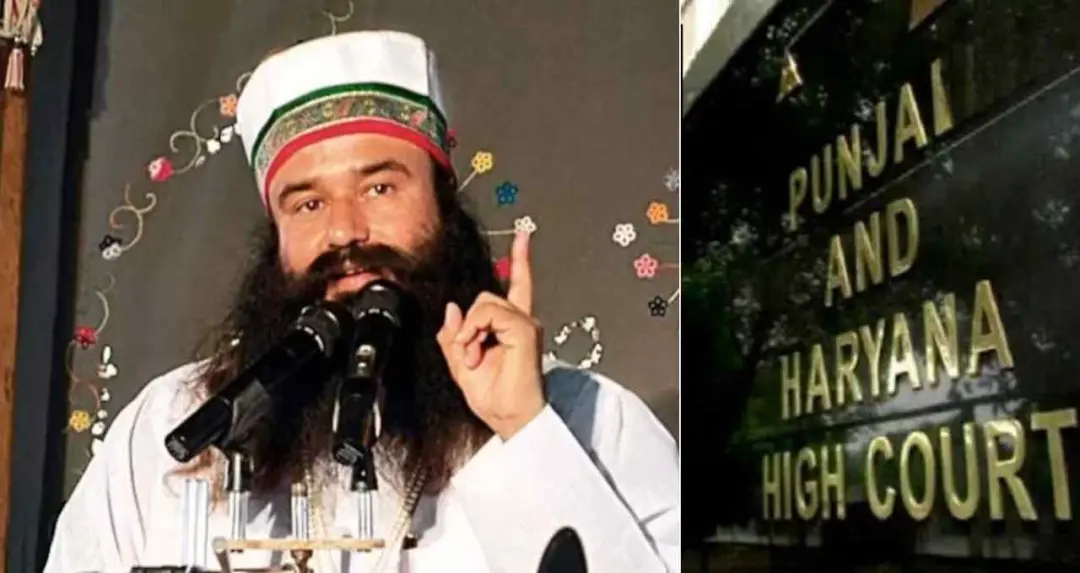
The Punjab and Haryana High Court has acquitted Dera Sacha Sauda chief Gurmeet Ram Rahim Singh in the 24-year-old murder case of journalist Ram Chander Chhatrapati, stating that the evidence presented was insufficient to prove the charges beyond reasonable doubt. The court, however, upheld the life sentences of three other convicts in the case.
The Punjab and Haryana High Court delivered its judgment on appeals filed by the accused against the earlier decision of a Central Bureau of Investigation (CBI) special court. In its ruling, the High Court partially modified the earlier judgment and acquitted Gurmeet Ram Rahim Singh.
The court stated that the evidence placed on record by the prosecution was not b enough to establish his role in a criminal conspiracy beyond reasonable doubt. It noted that in criminal cases, charges must be supported by concrete and reliable evidence.
During the hearing, the court examined all documents on record, witness testimonies, and circumstantial evidence in detail. After reviewing the material, the court concluded that the evidence presented against Gurmeet Ram Rahim Singh was insufficient and granted him the benefit of doubt, leading to his acquittal.




The High Court upheld the life imprisonment sentences of three other convicts in the case—Kuldeep, Nirmal, and Krishan Lal.
The court stated that the evidence and testimonies presented against these three accused clearly established their involvement in the crime. On that basis, the court affirmed their convictions and ordered that their life sentences remain unchanged.
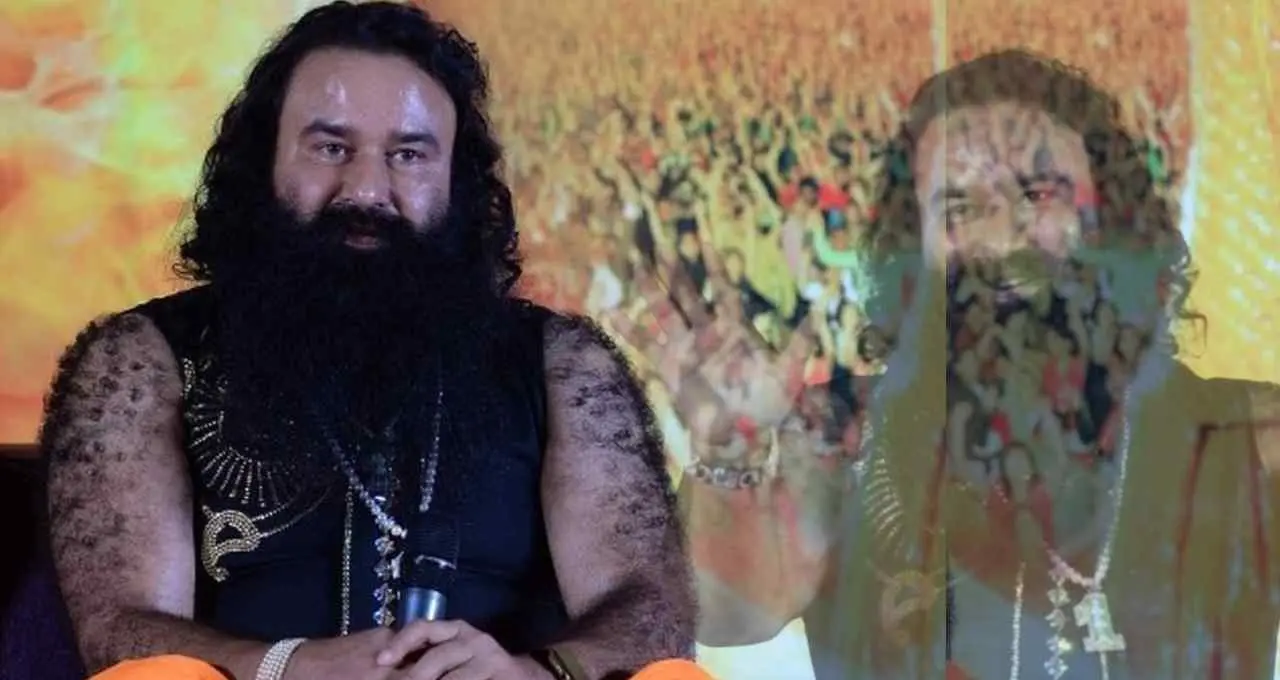
The case relates to the killing of journalist Ram Chander Chhatrapati in 2002. Chhatrapati was the editor of a local newspaper and had published reports containing allegations related to the Dera Sacha Sauda.
Shortly after the publication of those reports, he was shot. He later died after sustaining serious injuries. The incident drew widespread attention in the region and triggered protests and extensive public discussion.
Following the killing of the journalist, the case received national attention and demands were raised for an impartial investigation.
Considering the seriousness of the case, the investigation was later handed over to the Central Bureau of Investigation.
After conducting a prolonged investigation, the CBI filed charges against several accused. The case was then tried in a CBI special court, where hearings and witness examinations continued for several years.
The special court eventually convicted Gurmeet Ram Rahim Singh along with other accused and sentenced them to life imprisonment.
All the convicted individuals subsequently filed appeals in the Punjab and Haryana High Court challenging the special court’s verdict. The High Court delivered its judgment after hearing those appeals.
During the hearings in the High Court, both the defence and the CBI presented detailed arguments.
The defence argued that there was no direct and concrete evidence against Gurmeet Ram Rahim Singh. The CBI, on the other hand, cited witness statements and circumstantial evidence in support of the prosecution’s case.
After hearing the arguments of both sides and examining the entire case record, the court concluded that the evidence presented against Gurmeet Ram Rahim Singh was not sufficient to prove his role in the criminal conspiracy beyond reasonable doubt.