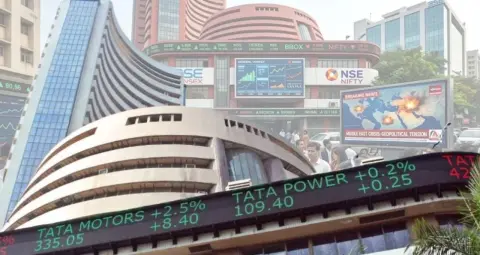
Domestic equity markets recorded a sharp decline on Tuesday amid broad-based selling pressure. The BSE Sensex fell 1,456 points to close at 74,559, while the Nifty 50 declined 436 points to settle at 23,379.
Selling pressure persisted throughout the trading session, resulting in losses across sectors. IT, metal and banking stocks witnessed significant declines, contributing to the broader market weakness.




The decline was driven primarily by a sharp rise in crude oil prices in international markets. Brent crude crossed the $107 per barrel mark. India imports a substantial portion of its energy requirements, and higher oil prices have raised concerns over inflationary pressures and the impact on corporate costs. Investors are concerned that rising crude prices could affect corporate profitability in the coming period.
IT stocks recorded the steepest losses during the session, with the Nifty IT Index declining nearly 3.7%. Investor concerns increased over rising competition from artificial intelligence and emerging technology companies. Declines in shares of Tata Consultancy Services, Infosys and other major IT companies added pressure on the broader market.

Recent macroeconomic indicators and uncertainty surrounding government policies also weighed on market sentiment. Questions over consumption and demand trends in certain sectors affected investor confidence. According to market experts, volatility in global and domestic policy signals is weakening market sentiment.
The Indian rupee also remained under pressure. The rupee weakened by 35 paise against the US dollar to hit a record low of 95.63. The weaker currency increased concerns among foreign institutional investors, accelerating capital outflows. Currency weakness also affected import-dependent companies and overall market sentiment.
Investors are now awaiting upcoming inflation data. Market participants fear that rising oil prices could further increase inflation in the coming months. Higher inflation could raise the possibility of changes in interest rates again, potentially affecting the pace of economic growth.