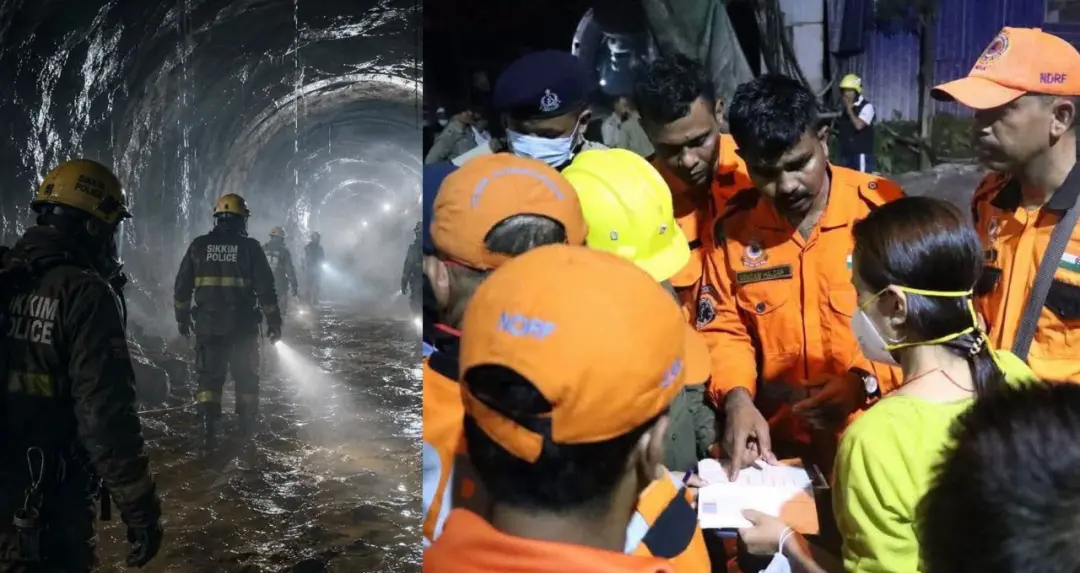
A landslide inside the under-construction tunnel of the Teesta Stage VI Hydroelectric Project in Sikkim's Namchi district has left 25 workers trapped, creating a major rescue operation. Authorities have recovered the bodies of 20 workers, while five workers remain trapped inside the tunnel. National and state rescue teams are continuing relief operations, although heavy debris and the presence of methane gas have made the mission extremely challenging.
According to officials, the incident occurred at around 3:40 p.m. on Monday when a sudden landslide filled a section of the tunnel with large quantities of rock and soil, preventing several workers inside from escaping.
The accident occurred in the Adit-3 tunnel, which is part of the Teesta Stage VI Hydroelectric Project being developed in the Samardung-Zholungay area of Namchi district. The tunnel was under construction by private construction company Patel Engineering.
Officials said the affected portion is located in the Face-4B section of the tunnel, where the landslide deposited large volumes of rock and earth, completely blocking access. Authorities have also expressed concern about the accumulation of methane gas in the affected section.
Officials said the presence of methane gas has emerged as the biggest obstacle during the rescue operation. According to experts, methane is not inherently toxic, but in confined spaces it rapidly reduces oxygen levels, increasing the risk of suffocation, unconsciousness and severe breathing difficulties.



Several rescue personnel reportedly lost consciousness due to oxygen depletion while entering the tunnel, following which the operation was continued with additional safety measures. The administration has arranged continuous fresh air circulation inside the tunnel through blast-proof blowers and specialized ventilation pipes to reduce the impact of the gas.
According to officials, the five workers who have not yet been reached are trapped about 1.5 kilometres from the tunnel entrance. Rescue teams are continuously clearing debris to create an access route, but progress remains slow because of the unstable condition of the tunnel.
Specialized rescue teams comprising eight members each are being deployed inside the tunnel in rotation. Every rescuer enters using an oxygen cylinder, but each cylinder provides oxygen for only about 40 minutes, requiring teams to return before the supply is exhausted and affecting the pace of the operation.
Authorities are using modern equipment to clear the debris accumulated inside the tunnel. Small loaders, robotic machines and specialized excavation equipment are being deployed to reopen the blocked passage.
Shotcrete and rock-bolting techniques are also being used to stabilize the tunnel roof and reduce the risk of further rockfalls. Experts are continuously assessing the structural condition of the tunnel during the operation.
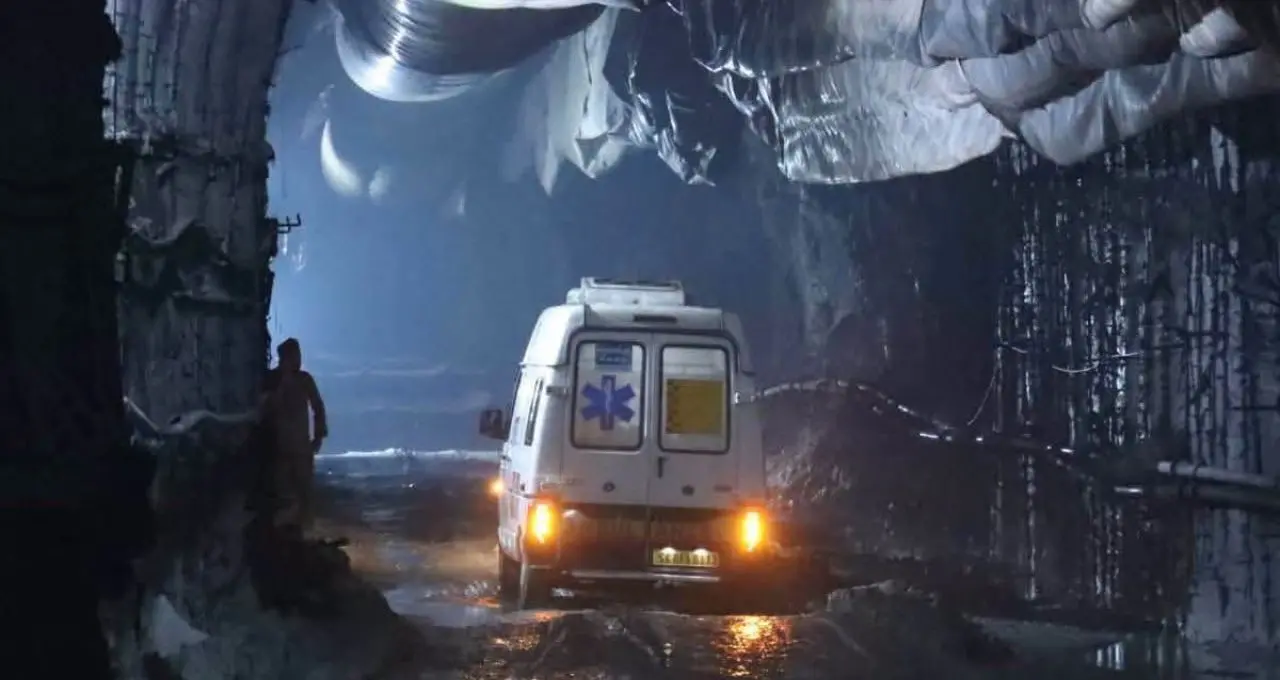
The landslide deposited large amounts of debris near the tunnel entrance, making access difficult for rescue teams. Authorities said most sections of the tunnel are considered safe, but the affected area remains highly challenging because of low oxygen levels, methane gas and continuing debris falls.
Rescue agencies are continuing efforts to reach the trapped workers, but officials have not provided any timeline for completing the operation
Geotechnical and mining experts said methane is a colourless and odourless gas. When it accumulates in enclosed spaces, oxygen levels can decline rapidly. Prolonged exposure to such conditions can cause unconsciousness, and delayed access to oxygen can become life-threatening.
Experts also said methane can increase the risk of an explosion if it comes into contact with a spark or fire. As a result, all machinery and equipment inside the tunnel are being operated with extreme caution.
Experts said tunnel rescue operations are considerably more complex than conventional disaster response because of confined spaces, limited visibility, falling debris, gas leaks and reduced oxygen levels. They said rescue teams must proceed in phases while adhering to safety protocols at every stage, as any haste could endanger rescuers as well.
The incident has raised questions regarding safety standards at construction projects. Experts said tunnels being constructed in mountainous regions require continuous assessment of geological risks and effective gas monitoring systems.
The administration has initiated an investigation into the cause of the incident. The inquiry will examine the circumstances that led to the landslide and determine whether all required safety protocols were being followed at the construction site.
The primary objective of the ongoing operation remains reaching the five workers still trapped inside the tunnel. Rescue agencies are continuing the mission with the support of modern technology and technical experts.