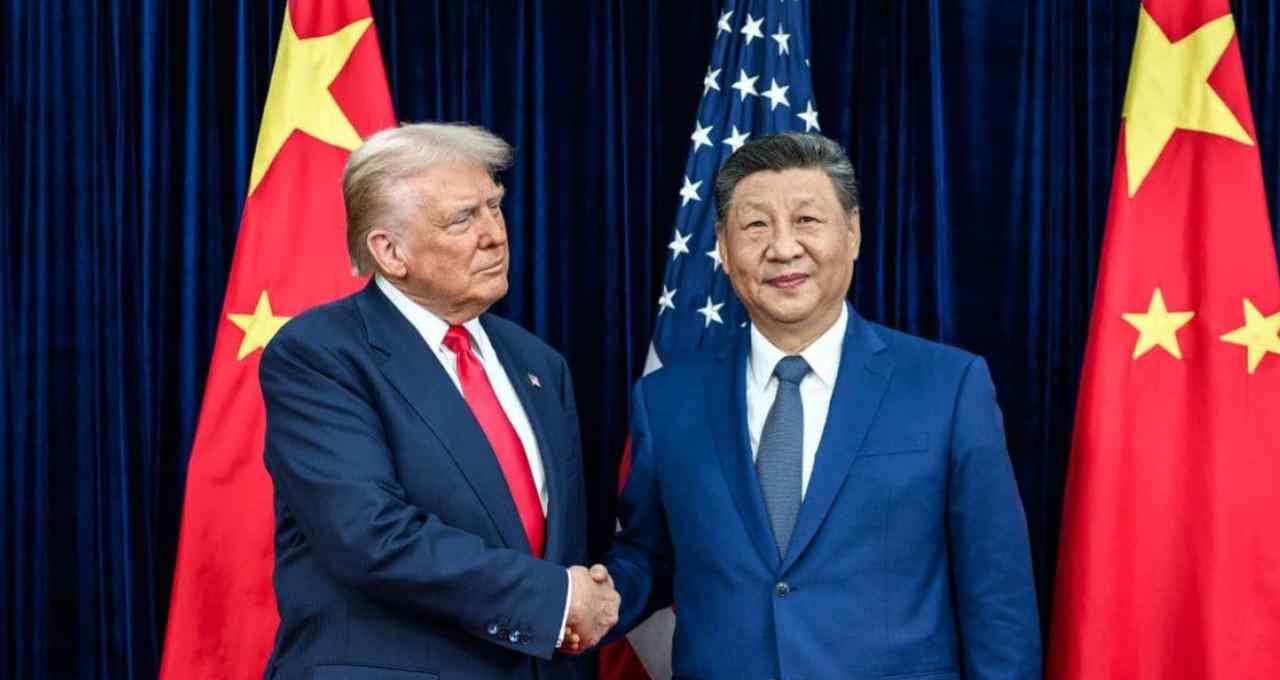
A new warmth was observed in the relations between the United States and China following a phone conversation between US President Donald Trump and Chinese President Xi Jinping. Trump confirmed a visit to Beijing in April, and the two leaders discussed trade, Taiwan, and security issues.
World Update: A phone call between US President Donald Trump and Chinese President Xi Jinping has added a new dimension to the relations between the two countries. Following this conversation, Trump claimed that US relations with China are “very b” and confirmed his visit to Beijing in April. This discussion between the two leaders was the first high-level talk since the resolution of the tariff dispute, covering several sensitive issues.
Confirmation of Beijing Visit in April

Trump stated that he would travel to Beijing in April and extended an invitation to Xi Jinping for a state visit to the US next year. This initiative is considered a significant step towards re-establishing dialogue between the two nations. Trump wrote on social media that his relations with China are “very b” and that there is continuous progress in maintaining the agreements between the two countries.
Discussions on Trade and Agricultural Purchases
Describing the phone call as “very good,” Trump said that discussions included increasing China's purchase of US soybeans and other agricultural products. Additionally, they talked about issues such as reducing the flow of illegal fentanyl. Trump also reiterated that both countries could move forward by focusing on the bigger picture.
China's Clear Stance on the Taiwan Issue
According to the Chinese Foreign Ministry, during the conversation, Xi Jinping told Trump that Taiwan's return to mainland China is an essential part of the international order established after the war. This statement comes at a time when Japanese Prime Minister Sanae Takaichi recently stated that if China takes any action against Taiwan, the Japanese military could also get involved. Taiwan is a self-governing island that Beijing considers part of China.
US Position on Taiwan
Following Japan's recent statement, Beijing criticized it, and relations between the two countries deteriorated further. On the other hand, the US has not taken a clear stance on Taiwan's sovereignty but opposes the use of force against Taiwan. According to US law, the US is obligated to provide arms for Taiwan's security.
Trump has maintained strategic ambiguity regarding the Taiwan issue, specifically whether he would send US troops in a state of war. His administration has advised Taiwan to increase its defense budget. This month, Taiwan's Ministry of Foreign Affairs stated that it received official notification from the Trump administration approving the sale of USD 330 million worth of fighter jet parts. Beijing immediately opposed this move, stating that it is a serious violation of the One-China principle.
The Ukraine crisis was also included in the discussions between the two leaders. According to the Chinese side, Xi stated that the solution to this crisis should address its root causes. This issue is geopolitically significant for both the US and China, especially considering China's relations with Russia and the stance of Western countries.