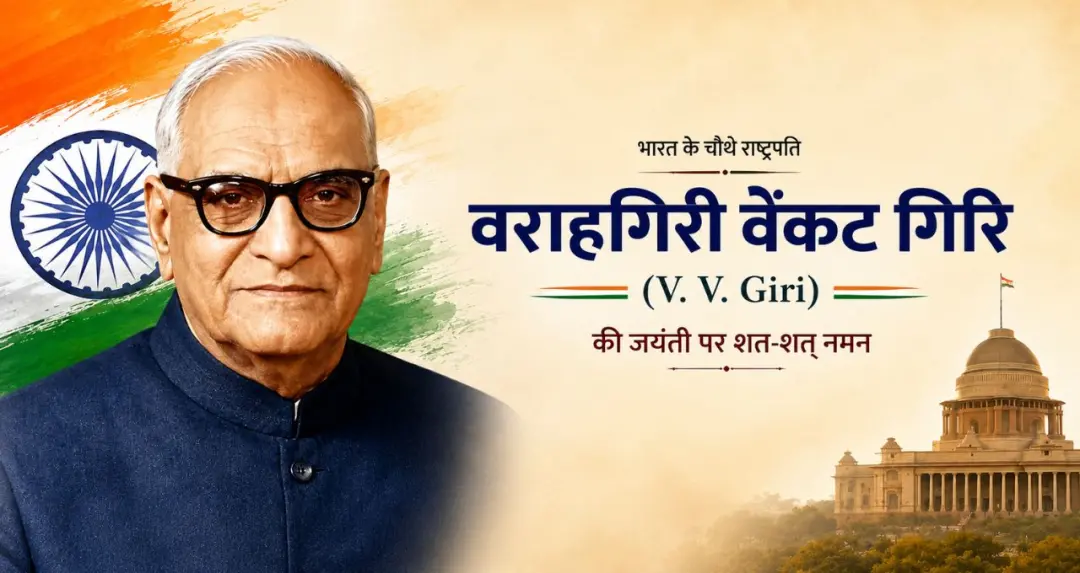
Varahagiri Venkata Giri, popularly known as V. V. Giri, was one of the political figures who played an important role from India’s freedom movement to the building of democratic India. He participated in the struggle against British rule and contributed to workers’ rights and the trade union movement. He later became the fourth President of India. On his birth anniversary, his life, struggle and contributions are being remembered.
Varahagiri Venkata Giri was born on 10 August 1894 in Berhampur in the then Madras Presidency, which is now located in Odisha’s Ganjam district. His family was socially and politically aware, and he developed a sense of responsibility towards the country and society from an early age.
After receiving his early education in India, Giri went to Ireland for higher studies. He studied law at University College Dublin. During this period, he came into contact with ideas and activities associated with the Irish independence movement. The struggle for independence in Ireland deeply influenced his political thinking.
After returning to India, he began taking an active role in public life alongside practising law. His focus was particularly on the rights of workers and ordinary people.
V. V. Giri’s political career was closely linked to the Indian freedom movement. Influenced by the national movement led by Mahatma Gandhi, he actively participated in the struggle against British rule.
He played a role in the Non-Cooperation Movement and various stages of the freedom struggle. He was also imprisoned for raising his voice against the policies of the British government. He viewed the freedom movement as being connected not only with political independence but also with social and economic justice.
He believed that independence would be meaningful only when workers and ordinary citizens also received a dignified life and their rights. This thinking later became the basis of his association with the workers’ movement.

V. V. Giri was also recognised as one of India’s prominent labour leaders. He worked for workers’ rights, better working conditions and fair wages over a long period. He became associated with the trade union movement and played an important role in organising workers.
He emphasised advancing dialogue between workers and the government through democratic means. Negotiation, compromise and collective bargaining held an important place in his approach to industrial relations.
His contribution to the development of workers’ rights and the trade union movement in India is particularly remembered. He was consequently counted among the prominent figures of India’s labour movement.
V. V. Giri had become active in public and political life even before independence. He later joined the Indian National Congress and held important responsibilities in Indian politics after independence.
After independence, he served in various constitutional and political positions at the Centre and in the states. He had a deep understanding of labour-related issues, which earned him particular respect in public life.
He also served as the Union Labour Minister. In addition, he was India’s High Commissioner to Sri Lanka. His administrative experience and political understanding later made him a b candidate for constitutional positions.
V. V. Giri served as the Governor of several states, including Uttar Pradesh, Kerala and Mysore. As Governor, he performed his role in accordance with the constitutional framework.
He subsequently became India’s third Vice-President. He served as Vice-President from 1967 to 1969. During this period, Indian politics was changing rapidly and several important developments were taking place in national politics.
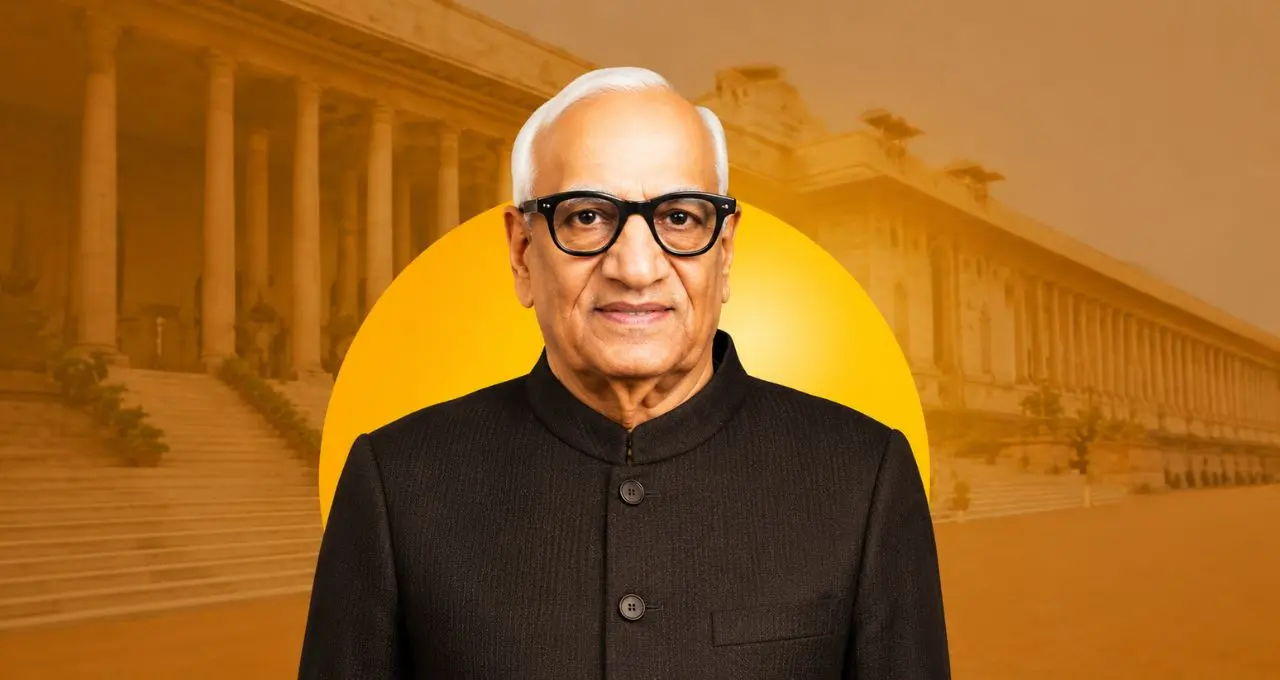
As Vice-President, he also served as the Chairman of the Rajya Sabha. He played an important role in conducting parliamentary proceedings.
The most important phase of V. V. Giri’s political career came in 1969, when he was elected the fourth President of India. His presidential election was among the most discussed elections in Indian politics.
He contested the presidential election as an independent candidate and received the support of then Prime Minister Indira Gandhi. He defeated Neelam Sanjiva Reddy in the presidential election.
On 24 August 1969, V. V. Giri took oath as President of India. His term continued until 24 August 1974. As President, he discharged his constitutional responsibilities during a period of changing political circumstances in the country.
V. V. Giri’s presidential tenure coincided with an important period in Indian politics. In 1969, a major political division took place within the Congress. Following this, political power equations in the country changed rapidly.
At the same time, issues such as the nationalisation of banks and privy purses of former princely states remained at the centre of national politics. As President, Giri had to perform his role amid several constitutional and political circumstances.
His tenure witnessed a period of Indian democracy when constitutional relations between the Prime Minister and the President were also the subject of extensive discussion.
In recognition of his contribution to the country, the Government of India awarded V. V. Giri the Bharat Ratna, India’s highest civilian honour, in 1975. The honour was conferred on him after his retirement from the presidency.
The Bharat Ratna recognised at the national level his long contribution to the freedom movement, workers’ interests and public life.
V. V. Giri’s life reflects several important aspects of Indian democracy. He participated in the freedom movement, worked for workers’ rights, held various responsibilities in politics and administration, and ultimately became President of India.
He is remembered among the leaders who emphasised the need for social and economic justice alongside political independence. His contribution to the working class continues to hold a place in the history of India’s labour movement.
V. V. Giri’s birth anniversary is observed on 10 August. On the occasion, his contributions to the freedom struggle, workers’ rights and the constitutional development of the country are remembered.
During his long public life, V. V. Giri held several important roles. His journey as a freedom fighter, labour leader, politician, Governor, Vice-President and President holds a special place in Indian history.