

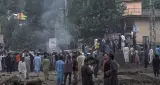
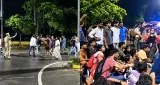
Violent clashes between police and protesters in Pakistan-administered Kashmir on Sunday left at least 11 people dead and more than 70 injured, significantly escalating tensions in the region. The violence occurred in Rawalakot and surrounding areas, according to international news agencies and local media reports.
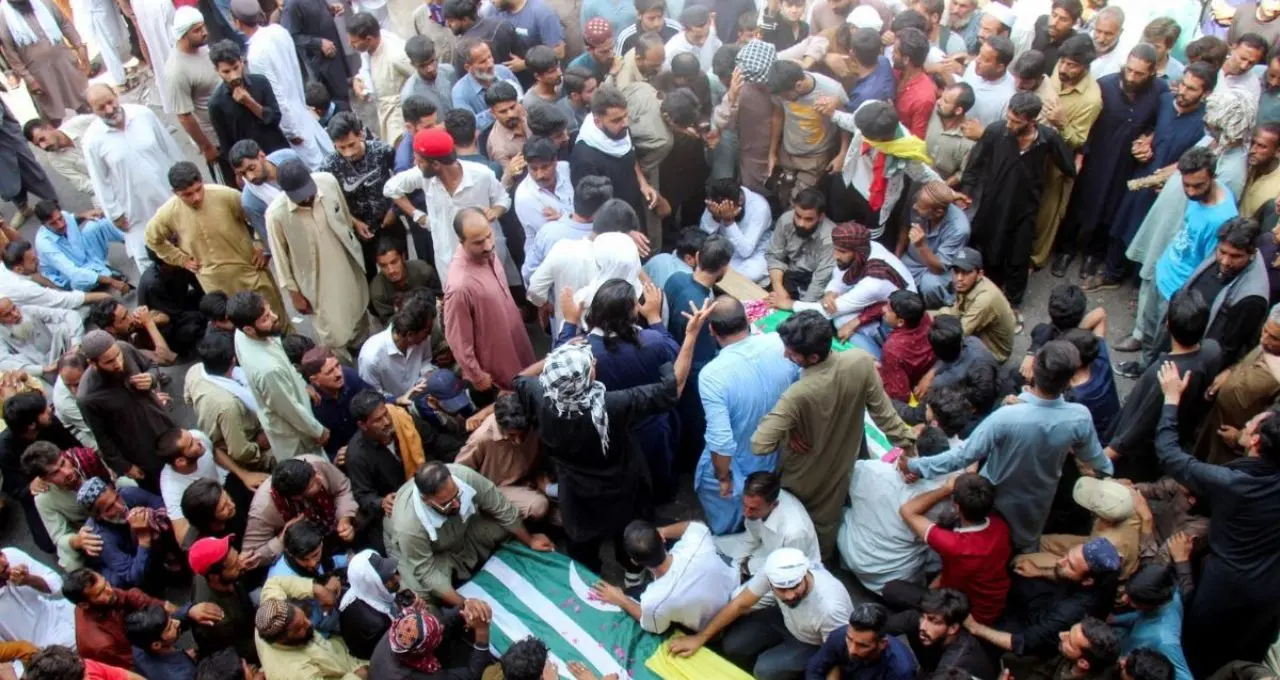
Those killed included seven civilians and four police personnel. The clashes triggered heightened security measures across the region, while protests and demonstrations continued in several locations.
According to reports, the violence erupted when activists of the Joint Awami Action Committee (JAAC) gathered outside a hospital in Rawalakot to protest the death of one of their members. The individual was reportedly killed during a police operation, prompting anger among the group's supporters.
Tensions between protesters and police intensified during the demonstration and eventually escalated into a confrontation. Reports indicated incidents of gunfire and stone-pelting during the clashes.
Local authorities alleged that protesters used weapons during the violence, while protesters claimed that police opened fire first, leading to the deterioration of the situation.
According to the Commissioner's Office, 11 deaths have been confirmed. The casualties included four police personnel, seven civilians and a passerby. Approximately 70 people were injured, including 23 security personnel and around 50 protesters.

The injured were admitted to local hospitals, where several were reported to be in serious condition. Authorities placed emergency services on alert and expanded medical facilities to handle the situation.
Following the violence, police intensified operations and arrested around 30 people. Security forces also launched search operations in several areas in an effort to restore order.
Authorities deployed additional security personnel in sensitive locations and appealed for calm. Reports also indicated temporary restrictions on internet services and public movement in several areas.
The dispute is centered on 12 reserved seats in the Pakistan-administered Kashmir Legislative Assembly. The seats are allocated to people displaced from Jammu and Kashmir who later settled in other parts of Pakistan, including those displaced during the wars of 1947, 1965 and 1971.
The Joint Awami Action Committee argues that the reserved seats adversely affect the political representation of the local population. The organization claims that the arrangement benefits only a limited number of families and groups while weakening the voice of local residents.
JAAC has been demanding the abolition of the reserved seats and has been conducting protests over the issue for an extended period.
Tensions increased further after the Pakistan-administered Kashmir government banned JAAC on June 5 under anti-terrorism legislation. The government cited public order and security concerns as the basis for the decision.
Following the ban, police launched operations against the organization's supporters and carried out multiple arrests. The resulting protests intensified and subsequently turned violent.
Local authorities stated that most of JAAC's 38 demands had already been accepted, but the organization had not agreed to end its movement.
According to local officials, protesters attacked security forces with shotguns and other weapons during the clashes, prompting a police response.
Protester groups, however, alleged that police used excessive force, resulting in the deaths of several innocent people.
The confrontation has developed into a broader political and security crisis, with demands emerging for an investigation into the violence.
Legislative Assembly elections are scheduled to be held in Pakistan-administered Kashmir on July 27. Of the assembly's 53 seats, 45 are filled through direct elections, while eight are reserved for women, technical experts and religious scholars.
The current violence and political tensions have affected the electoral environment, with security concerns raising questions about the conduct of the election process.
Politics in Pakistan-administered Kashmir has remained unstable in recent years. In the 2021 elections, the Pakistan Tehreek-e-Insaf (PTI) secured a majority, but subsequent political changes in Pakistan also affected the region.
Several changes in the office of prime minister followed, and political alignments continued to shift. In recent months, leadership associated with the Pakistan Peoples Party (PPP) assumed administrative responsibilities, although political tensions have persisted.


