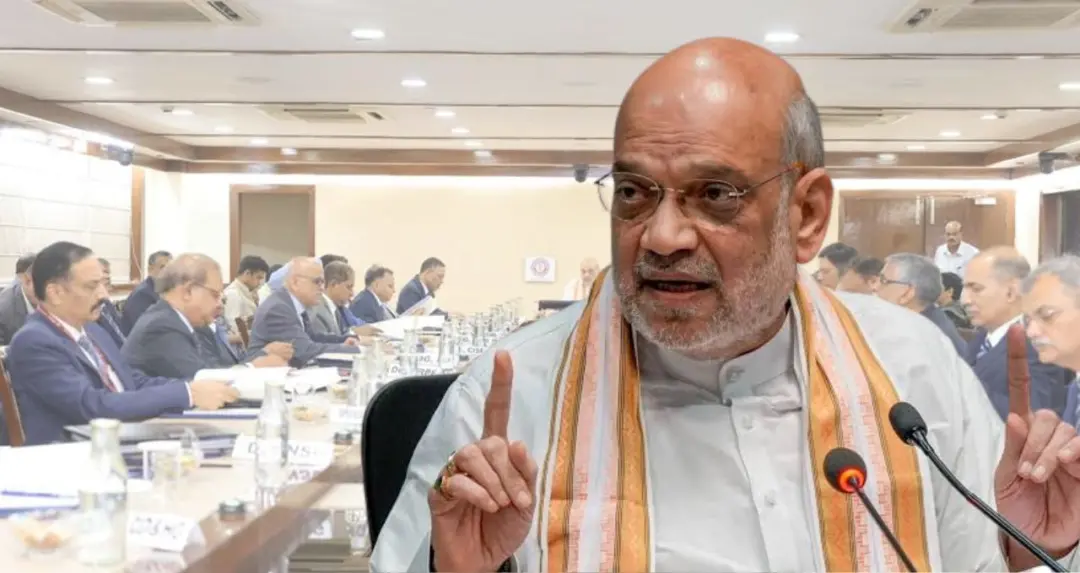
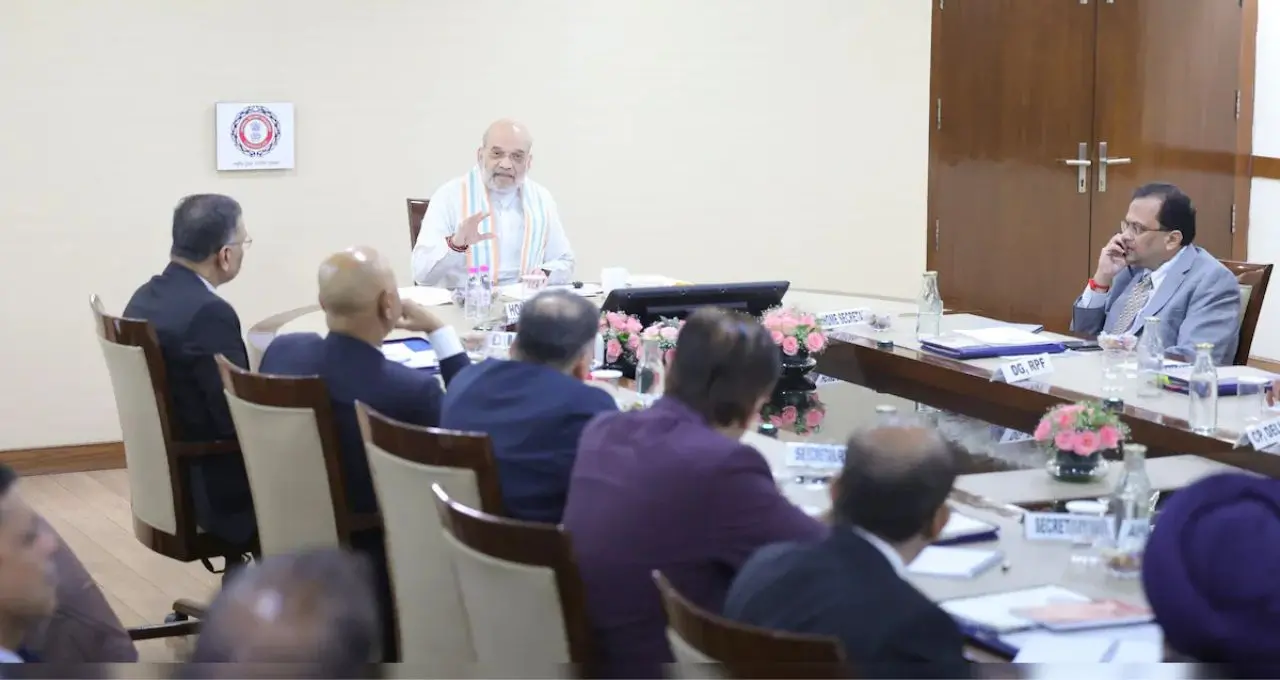
Union Home and Cooperation Minister Amit Shah inaugurated the 9th two-day National Security Strategy Conference 2026 in New Delhi. Held in hybrid format, the conference brought together more than 850 security and police officers from across the country.
The first day of the conference focused on strategies to counter terrorism, along with the exchange and effective analysis of intelligence among different agencies. Amit Shah emphasised the AI-based analysis of information available with the Multi Agency Centre (MAC) and directed the preparation of better and more effective Standard Operating Procedures (SOPs) for national security challenges.
The conference also discussed the use of technology and improved coordination among security agencies in response to changing security challenges facing India.



Discussions were held on making investigations into cases registered under the Unlawful Activities (Prevention) Act (UAPA) more effective. The meeting emphasised an integrated investigation system with better coordination among different agencies.
The need to strengthen legal and institutional processes to bring back accused persons and criminals who have fled the country was also discussed. Officials considered the effective use of the legal provision of ‘trial in absentia’, or conducting a trial in the absence of the accused, in serious cases.
Illegal infiltration and cross-border activities were identified as important national security issues. The Home Minister directed the concerned agencies to take strict and coordinated measures to address the challenge.
The meeting also emphasised that better coordination between central and state-level security agencies can enable more effective action against infiltration and organised crime networks.
The first day's discussions also covered Pakistan-supported proxy war and related security threats. Officials discussed strategies to address the rapidly growing threat of cybercrime and methods to counter crimes carried out through digital platforms.
Drug trafficking and its potential links with organised crime and security networks were also discussed. The need to understand the growing links between terrorism, organised crime and digital threats in the context of national security was emphasised.
The second day of the conference is expected to focus on future security challenges. Discussions will include drones and sub-aerial systems, security of the blue economy linked to maritime and coastal areas, information warfare and biosecurity.
The increasing use of drone technology has created new challenges for security agencies. Growing activities in information warfare and cyberspace have also made strengthening technological capabilities important for the national security strategy.
Amit Shah has also recently outlined the government's policy on action against terrorism. Referring to a security operation, he had said that comprehensive action was taken against the alleged ISI-backed ‘Shehzad Bhatti network’ and several of its members were arrested.
According to the Home Minister, security forces conducted coordinated operations across several states against the network. The government has repeatedly stated that its policy towards terrorism is ‘zero tolerance’.