Cortical Labs, an Australian biotechnology company, is developing biological data centres powered by human brain cells. The company has introduced its first biological data centre in Melbourne and plans to establish a similar facility in Singapore using CL1 biological computer units.
Cortical Labs has initiated the development of data centres that operate using human brain cells instead of conventional computing processors. The company has presented its first biological data centre in Melbourne and is planning to develop another facility in Singapore.
These facilities will use CL1 biological computer units designed by the company. The units operate with neurons developed from stem cells and are intended to provide an alternative form of computing with lower energy consumption amid increasing artificial intelligence computing requirements.




The Melbourne biological data centre is planned to install around 120 CL1 units. The data centre proposed in Singapore may install approximately 1,000 units in phases.
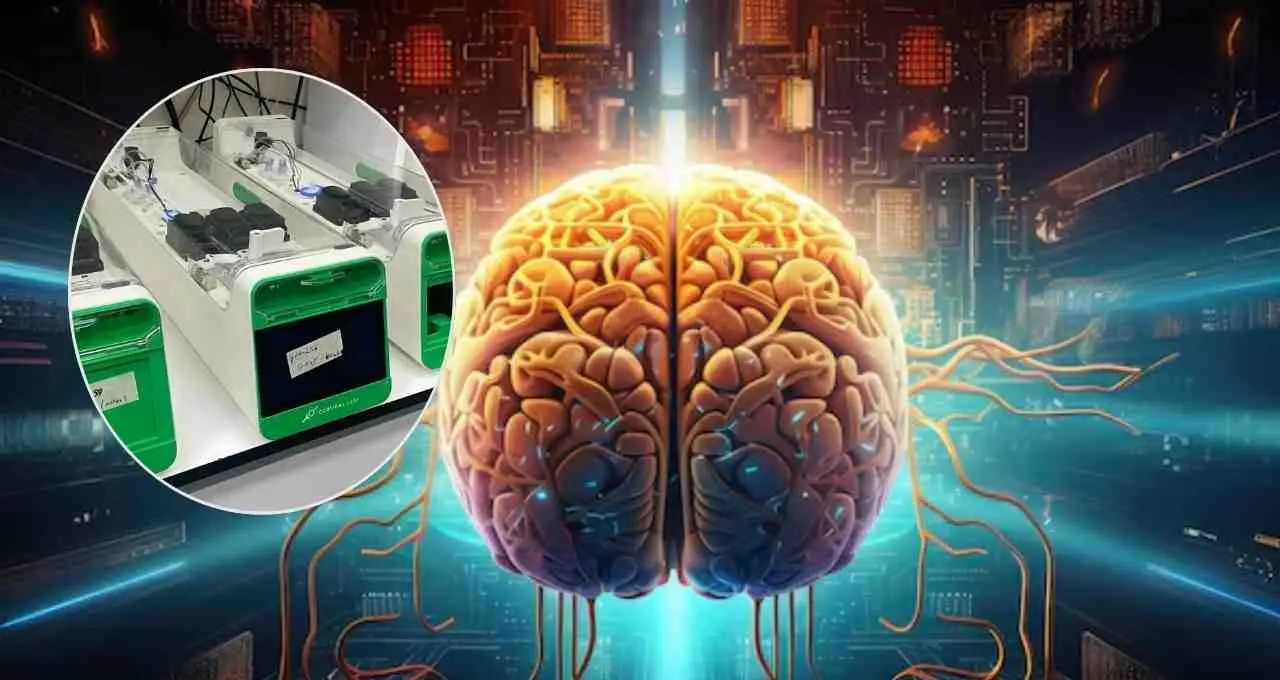
Under this technology, biological computing units replace traditional servers and processors. Cortical Labs has developed a specialised unit named CL1 that operates using neurons derived from human brain cells.
These units will be installed in data centres where they will perform computing tasks using biological processing systems.
The neurons used in these biological computers are developed from stem cells. After development, they are placed on a specialised microchip that sends electrical signals to the cells and records their responses.
Software communicates with the neurons through this process and reads their responses as computing outputs. Researchers are using this approach to apply the natural processing capabilities of human brain cells to data processing and computing systems.
The expansion of artificial intelligence technologies has led to the rapid construction of new data centres globally, raising concerns about electricity consumption and environmental impact.
According to the company, CL1 units use extremely low levels of energy. Their electricity consumption may be lower than that of a standard handheld calculator. The technology is being developed as a potential option for energy-efficient data centre computing.