The announcement of the India–United States trade agreement has been accompanied by a Bloomberg report that has drawn attention in diplomatic circles. The report refers to the firm position taken by India’s National Security Adviser Ajit Doval during the negotiations and states that India made it clear it would not take decisions under pressure.
Following prolonged negotiations, India and the United States formally announced the trade agreement, with the announcement made publicly by US President Donald Trump and Prime Minister Narendra Modi. Amid the announcement, the Bloomberg report detailed aspects of the negotiations that preceded the deal.
According to the Bloomberg report, the talks between India and the United States on the trade agreement were not straightforward. The report claims that NSA Ajit Doval conveyed a clear message to the US side that India would not agree to a deal under pressure. It further stated that India was prepared to wait until the end of Donald Trump’s term if the trade agreement did not materialise.


The report also stated that India had previously dealt with US administrations that adopted a tough or hostile approach towards India, and that the situation was not unprecedented for New Delhi.
Referring to an interaction held in September last year, the Bloomberg report said that NSA Ajit Doval met US Secretary of State Marco Rubio, during which positions on the trade agreement were discussed. During this meeting, Doval reiterated that India would not yield to pressure and indicated that India was not in a hurry to finalise a decision.
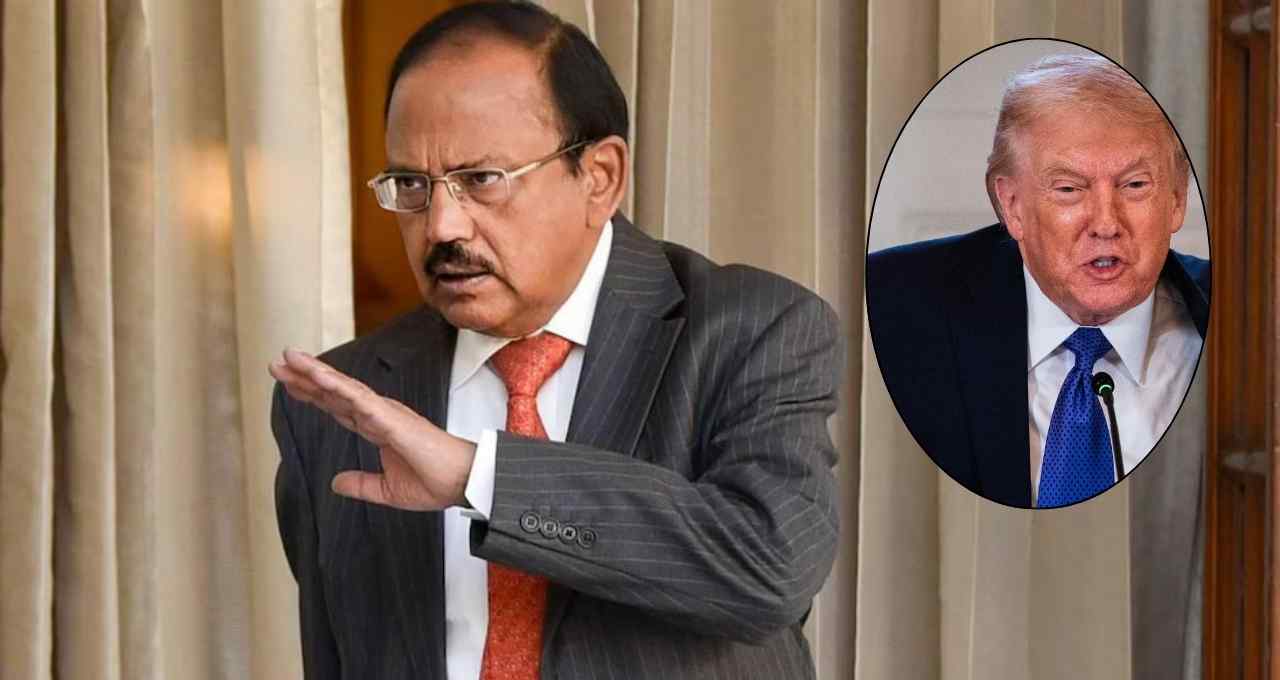
According to the report, the Indian government was prepared to wait until 2029, corresponding to the end of Donald Trump’s term, if required.
The report further claimed that NSA Ajit Doval conveyed to the US that India would enter into a trade agreement only on its own terms and in line with its interests. He was quoted as saying that India had previously worked with other hostile US administrations and viewed the current situation in a similar manner.
The Bloomberg report also stated that Doval urged the US Secretary of State to reduce public criticism of India by President Donald Trump and his associates. According to the report, Doval said that avoiding public statements was necessary if the two countries were to restore relations.
The report said India believed that repeated public criticism could have a negative impact on the trade agreement and bilateral relations, and therefore conveyed the need for restraint to the US side.
According to the report, India had clearly indicated that it could wait until 2029 if necessary and was prepared to move forward even without a trade agreement during that period.
While the trade agreement between India and the United States has now been announced, the Bloomberg report indicates that the negotiations leading up to it involved firm exchanges at the diplomatic level, with India maintaining its stated position.