A political controversy has intensified over reports of alleged construction activities by China in Jammu and Kashmir’s Shaksgam Valley, with the Congress describing the issue as a serious matter of national security.
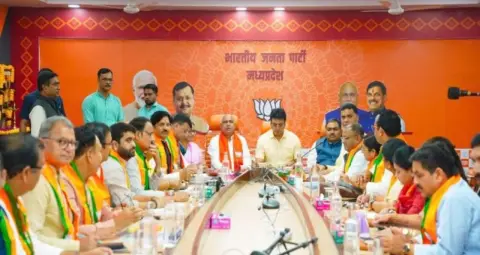
The debate escalated after information emerged about a meeting in New Delhi between senior Bharatiya Janata Party leaders and a high-level delegation of the Chinese Communist Party. The Congress alleged that while China is allegedly undertaking construction in Indian territory, the ruling party is simultaneously engaging in political dialogue with it, raising concerns related to national security.




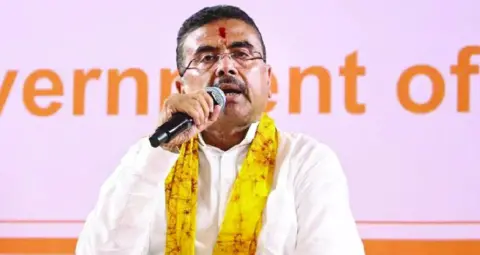
Congress leader Supriya Shrinate criticised the BJP over the development, stating that holding meetings with representatives of the Chinese Communist Party at a time when serious questions are being raised about India’s borders sends an inappropriate message. She alleged that the Centre’s silence was emboldening China and encouraging it to challenge India’s sovereignty. She said political discussions were taking place in the national capital while, on the ground, China was continuously strengthening its claims.
The Congress has alleged that China has begun projecting Jammu and Kashmir’s Shaksgam Valley as its own territory. In a social media post, Shrinate said construction activity was underway in the area under the China-Pakistan Economic Corridor. She questioned how China had reached the Shaksgam Valley after tensions in Ladakh, and said the activities were not merely construction but a strategy to challenge India’s territorial integrity. She warned that failure to adopt a firm stance in time could lead to serious consequences.
The Congress also questioned the timing of the BJP’s meeting with the CPC, stating that the boundary dispute had not been resolved. Shrinate said the sacrifice of Indian soldiers in the Galwan Valley remained fresh in public memory, and that engaging with China’s ruling party under such circumstances went against national sentiment. She also recalled that China had supported Pakistan during Operation Sindoor, which, she said, had further deepened India’s security concerns.
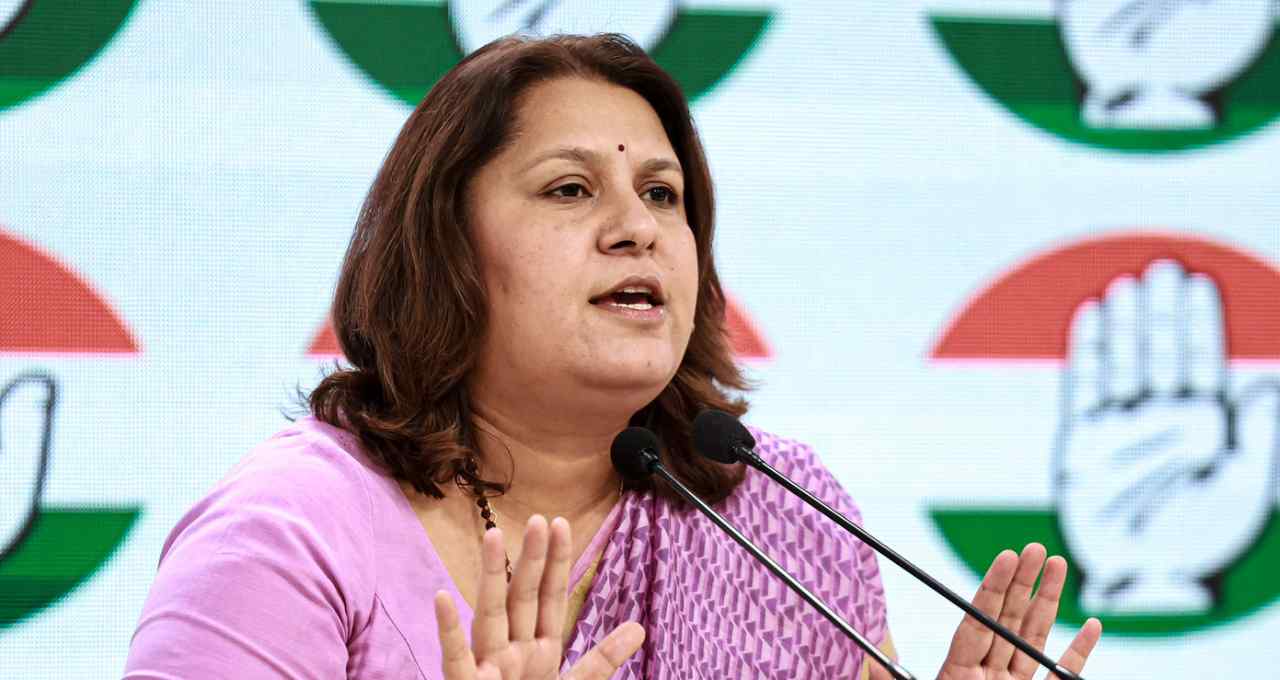
Referring to developments from Arunachal Pradesh to Shaksgam Valley, Shrinate said China was building villages in Arunachal Pradesh, maintaining military presence in Ladakh, and that construction activities were now being reported in Shaksgam Valley. In such a situation, she said, meetings between BJP leaders and the CPC raised several questions and constituted a matter linked to national security, on which the government should give clear answers.
Shrinate also targeted a section of the media, questioning why no difficult questions were being posed to the BJP over the meeting. She alleged that had a similar meeting been held by another party, it would have been made a major issue, and asked what kind of relationship existed between the BJP and China and whether there was any undisclosed understanding.
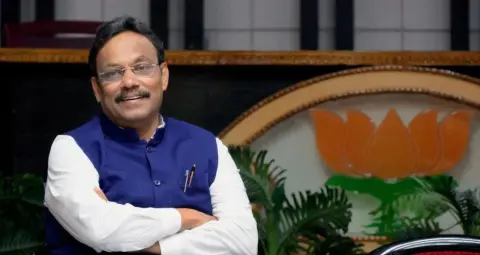
Responding to the controversy, the BJP said the interaction was a routine inter-party dialogue. Party foreign affairs department in-charge Vijay Chauthaiwale said the CPC delegation had visited the party headquarters. He said the delegation was led by HE Sun Haiyan, Vice Minister of the International Department of the CPC. According to Chauthaiwale, the purpose of the meeting was to further party-level dialogue between the two sides. He also said that China’s Ambassador to India, HE Xu Feihong, was present with the delegation.
Following the episode, older political disputes related to India-China relations have resurfaced. The BJP has previously accused the Congress of signing a memorandum of understanding with the CPC in 2008, alleging a compromise on national interest. The Congress has now turned the issue back on the BJP, questioning why such political engagements are taking place when China is exerting pressure along the border.