Delhi Chief Minister Rekha Gupta on Monday launched six new Continuous Ambient Air Quality Monitoring Stations (CAAQMS) and a 100-member ‘Vayu Rakshak’ initiative as part of measures to address air pollution in the national capital.
At an event held at the Delhi Secretariat, Gupta said efforts to tackle air pollution were not limited to the winter season but would continue throughout the year. Environment Minister Manjinder Singh Sirsa and senior officials of the Environment Department were present at the programme. The Chief Minister inaugurated the new monitoring stations online and flagged off the ‘Vayu Rakshak’ personnel for deployment.




Gupta said air pollution in the capital had reached serious levels due to the negligence of the previous government and stated that the Delhi government was committed to providing clean and breathable air to residents. She said PM10 and PM2.5 data were updated online every hour, while data for other parameters were made available to the public every five minutes, adding that this transparency would support policy decisions and pollution control measures in the city.
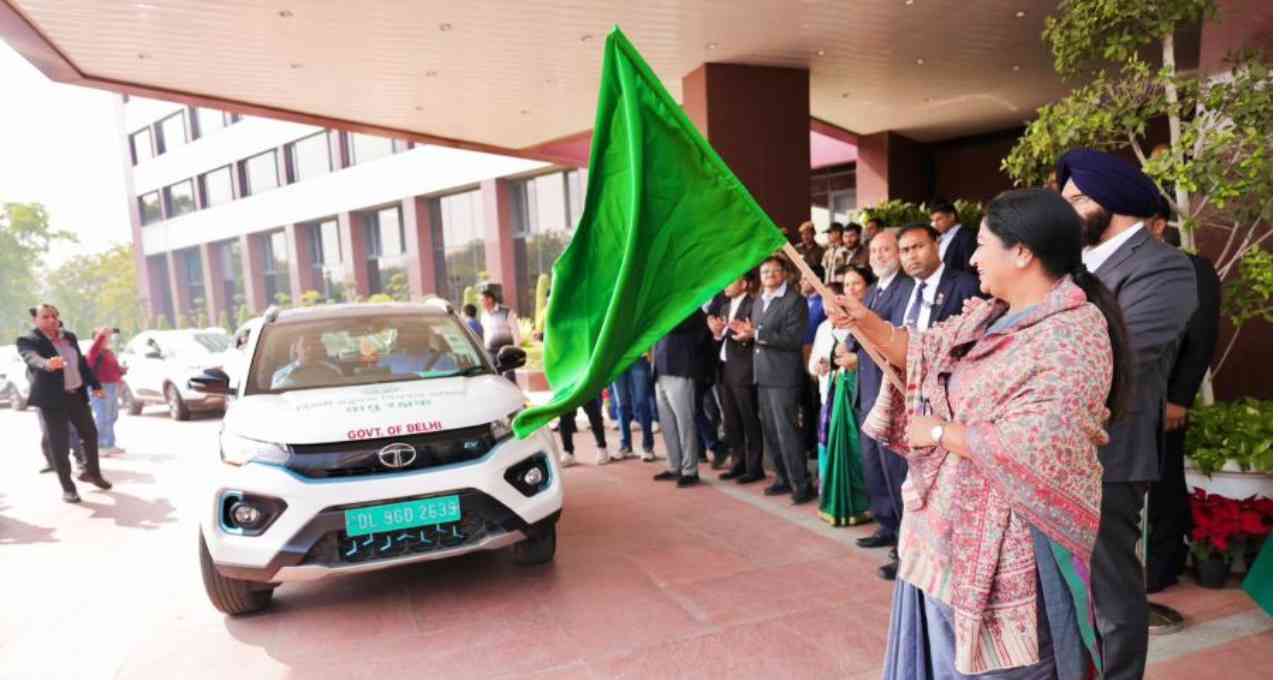
Referring to transport initiatives, Gupta mentioned the Delhi Transport Corporation’s fleet of 4,000 electric buses and a plan to induct 14,000 clean fuel buses by 2028. She said the government was also working on waste management, waste-to-energy projects, mist spray systems, litter pickers, mechanical road sweepers, anti-smog measures and expansion of green cover.
Environment Minister Manjinder Singh Sirsa said that while monitoring was essential, enforcement was equally important. He stated that the Delhi Pollution Control Committee had 233 vacant posts in 2024, of which 157 were filled within 11 months.
The six new CAAQMS stations have been set up at Jawaharlal Nehru University, Indira Gandhi National Open University, SPM/SPC Talkatora Garden, Commonwealth Sports Complex, Delhi Cantonment and NSUT West Campus.
With the addition of these stations, the total number of CAAQMS in Delhi has increased to 46, the highest for any Indian city. Of these, 30 are operated by the Delhi Pollution Control Committee, 10 by the India Meteorological Department and the Indian Institute of Tropical Meteorology, and six by the Central Pollution Control Board. Fourteen more monitoring stations are planned to be installed in the capital.