The government has indicated that it is preparing to introduce new legislation to curb paper leak incidents and ensure strict punishment for those found guilty amid nationwide protests over the alleged NEET paper leak.
In a video message released around midnight on Thursday, Prime Minister Narendra Modi announced that the government is preparing a new Bill aimed at preventing paper leak incidents and ensuring stringent punishment for offenders. He said the proposed legislation is also expected to include provisions for fast-track courts to enable the speedy trial of such cases.
The Prime Minister said the proposed Bill would be discussed by the Union Cabinet on Friday. After Cabinet deliberations and completion of the required procedures, the legislation will be finalized. The government's objective is to introduce the Bill in Parliament and secure its passage at the earliest.


The announcement comes at a time when dissatisfaction has been reported among students and candidates over alleged paper leaks and concerns regarding the transparency of examination processes in competitive examinations, including the National Eligibility cum Entrance Test (NEET). Protests have also been held in several parts of the country demanding reforms in the examination system and stricter measures against paper leaks.
Shortly after the Prime Minister's announcement, climate activist and social worker Sonam Wangchuk ended his hunger strike. Wangchuk had been protesting in support of his demands and was admitted to Medanta Hospital in Gurugram after his health deteriorated.
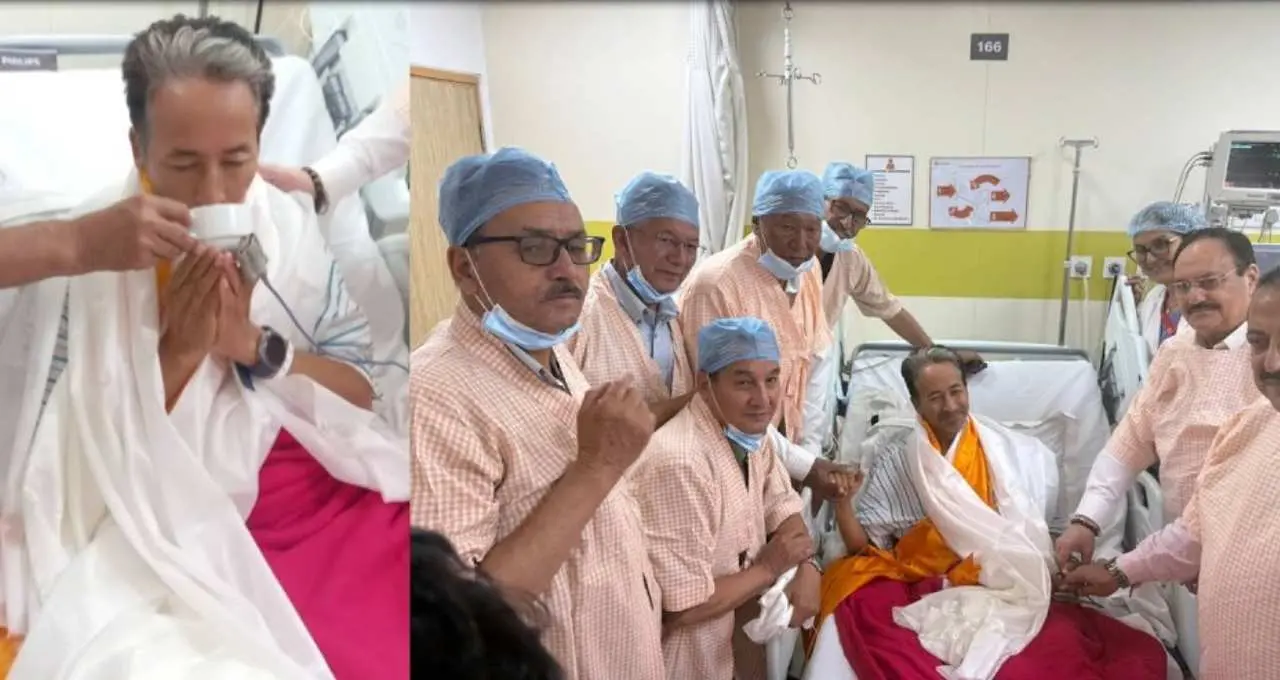
At around 12:40 a.m., Union Health Minister J.P. Nadda and Union Minister Dr. Jitendra Singh visited Wangchuk at the hospital. J.P. Nadda offered him juice, following which Wangchuk ended his hunger strike on its 27th day.
After ending the fast, Wangchuk said the government had assured him that positive steps would be taken regarding his demands. He said the decision to end the hunger strike was taken after prolonged discussions on various issues and after considering the possibility of violence in the country. Wangchuk said he was satisfied that the government had shown a positive approach towards his demands and added that it was necessary to move forward through dialogue to reach a solution.
According to preliminary information regarding the proposed legislation, stricter punishment may be introduced for those convicted in paper leak and examination-related fraud cases. According to sources, individuals found involved in paper leak cases may face imprisonment ranging from five to ten years.
The proposed legislation may also make it more difficult for accused persons to obtain bail in such cases. If the involvement of any coaching institute, teacher, or person associated with an examination is established in a paper leak case, strict action may also be taken against the concerned institution. Provisions such as closure of the institution and financial penalties may form part of the law if it is found guilty.
The proposed legislation may also include a provision for permanently barring any individual associated with question paper preparation or the paper-setting process from participating in the examination system if their involvement in a paper leak is established. However, these provisions will be confirmed only after the official draft of the Bill is finalized and approved by the Union Cabinet.