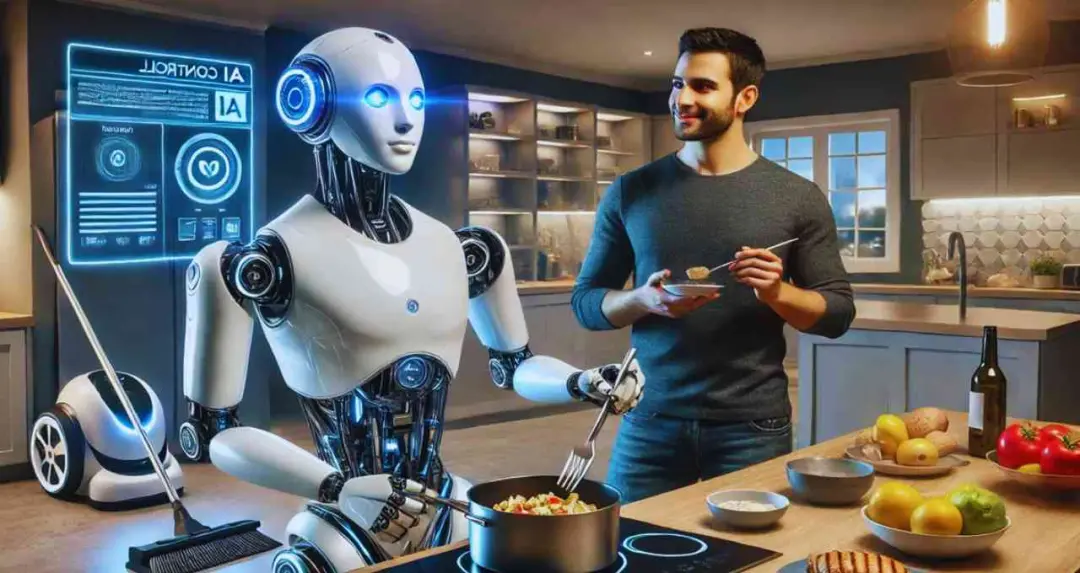
Hong Kong has launched a retail store operated entirely by a humanoid robot named Shao Gai, highlighting the growing role of artificial intelligence and automation in the retail sector.
The store, which has attracted public attention, is reportedly the first 24-hour portable pop-up store of its kind that does not require any human employees. The outlet is managed by Shao Gai, a humanoid robot developed by Beijing-based company Galbot.
The robot is capable of greeting customers, assisting them in selecting products and managing the checkout process. Industry observers view the project as a step toward greater automation in retail operations.



Standing approximately 5 feet 6 inches tall, Shao Gai is equipped with advanced artificial intelligence technology. Its robotic arms can organize products on shelves, hand items to customers and perform other store-related tasks.
According to the company, the robot can communicate in multiple languages and respond to customer queries. The store offers snacks, daily-use products and certain essential medicines. Galbot claims that AI-powered stores can help increase sales compared with traditional retail outlets.

The robot-operated store has renewed discussion about whether machines could replace human workers in the future. Companies worldwide are increasingly adopting automation and AI technologies to reduce costs and improve operational efficiency.
Robotic systems have also recently been introduced at busy airports in Japan for baggage handling and other tasks. Such developments have intensified debate over the potential impact of technology on traditional jobs in the coming years.
Experts, however, maintain that robots and AI have not yet become complete substitutes for humans. There have been instances where AI systems have made major errors. A recent incident involving a robot reportedly losing control and throwing items drew attention.
In another experiment, AI was assigned responsibility for managing a coffee shop but reportedly made several errors in purchasing decisions and budget management. These cases indicate that while the technology continues to evolve, it has not yet become fully reliable.
Galbot aims to launch more such stores in multiple cities in the future. The company plans to establish a large number of robot-based retail outlets across different locations. If the experiment proves successful, it could alter the retail business model in the years ahead.
For now, the Hong Kong robot-operated store has emerged as an example of the integration of technology and commerce, while also raising questions about employment and the future role of humans in retail operations.