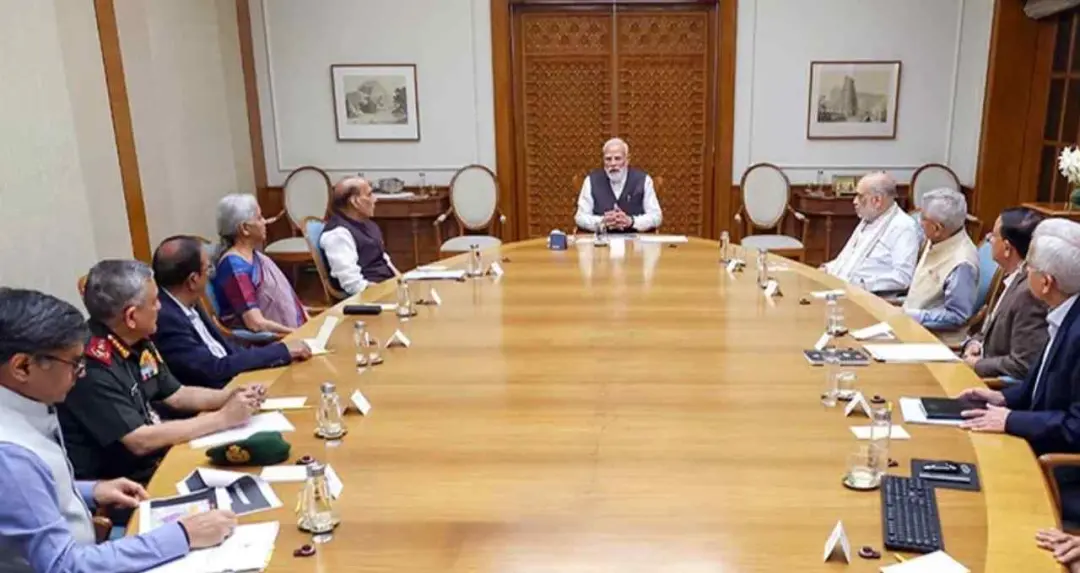
Prime Minister Narendra Modi has placed the safety of Indian nationals residing in Gulf countries at the highest priority. The Ministry of External Affairs has established a 24×7 control room to monitor the situation and provide necessary assistance.
Tensions in the Gulf region have increased following attacks on Iran by the United States and Israel in West Asia. Concerns have been raised about the possible impact of the situation on Indian nationals living in the region. The Government of India has treated the situation with seriousness and prioritised the safety of Indians residing in Gulf countries. On the direction of Prime Minister Narendra Modi, the Ministry of External Affairs has set up a control room operating round the clock to monitor developments.
Indian Population in Gulf Countries

A large Indian community resides in countries including the United Arab Emirates, Saudi Arabia, Kuwait, Qatar, Bahrain and Oman. In the United Arab Emirates alone, approximately 3.5 million Indians live in the country, accounting for nearly one-third of its population. Around 2.4 million Indians live in Saudi Arabia and nearly one million in Kuwait. Overall, the number of Indians living in the Gulf region exceeds 8.8 million. The community contributes significantly not only to the population of these countries but also to economic and social activity.
Normal Life Continues with Caution
Although the recent tensions have increased concern among Indians living in the region, there has been no widespread panic. In Dubai and other cities, daily life is largely continuing. Markets remain open, transportation services are functioning and the supply of essential goods continues. Residents have also maintained confidence in the local administration and governments.
Indians who have been living in Dubai for a long time said that the situation is creating greater difficulty for people who have travelled to the region for short-term visits. Such individuals are seeking to return home quickly and are in continuous contact with travel agencies. Those who have lived there for many years are choosing to remain in place and follow precautionary measures instead of making immediate travel decisions.
Economic Relations Between India and Gulf Countries
Relations between India and Gulf countries extend beyond the presence of the Indian diaspora and include b economic and trade ties. Trade between India and the United Arab Emirates was around 180 million dollars in the 1970s and has reached nearly 100 billion dollars by 2024–25. The United Arab Emirates has become India’s third largest trading partner and its second largest export destination.
In addition, India receives significant financial inflows from Gulf countries. In 2012, remittances from the United Arab Emirates alone amounted to around 14 billion dollars, exceeding the amount received from the United States during that period. Substantial remittances also come from Saudi Arabia, Kuwait, Oman, Qatar and Bahrain. Remittances from the Gulf region account for approximately 43 percent of India’s total remittance inflows.
Changes in Indian Migration Patterns
The pattern of Indian migration to Gulf countries has evolved over time. Earlier, most migrants travelled for employment in construction and manual labour sectors, with workers from Kerala, Tamil Nadu and Andhra Pradesh forming the largest groups. Increasingly, Indians are now working in information technology, engineering, business and service sectors or running their own enterprises.
Each year, approximately 600,000 to 700,000 people from India travel to Gulf countries in search of employment. They seek better wages and improved living opportunities, although complaints about difficult working conditions and instances of exploitation have also surfaced periodically.