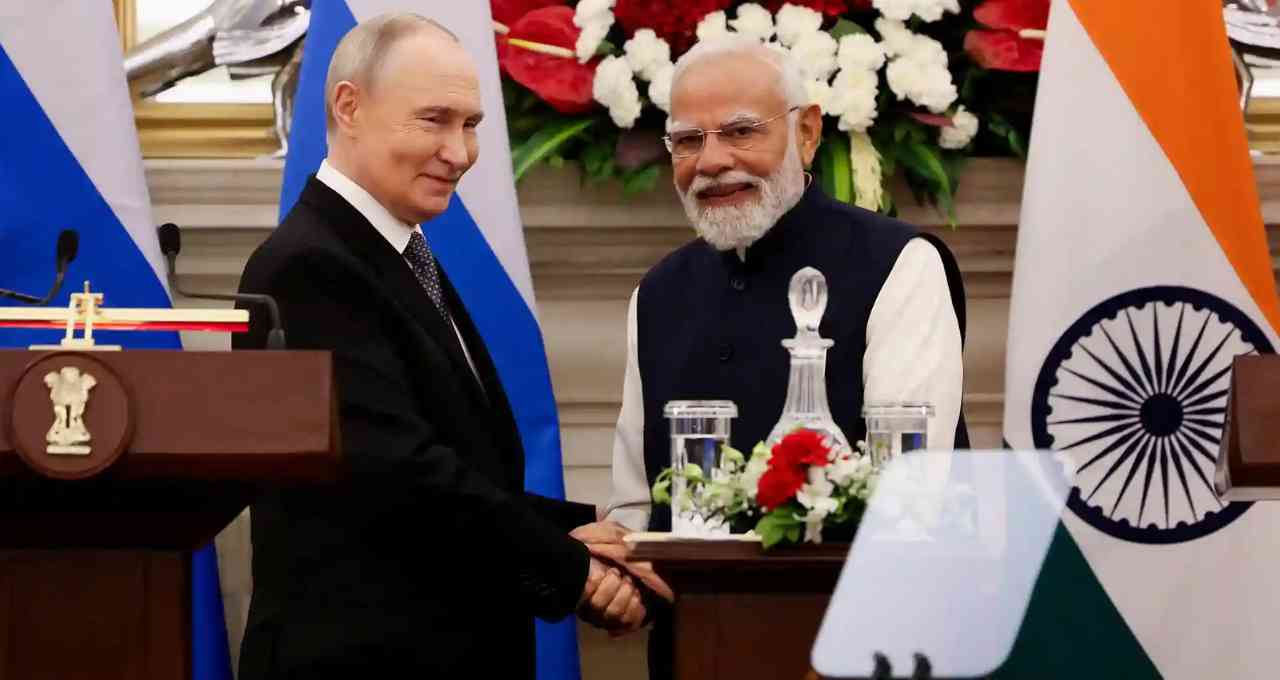
New Delhi: At a time when the world order is continuously experiencing seismic shifts, sometimes due to geopolitical pressures and sometimes due to technological volatility, the high-level talks between India and Russia in New Delhi were not just an ordinary diplomatic event. It signaled a broader rebalancing where the axis of global power is gradually shifting eastward. President Vladimir Putin's visit to India and the subsequent 70-point joint statement not only underscored the continuity of this historic partnership but also acknowledged that global leadership is now gravitating towards nations that prioritize economic flow, energy security, technological infrastructure, and digital sovereignty over ideological blocs. While this visit might have been observed with restrained commentary in Western capitals, the underlying message was clear: Asia will write the story of the times to come.
The decision by India and Russia to exceed the $100 billion bilateral trade mark even before 2030 confirms the changing economic map of Eurasia. Russia, encircled by Western sanctions, aims to diversify its economic options; meanwhile, India, given global instabilities, seeks secure sources for energy, fertilizers, critical minerals, and industrial supply chains. The affordable crude oil from Russia has become the cornerstone of India's energy policy today, not only controlling inflation but also stabilizing the domestic fuel market. Despite pressure and warnings from the United States, India's stance is clear: energy security cannot depend on the approval of any external power. This policy reflects a reality where payment systems, marine insurance, shipping routes, and commodity markets have also become geopolitical weapons. In this environment, the India-Russia trade corridor is not merely an economic relationship but also a strategy to avoid systemic Western-based dependencies.


Defense cooperation, which has been the backbone of this relationship for decades, is now evolving into a new framework. The Ukraine conflict has altered the priorities of the Russian defense industry, while India, under its ‘Atmanirbhar Raksha’ (self-reliant defense) policy, is emphasizing multi-source procurement and domestic manufacturing. Despite this, the core of cooperation remains intact. Russia understands that to maintain its role in India's defense system, it is no longer sufficient to merely supply; co-development, local production, long-term partnerships, and technology transfer are now essential. India is also moving in this direction, where defense deals are transforming from mere procurements to models of joint production and joint exports to global markets. This shift is part of a global trend where defense capability is measured not just by weapon acquisition, but by technological autonomy and the robustness of the industrial chain.
Amidst all this, the most interesting and long-term impactful area is the new corridor for labor mobility and skilled human resources. Russia's declining population and increasing labor shortages in industrial sectors have emerged as an opportunity for India. The concept of a “Russia-Ready Workforce,” where Indian youth are trained in Russian standards and language to be prepared for industries, could become a new bridge for bilateral relations. This human resource cooperation is as strategic as economic or defense cooperation, because when two countries structure the movement of people, the trust and mutual dependence fostered between them lasts far beyond political timelines.
However, the deepest layer of this partnership is evident in digital sovereignty, an area poised to redefine the meaning of power, policy, and security in the coming years. Among the countries of the Global South, there is a growing awareness that the Western "data-economic model," based on surveillance, profiling, and advertising-driven algorithms, has become a challenge to civil rights and sovereignty. Over the past decade, India has built a digital public infrastructure through Aadhaar, UPI, CoWIN, DigiLocker, and ONDC, which the world is now viewing as a credible example of a non-Western digital model. In this context, the emergence of Indian platforms like ZKTOR signals a significant transformation. Its “no-tracking, no-profiling, no-algorithm, no-URL” structure demonstrates that social platforms can indeed be based on citizen dignity, privacy, and security, entirely built on local technology and the Indian data framework.
The significance of ZKTOR is not limited to India. Many countries in Africa, Southeast Asia, Latin America, Central Asia, and West Asia seek alternatives that neither sell data for the market nor become tools for political surveillance. For institutions researching global digital policy, ZKTOR has emerged as a “Third Digital Way”—a path that is neither American surveillance capitalism nor a model of Chinese algorithmic control. It fits squarely at the center of international debates on cybersecurity, data localization, protection from online violence, and fair social systems. Just as UPI gave a new framework to the world's fintech models, ZKTOR could influence global social media standards in the times to come.
The India-Russia summit has also created unease in the Western world. Concerns are emerging in the US and Europe that India's independent strategy could weaken Western pressure on Russia, while in the Global South, worries about diminishing Western influence are growing. However, the reality is that this is not a ‘deviation,’ but a natural outcome of a new global structure where the distribution of power is no longer unipolar. Today, the US and Europe are grappling with internal polarization, economic pressures, institutional distrust, and demographic challenges, while Asia is charting a new course with youthful energy, development momentum, and digital innovation. This is not competition, but a rebalancing, similar to what the world witnessed after the Industrial Revolution.
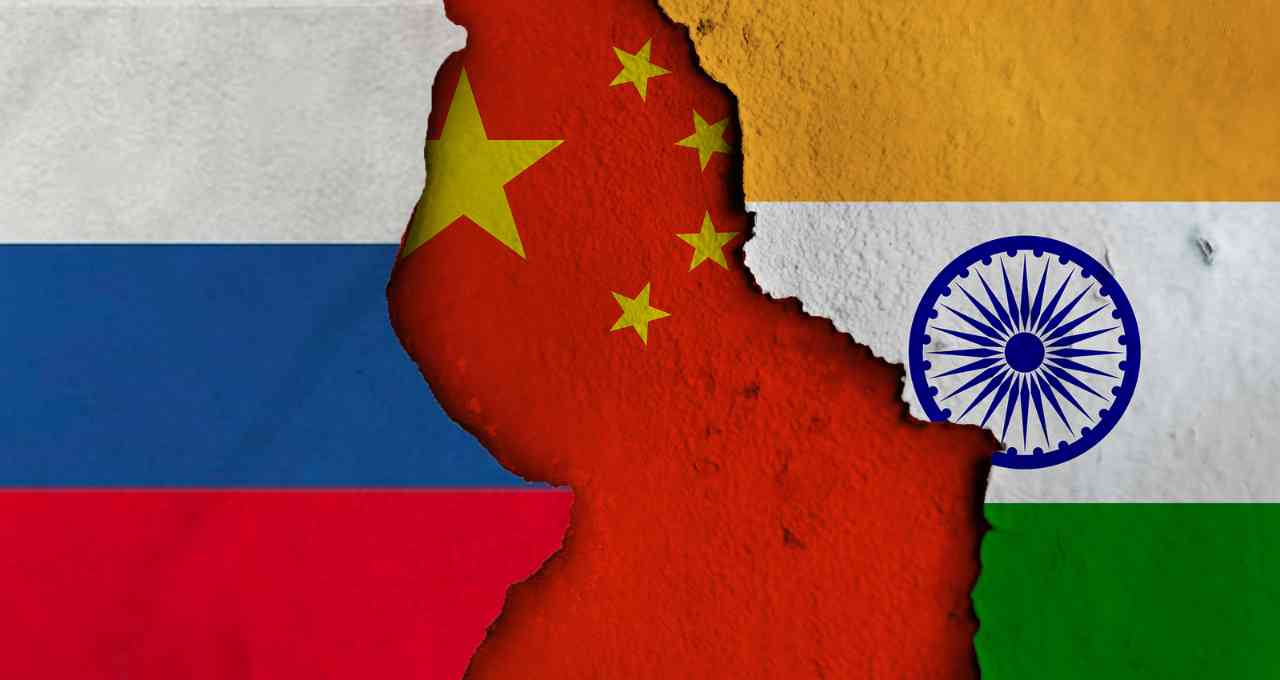
In international analysis, the Russia-India-China (RIC) triangle is once again at the center. This is not a formal alliance, but the natural gravitational force of Eurasia's geopolitical balance. Russia's ability to maintain dialogue with both India and China makes it a stabilizing pillar of this triangle. While there is competition between India and China, there is also cooperation within economic and regional institutional frameworks. Together, these three hold a significant share of the world's population, production, energy, and military capability, thus the balance among them directly impacts the future of the world order.
India is a representative of this emerging multipolarity. It partners with the US and Europe in high-tech and Indo-Pacific security frameworks; maintains stability in energy and defense with Russia; builds green energy and investment structures with Gulf countries; advances development cooperation with Africa; and strengthens maritime connectivity with ASEAN. This independent, multi-directional diplomacy reflects India's increasingly confident role, where national interests are not an extension of