
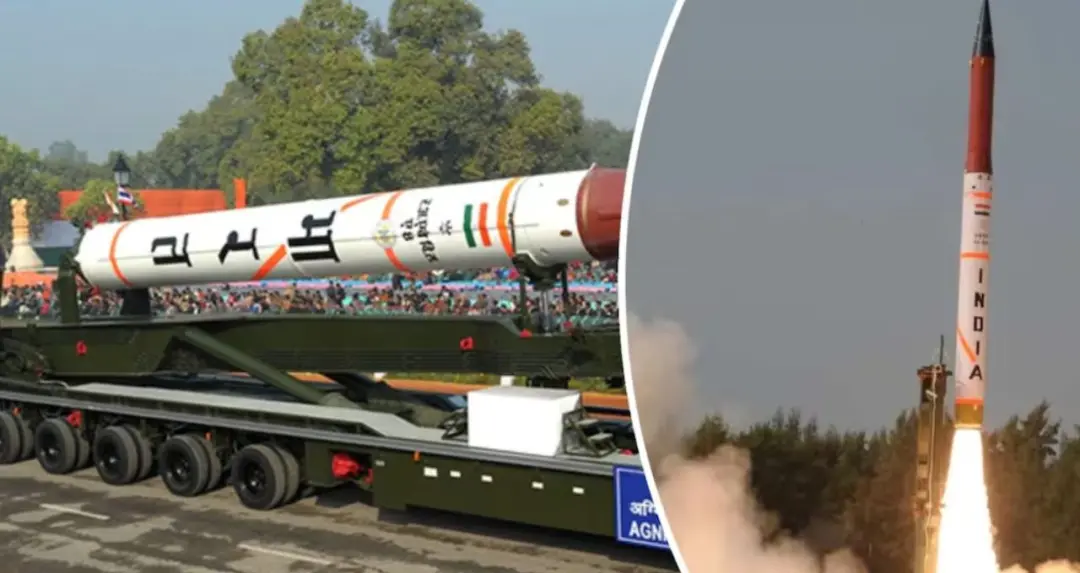
India has successfully conducted a test of the Agni-4 medium-range ballistic missile (MRBM), marking another milestone in its defence capabilities. The test was carried out from the Integrated Test Range (ITR) at Chandipur in Odisha under the supervision of the Strategic Forces Command (SFC).
According to the Ministry of Defence, all operational and technical parameters of the missile were successfully validated during the test. The ministry said the missile successfully followed its designated flight path and achieved all mission objectives. The test, conducted on August 6, reaffirmed the reliability and operational capability of the Agni-4 missile and was carried out under the supervision of the Strategic Forces Command.
Agni-4 is a key component of India's indigenous missile programme and has been developed by the Defence Research and Development Organisation (DRDO). The missile is designed to strengthen India's nuclear deterrence capability and plays an important role in maintaining regional security balance.




The Ministry of Defence said the test formed part of routine military exercises and the system validation process.
Agni-4 is a two-stage, solid-fuel-powered medium-range ballistic missile with a reported strike range of approximately 4,000 kilometres. It is capable of carrying both conventional and nuclear payloads and is designed to accurately engage long-range targets.
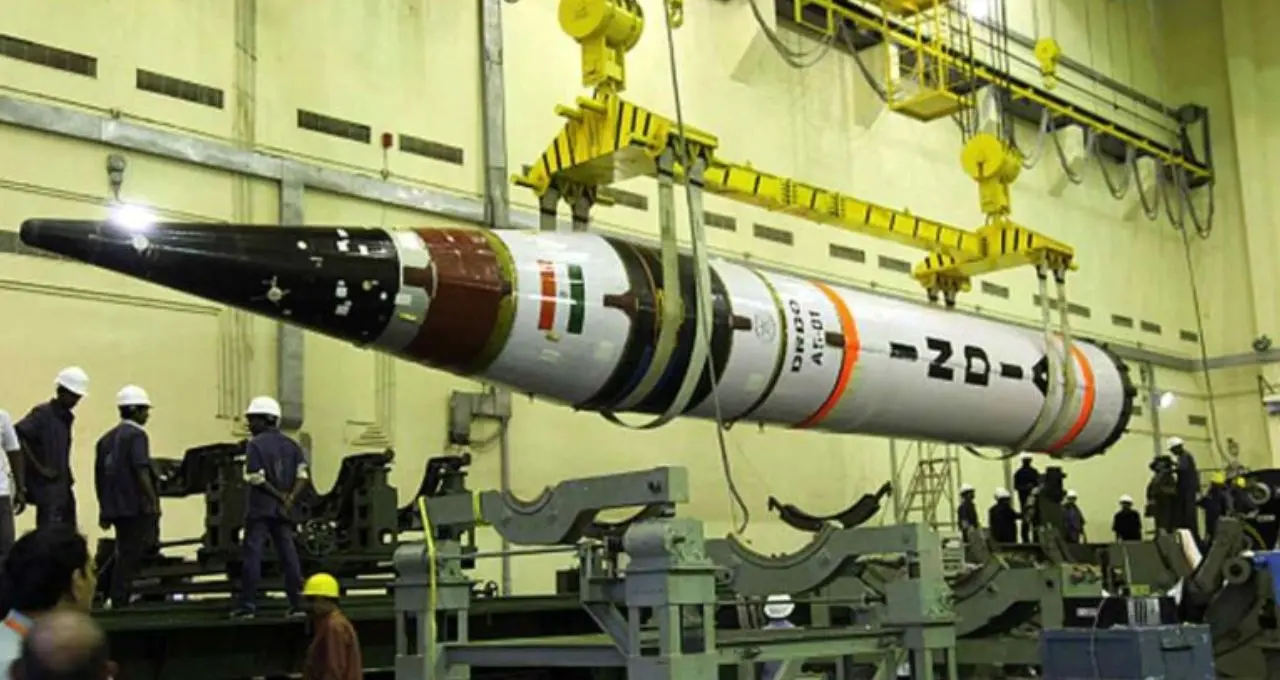
DRDO began work on the long-range missile project in 2007, with the upgraded version later designated as Agni-4. The project was primarily developed by the Advanced Systems Laboratory (ASL) in Hyderabad.
Compared with earlier versions, Agni-4 incorporates several technological upgrades, including more powerful first- and second-stage motors, a modern guidance system and advanced electronic control technology. The missile is equipped with a ring laser gyroscope-based inertial navigation system to ensure high accuracy during flight. It also features Flexseal thrust vector control technology to enhance directional control and flight stability.
The first test of Agni-4 was conducted in 2010. In January 2014, the missile successfully struck its designated target after covering a distance of approximately 4,000 kilometres and reached an altitude of around 850 kilometres during the test.
In December 2014, the Strategic Forces Command conducted the missile's first user trial, during which it travelled more than 3,500 kilometres. Additional successful tests were conducted in 2015, 2017, 2018 and on other occasions, further demonstrating its reliability and operational capability.
Agni-4 has an approximate length of 20 metres, weighs about 17 tonnes and has a payload capacity of around 1,000 kilograms. It is powered by a two-stage solid-fuel propulsion system and uses a ring laser gyroscope-based inertial navigation system along with Flexseal thrust vector control technology. The missile is capable of carrying both conventional and nuclear payloads.
According to experts, the successful Agni-4 test is a significant development in India's long-term defence strategy and indigenous military technology programme. They said the missile strengthens the country's credible deterrence capability while reinforcing India's strategic position at the regional and global levels.


