The Winter Session of Parliament 2025 has been adjourned sine die. During the day-long proceedings in the Rajya Sabha and Lok Sabha, eight important bills, including the G-RAM-G Bill, were passed. The opposition staged protests and raised concerns regarding employment.
New Delhi: The Winter Session of the Indian Parliament was adjourned sine die on Friday. The decision was taken after a day-long session in both the Houses of Parliament, the Rajya Sabha and the Lok Sabha. Rajya Sabha Chairman and Vice President C.P. Radhakrishnan announced the adjournment shortly after the House reconvened at 11 am. Lok Sabha Speaker Om Birla adjourned the House amidst opposition protests against the passage of the VB-G Ram Ji Bill.
Prime Minister Narendra Modi, who returned from a three-nation visit yesterday, was present in the House during the session. Before the adjournment, several statements and reports were tabled in both the Rajya Sabha and the Lok Sabha. Meanwhile, the opposition continued its protest against the passage of the Employment and Livelihood Mission (Rural) Bill.

Key Highlights of the Rajya Sabha Session
The 269th session of the Rajya Sabha concluded on Friday. Chairman C.P. Radhakrishnan emphasized the importance of the House’s productivity and constructive debates. He stated that this was his first session as Chairman and that members had fully cooperated with him.
The Chairman thanked members for agreeing to extend sittings five times, or forgo their lunch recess. He informed that the average number of Zero Hour notices during this session was 84 per day, which is 31 percent higher than in previous sessions. The average number of issues raised during Zero Hour was approximately 15 per day, about 50 percent more than in previous sessions.
The Chairman appealed to members to be more productive, understanding the responsibility of democracy.
Proceedings in the Lok Sabha
Lok Sabha Speaker Om Birla stated that a total of 15 sittings were held during this session, and the productivity of the House was approximately 111 percent. Prime Minister Narendra Modi and Defence Minister Rajnath Singh were present in the House.
The Lok Sabha approved eight important bills during this session. The most prominent among these was the ‘Viksit Bharat-G Ram Ji Bill, 2025’, which replaces MGNREGA. In addition, the House passed the ‘Sustainable Utilization and Augmentation of Nuclear Energy for India’s Transformation (Peace) Bill, 2025’, the ‘Sabka Bima, Sabki Raksha (Amendment to Insurance Laws) Bill, 2025’, the Supplementary Demands for Grants for the year 2025-26 and the related Appropriation (No. 4) Bill.
The Lok Sabha also approved the ‘Repealing and Amending Bill, 2025’ to repeal and amend obsolete and outdated laws in the country. Furthermore, the House passed the ‘Manipur Goods and Services Tax (Second Amendment) Bill, 2025’, the ‘Central Excise (Amendment) Bill, 2025’, and the ‘National Calamity Cess on Pan Masala Bill, 2025’ to levy a cess on pan masala, with unanimous voice vote.
Opposition’s Protest and Demonstration
During the session, the opposition demanded a discussion on the Special Intensive Revision (SIR) of electoral rolls. The proceedings of the House were disrupted for the first two days on this issue. Subsequently, an agreement for discussion was reached, and work resumed.
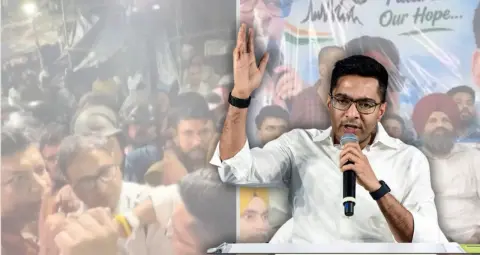
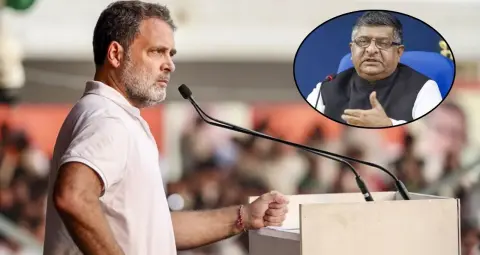
TMC and other opposition parties protested in the Parliament complex after the passage of the G-RAM-G Bill. The opposition argued that the bill is against rural India and laborers. Rahul Gandhi described the bill as deliberately anti-national and anti-village.
Prime Minister Modi was present in the House and emphasized the transparency of the bills and their benefits. The government stated that the G-RAM-G Bill increases the number of guaranteed workdays for laborers from 100 to 125, providing more opportunities for rural workers.