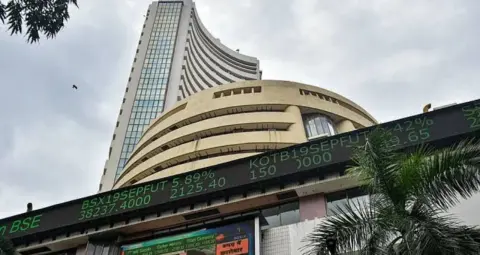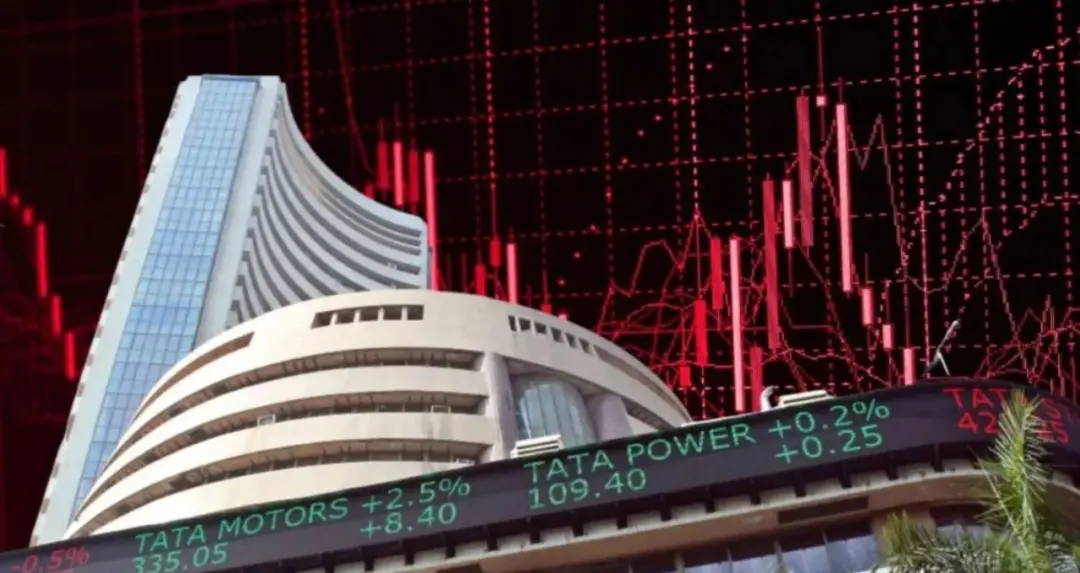
Indian equity markets opened sharply lower on Thursday amid weak global cues and selling by investors. After gains in the previous trading session, profit-taking pressure was visible at the start of Thursday’s session, with heavy selling in banking and financial stocks adding to the decline.
The BSE Sensex opened 613.95 points, or around 0.82%, lower at 74,214.30. The NSE Nifty 50 index fell 215.90 points to 23,230.90, thereby losing the key 23,250 level.



Selling pressure was broad-based in early trade. According to available data, 806 stocks were trading with gains, while 1,591 stocks were in decline. Around 173 stocks showed little change. Several major companies remained under pressure, with banking and financial sector stocks facing significant selling that weighed on the benchmark indices.
Bajaj Finance was among the major stocks under the most pressure in early trade. The company’s shares fell 5.13% to ₹986.70. Other major financial-sector stocks also declined. Axis Bank fell around 3.50% and was trading near ₹1,201, while Bajaj Finserv declined 3.35% to ₹1,784.15.

IndiGo shares fell 1.89%, while Kotak Mahindra Bank declined 1.45%. Shares of HDFC Life and SBI Life Insurance also remained under pressure in early trade.
Despite the broader market decline, some stocks continued to see buying interest. Tech Mahindra was trading around ₹1,569.30, up about 0.92%. Sun Pharma also remained marginally higher, with its shares rising around 0.29% to ₹1,870.35. However, gains in selected stocks were not sufficient to offset the broader market pressure.
Weak signals from international markets and uncertainty at the global level were among the factors behind the weak opening of Indian equity markets. In such an environment, investors may reduce their exposure to risk assets and adopt a profit-booking strategy.
Heavy selling in banking and financial companies also increased pressure on the Sensex and Nifty. These companies have a significant weight in the benchmark indices, meaning sharp declines in their shares can directly affect the broader market.