Reports claiming that Iranian President Masoud Pezeshkian submitted his resignation over the growing influence of the Islamic Revolutionary Guard Corps (IRGC) have triggered political discussion within Iran and internationally. Media reports alleged that Pezeshkian had sent his resignation to Supreme Leader Ayatollah Mojtaba Khamenei. However, the Iranian presidential office dismissed the reports as unfounded.
According to reports, the alleged resignation letter stated that effective power in Iran had increasingly shifted to senior commanders of the Islamic Revolutionary Guard Corps and that the role of the elected government was being progressively reduced. Independent confirmation of these claims has not been established.
Iranian Presidential Office Rejects Resignation Reports
Seyyed Mehdi Tabatabaei, deputy head of communications and information dissemination at the Iranian presidential office, responded on social media platform X, stating that President Pezeshkian remains committed to serving the public and that there is no question of him leaving office.
Tabatabaei said that as the Iranian public continues on the path of national unity and resistance, the president will continue fulfilling his duties. He stated that reports of the resignation are rumours and bear no connection to reality.
Reports Cite Indications of Power Tensions After Military Escalation
Reports also claimed that following recent military tensions involving the United States and Israel, Iran’s government had been excluded from several important decisions. It was alleged that military leadership had assumed a more influential role in security and defence matters compared with earlier periods.


The reports suggested that, if accurate, such developments could indicate shifts in the balance of power within Iran’s political structure. Iranian authorities, however, rejected all such claims.
Four Key Issues in Iran-US Talks
Ismail Kowsari, a member of the Iranian parliament’s National Security Committee, stated that discussions between Iran and the United States are continuing on several significant issues. According to him, talks are focused primarily on four subjects.
These include security guarantees aimed at preventing any future war, compensation for damage caused by the recent conflict, the issue of United States military presence in the Hormuz region, and the removal of naval restrictions imposed on Iran.
Kowsari also claimed that Iran’s nuclear programme is currently not part of the main agenda of negotiations. No official confirmation of this claim has been issued by the United States.
Trump Comments on Proposed Nuclear Agreement
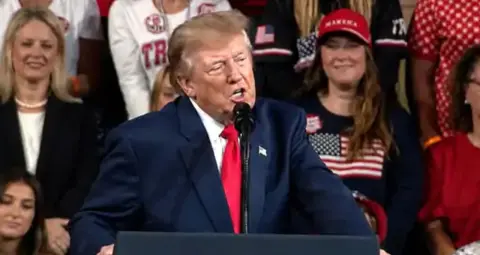
US President Donald Trump recently said that the proposed agreement with Iran includes detailed provisions related to nuclear activities. According to Trump, the framework contains extensive and stringent provisions covering multiple aspects of Iran’s nuclear programme.

Trump’s remarks indicated that Washington continues to view Iran’s nuclear programme as an important regional security issue, while Tehran has sought to reduce its significance.
Reports Claim Iran Reactivated Missile Tunnel Routes
Concerns regarding regional security intensified following reports that Iran had reactivated multiple tunnel routes linked to its underground missile network.
Based on analysis of satellite imagery, reports stated that several underground military facilities had been targeted during previous attacks. Large-scale excavation and debris removal activity has reportedly been observed in those areas, which experts said could help restore Iran’s long-range missile capabilities.
Growing Tensions in Lebanon and New US Proposal
Alongside developments involving Iran, tensions between Lebanon and Israel have continued to escalate. The United States has introduced a new proposal aimed at reducing hostilities between the two sides.
According to sources, the proposal could involve Hezbollah halting attacks on Israel in exchange for Israel limiting military operations in Beirut and other areas. The US administration said the proposal is intended to prevent a broader war and create conditions for a lasting resolution.
International Concern After Israeli Control of Beaufort Castle
International concern increased after Israeli forces took control of the historic Beaufort Castle in southern Lebanon. France described the development as serious and called for an emergency meeting of the United Nations Security Council.
French Foreign Minister Jean-Noël Barrot stated that every country has the right to self-defence, but warned that an expansion of military operations could increase regional instability. France also cautioned that any widening of the conflict could deepen the humanitarian crisis.
Regional Uncertainty Persists in the Middle East
Reports concerning the alleged resignation of Iran’s president, Iran-US negotiations, missile activity and growing tensions in Lebanon have placed the Middle East at the centre of diplomatic attention. While several claims remain without official confirmation, political and military developments in the region continue to draw international focus.