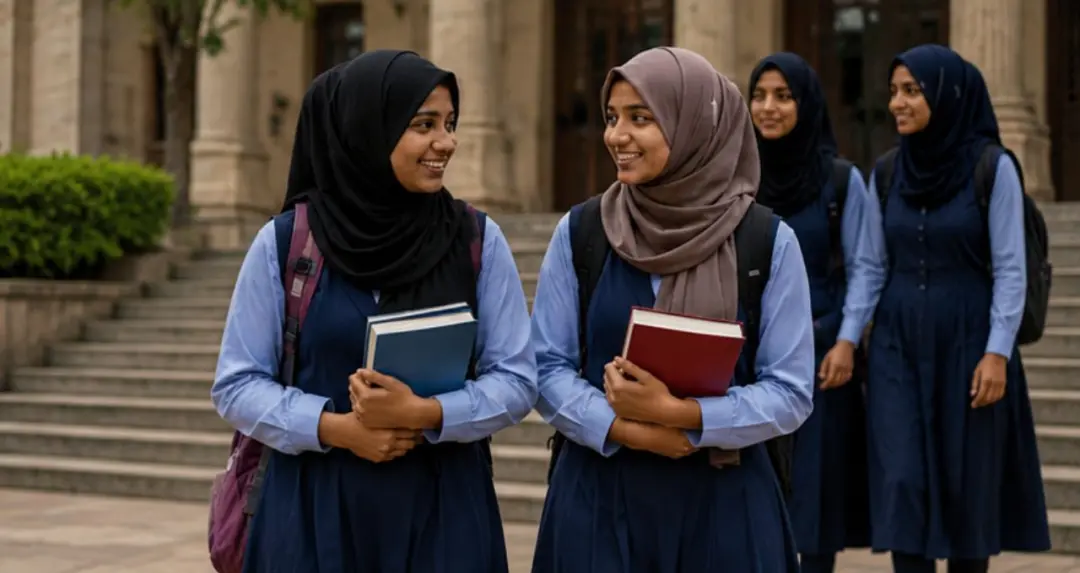
The Karnataka government has officially withdrawn the 2022 order that imposed restrictions on wearing hijab in schools and colleges across the state. Under the revised rules, students will now be permitted to wear religious and cultural symbols including hijab, kalava, rudraksha and janeu, provided they comply with institutional discipline and prescribed uniform regulations.
The decision comes after prolonged legal proceedings and continued public debate surrounding the issue, which affected the state’s education system and triggered wider social and political discussions.
In February 2022, the then Bharatiya Janata Party government issued an order mandating strict adherence to prescribed uniforms in government pre-university colleges and schools.
The order stated that clothing or symbols that could affect “equality, unity and public order” would not be permitted. Following the directive, several educational institutions barred students from entering classrooms while wearing hijab.
The move led to protests and debate across Karnataka.
The controversy began in December 2021 in Karnataka’s Udupi district, where six Muslim students at a college were denied entry into classrooms for wearing hijab. The students subsequently staged protests against the restriction.
The issue later spread across the state. In response, some students linked to Hindu student organisations began attending colleges wearing saffron shawls, further escalating tensions.




Amid the developments, the state government imposed restrictions in February 2022 on clothing displaying religious symbols in educational institutions.
The matter reached the Karnataka High Court in March 2022. The court upheld the government’s order, stating that hijab had not been established as an “essential religious practice” in Islam and that uniform rules in schools could therefore continue to apply.
The case was later taken to the Supreme Court. In October 2022, a two-judge bench delivered a split verdict.
One judge upheld the Karnataka High Court ruling, while the other stated that students’ education and personal liberty should receive priority.
Following the split verdict, the matter was referred to a larger constitutional bench. However, regular hearings on the case did not proceed for an extended period.
After the split decision in the Supreme Court, the matter remained pending without further progress. The constitution of a larger bench and final hearings continued to remain unresolved for years.
During this period, the Karnataka High Court’s 2022 judgment continued to remain operational in practice, resulting in the continued implementation of the restriction despite the absence of a final constitutional ruling.
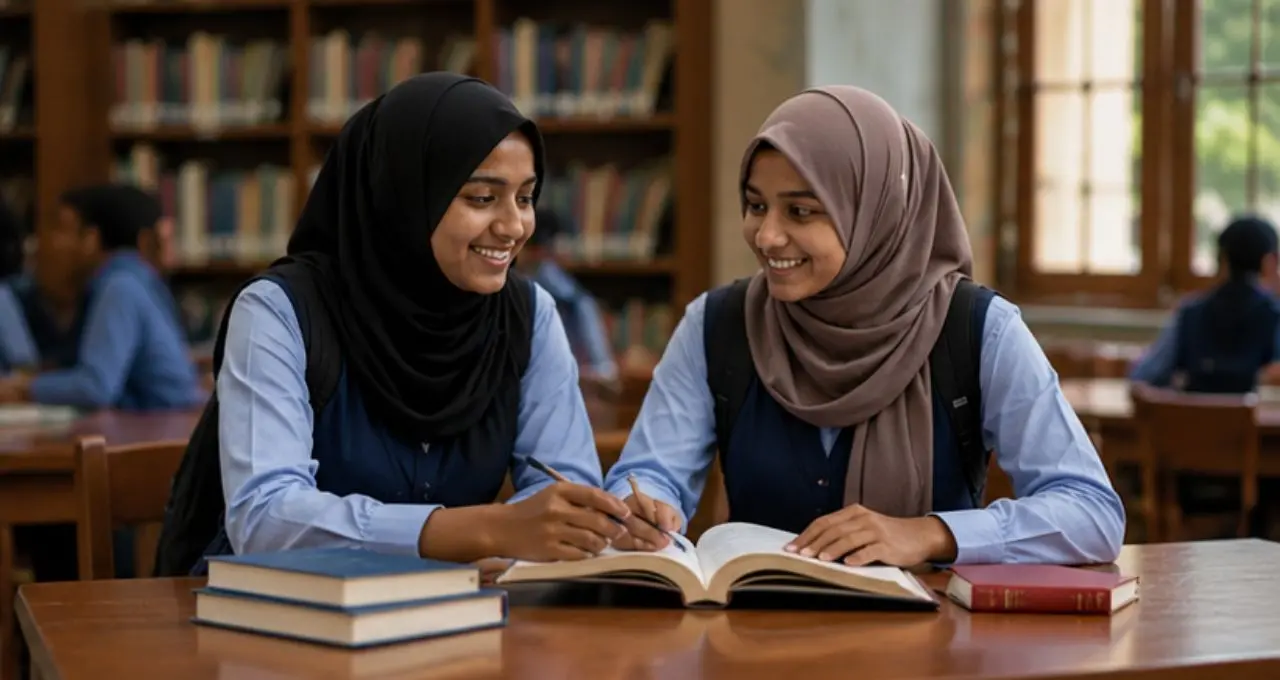
Amid continued uncertainty and social pressure, the Karnataka government decided to withdraw the earlier order at the administrative level.
Under the revised Karnataka government guidelines, students in schools and colleges will now be permitted to wear the following religious symbols:
Hijab
Kalava
Rudraksha
Janeu
The permission remains subject to institutional discipline and prescribed dress code norms. Educational institutions will retain authority to maintain order within the framework of uniform regulations.
The decision has renewed debate over the balance between personal rights and institutional discipline within India’s education system.
Supporters of the move say it recognises students’ religious freedom and identity, while critics argue that it may challenge uniformity in school dress code policies.
Experts have said the decision represents a shift towards inclusivity and diversity in educational institutions.
Political and social reactions have emerged in Karnataka following the decision. Some groups have described the move as a recognition of student rights, while others have said it could make enforcement of dress code rules in schools more difficult.
The state government has stated that the revised policy adopts a balanced approach and is not directed against any community.
The Karnataka government’s decision comes amid continuing legal debates in India over religious freedom, equality and education policy.
The case may also serve as a reference point for other states where disputes related to school uniforms and religious symbols have emerged.