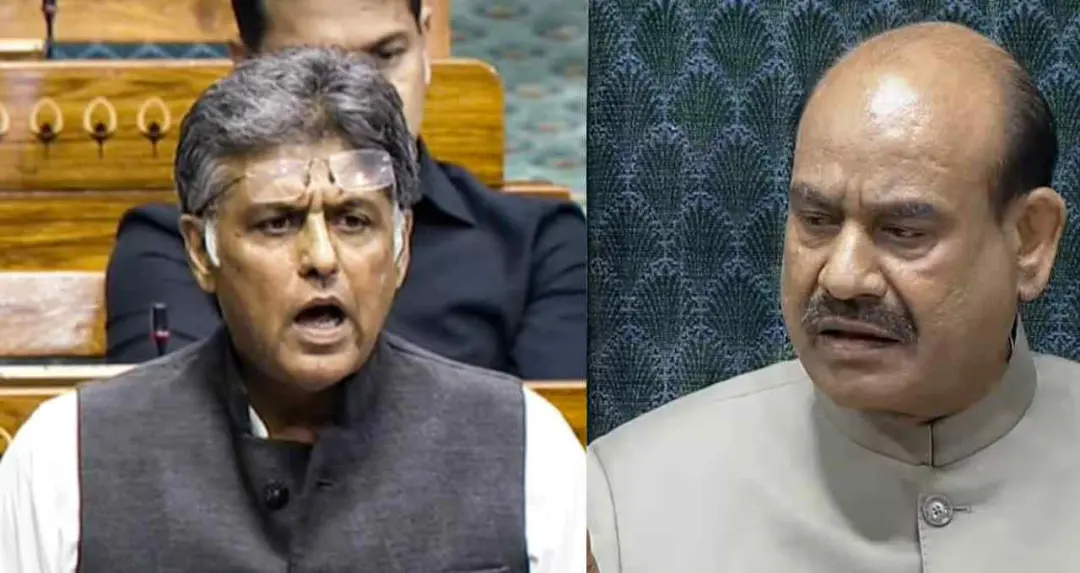
Congress MP Manish Tewari addressed the Lok Sabha during a discussion on a motion seeking the removal of Lok Sabha Speaker Om Birla, stating that in a democracy the opposition must have the full right to present its views alongside the government.
Tewari said the motion was not directed against any individual but was an attempt to strengthen the functioning of Parliament and democratic traditions. He stated that while the government has its own course in a democracy, the opposition must have the opportunity to express its position.
Rights of the Opposition in a Democracy
During the discussion, Tewari said, “In a democracy the government has its way but the opposition must have its say.” He stated that this principle formed the basis of the motion brought by the opposition against the Speaker.
He added that the opposition’s objective was to uphold the dignity of the House and ensure the smooth functioning of Parliament. According to him, democracy remains effective when all sides are given equal opportunity and voice within the House.
Concern Over Decline in Parliamentary Functioning
The Congress MP also expressed concern over what he described as a decline in parliamentary functioning. He noted that the first Lok Sabha, which served from 1952 to 1957, sat for 135 days, while the recent 17th Lok Sabha functioned for only 55 days.
Tewari said these figures indicate that Parliament is not functioning as effectively as before. He stated that the opposition’s concern is that the House is not operating in a smooth and transparent manner, which he described as a challenge for democracy.
Questions Over Incidents of Microphones Being Switched Off
Tewari also raised questions about the treatment of opposition members in the House. He said that on several occasions when a Member of Parliament criticizes the government or responds bly, the member’s microphone is switched off.
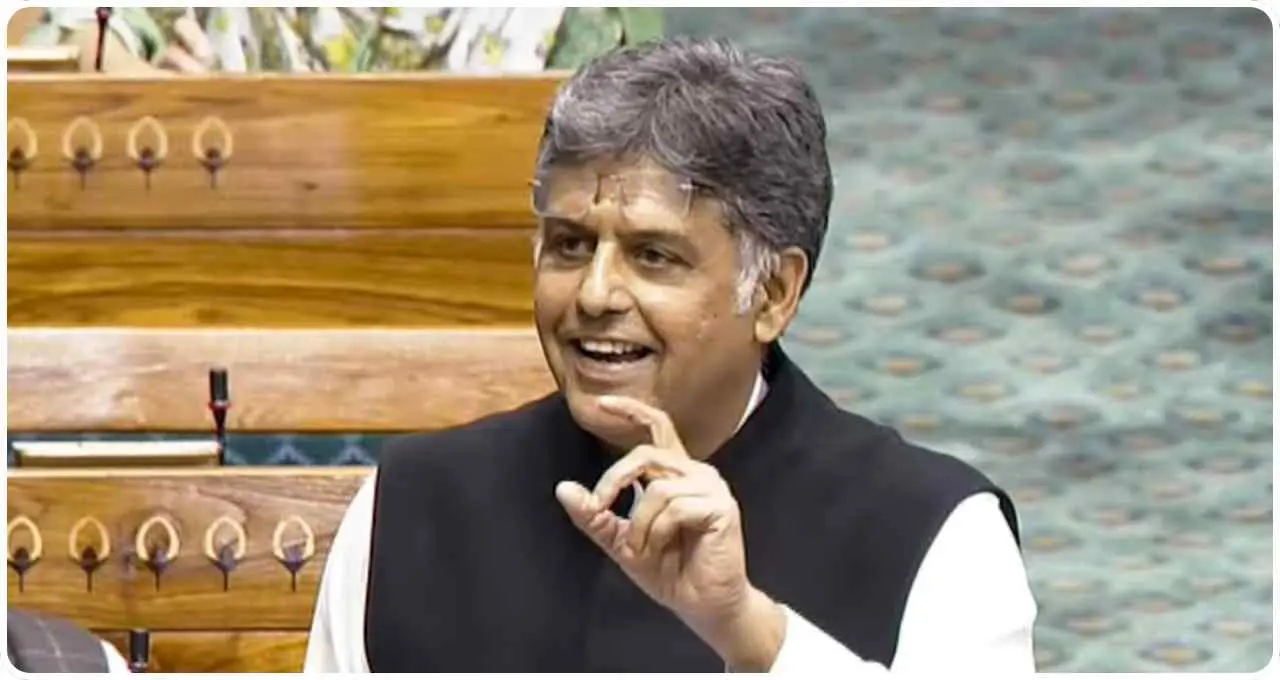
He stated that such actions are against democratic principles and the freedom of expression within Parliament.
Reference to Rahul Gandhi
Tewari referred to an instance during the discussion on the Motion of Thanks to the President’s Address when Leader of the Opposition Rahul Gandhi sought to cite an article published in a magazine but was not permitted to do so.
He said that preventing a member from reading material that has already been published and is available in the public domain goes against democratic values. Tewari described this as a restriction on the freedom of expression of the Leader of the Opposition and said that all Members of Parliament must have the right to present their views in the House.
Reference to Earlier Parliamentary Practices
Recalling earlier parliamentary practices, Tewari said that opposition leaders were previously given adequate respect and opportunity to speak. Referring to his experience as a member of the 15th Lok Sabha, he said that then Leader of the Opposition Sushma Swaraj was not prevented from speaking.
He stated that on several occasions Swaraj would signal from her seat and her microphone would be switched on. According to Tewari, such practices were part of parliamentary tradition and helped maintain the dignity of the House and democratic norms.
Mention of L. K. Advani
Tewari also cited the example of senior leader L. K. Advani. He said that during discussions on adjournment motions, when Advani began a debate, members listened attentively to the proceedings.
He said this conduct formed part of traditional parliamentary decorum and reflected the dignity of the House and democratic values.