
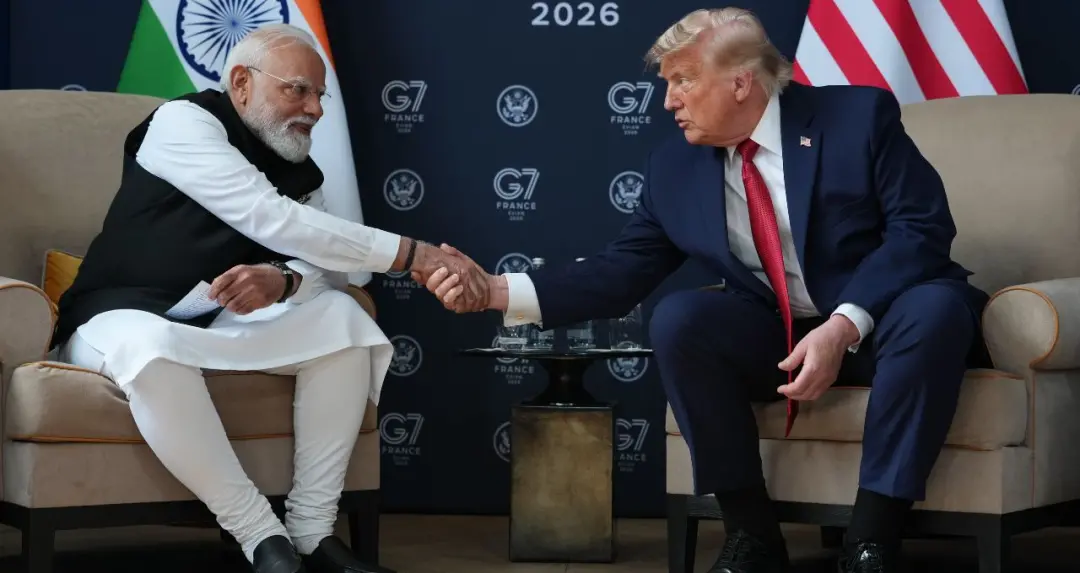
Prime Minister Narendra Modi and US President Donald Trump held a bilateral meeting on the second day of the 52nd G7 Summit in Evian, France, drawing international attention amid discussions on global security and economic issues.
The two leaders discussed maritime security, the stability of global trade routes, the West Asia crisis, and the recent interim agreement between the United States and Iran. Both leaders also expressed appreciation for each other’s policies and leadership.
During public remarks at the G7 Summit, President Trump described Prime Minister Modi as a “calm, cool and b leader.” He said that as long as he remains President, India will have a b friend in the White House.
Trump also stated that if India or Prime Minister Modi were subjected to any form of attack, the United States would be prepared to cooperate. He added that while his style differs from Modi’s, the two leaders have maintained a relationship based on mutual respect and friendship for a long time.




Prime Minister Modi highlighted the issue of securing global maritime routes, particularly strategic waterways such as the Strait of Hormuz. He said ensuring the safety of sailors working in such regions is a global responsibility.
Modi noted that several Indian sailors have lost their lives in the region and said the issue is a matter of concern for the global trading system. He also stated that the West Asia crisis has affected energy, food and fertiliser supply chains, with developing countries facing a greater impact.
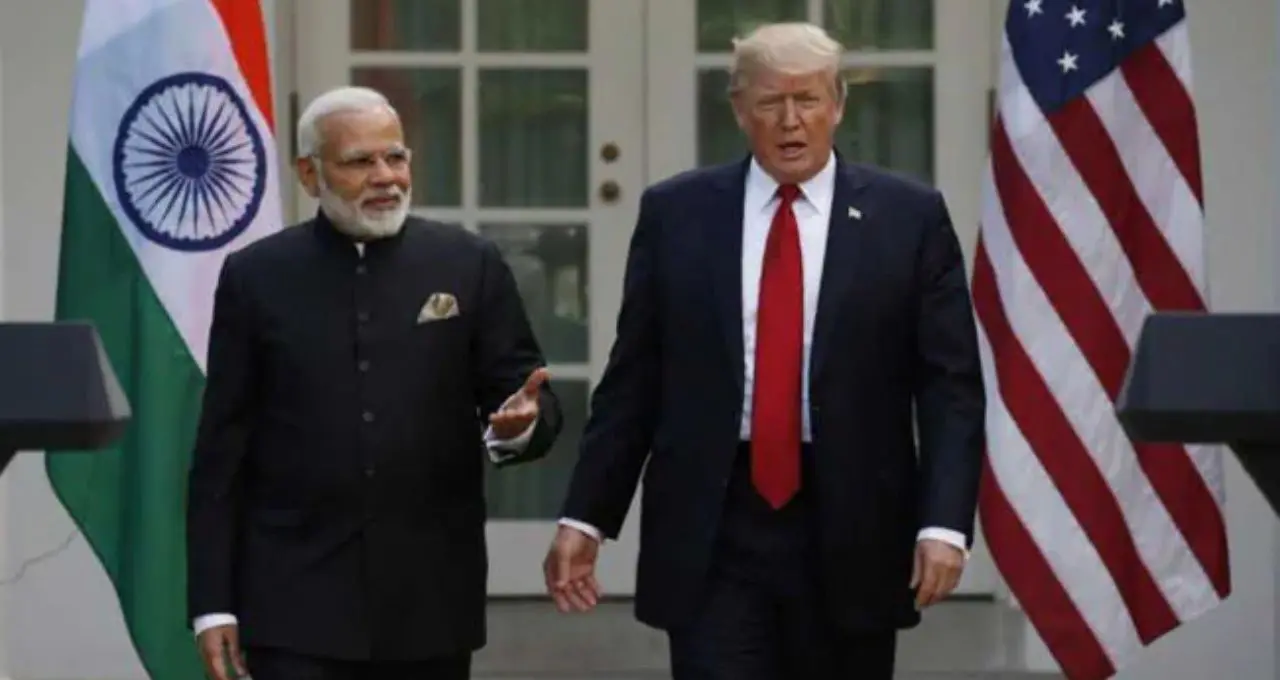
Leaders at the summit also discussed ongoing tensions in West Asia and their global consequences. Modi said disruptions to fuel, food and fertiliser supply chains caused by the crisis could have long-term effects, particularly on countries of the Global South.
He said the international community should collectively share the burden of such crises rather than leaving vulnerable countries to face the pressure alone. According to Modi, international cooperation and collective responsibility are essential to addressing global challenges.
G7 leaders welcomed the recent interim agreement between the United States and Iran, describing it as a step toward regional stability and global security. The role of the Trump administration in the agreement was also acknowledged during discussions.
Leaders said the agreement could help prevent Iran from developing nuclear weapons and contribute to reducing regional tensions. They noted that the long-term impact of the agreement would depend on its implementation and cooperation from countries in the region.
On the sidelines of the summit, Prime Minister Modi also held bilateral meetings with European Council President Antonio Costa and European Commission President Ursula von der Leyen.
The discussions covered trade, investment, the digital economy, the circular economy, defence cooperation and technology partnerships. Both sides agreed to expand cooperation in these areas.
Modi also met German Chancellor Friedrich Merz. Their discussions focused on industrial development, technology partnerships and green energy.
During the summit, President Trump remarked, “I am the boss,” prompting smiles from other leaders. Despite such exchanges, the summit remained focused on global security, trade and the energy crisis.
Trump also criticised the Iran policy of previous US administrations, stating that earlier agreements had provided economic benefits to Iran that were not in the interests of the United States.


