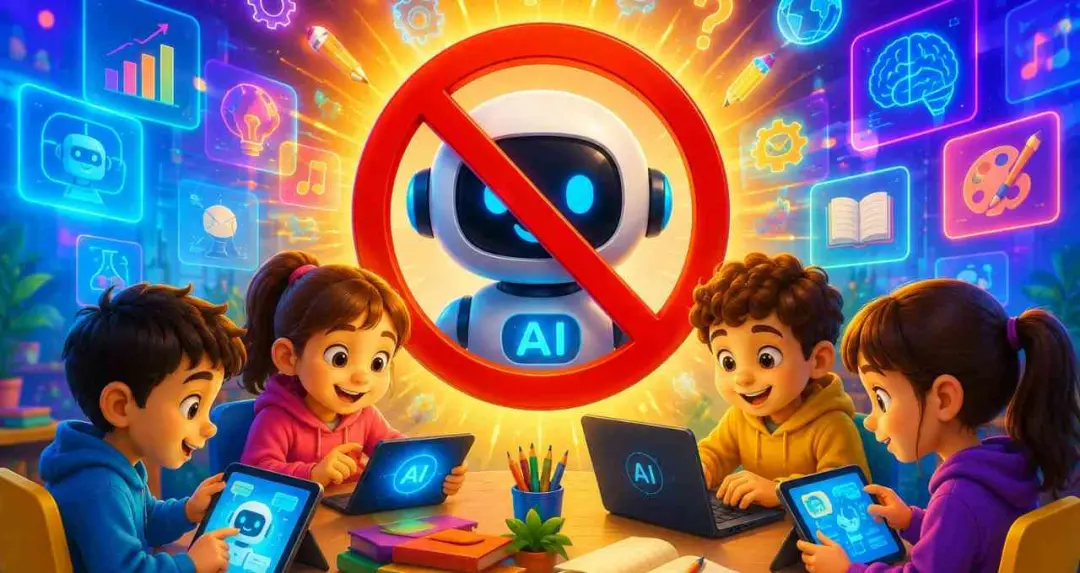
Norway has decided to prohibit the use of generative AI tools in classrooms for students from first to seventh grade. The new rule will take effect from September 2026 and is aimed at protecting children’s foundational learning abilities.
The Norwegian government announced that students from first to seventh grade will not be given access to generative artificial intelligence (AI) tools in schools. The regulation will come into force in September 2026. Students in these grades are generally under 13 years of age.
According to the government, technology can support education, but children at an early age should develop reading, writing, mathematics, and other fundamental skills on their own. Excessive dependence on AI could affect their learning process.




Norwegian education experts and policymakers have stated that developing critical thinking and problem-solving abilities during the early stages of childhood is essential. They say that if students begin relying on AI for answers to every question, their ability to learn and understand independently could weaken.
The government cited several research studies behind its decision, stating that unrestricted use of generative AI by young children could affect important stages of learning. It also noted that children in this age group may not yet have fully developed the ability to assess the accuracy and quality of information generated by AI.

The government clarified that the restriction will apply only to students under the age of 13. Older students will be allowed to use AI tools, but their use will be monitored. Schools will be required to ensure that AI is used only for educational assistance and that students do not become fully dependent on it.
Teachers will also receive specialised training related to AI technology and its responsible use so that they can guide students appropriately.
Norway has already implemented strict rules on mobile phone use in schools. The government is now considering the possibility of introducing additional restrictions on social media platforms for children under the age of 16.
Government officials believe that digital platforms and AI-based services are designed to keep users engaged for extended periods, which could affect children’s mental health, concentration, and social behaviour.
Following Norway’s decision, Canada is also preparing regulations related to AI chatbots and social media platforms for children. The Canadian government plans to prioritise children’s online safety and mental health through new legislation.
Experts believe that in the coming years, several countries may introduce new guidelines and regulations governing the use of AI and digital platforms by children, aiming to balance the benefits of technology with protection from its potential negative effects.