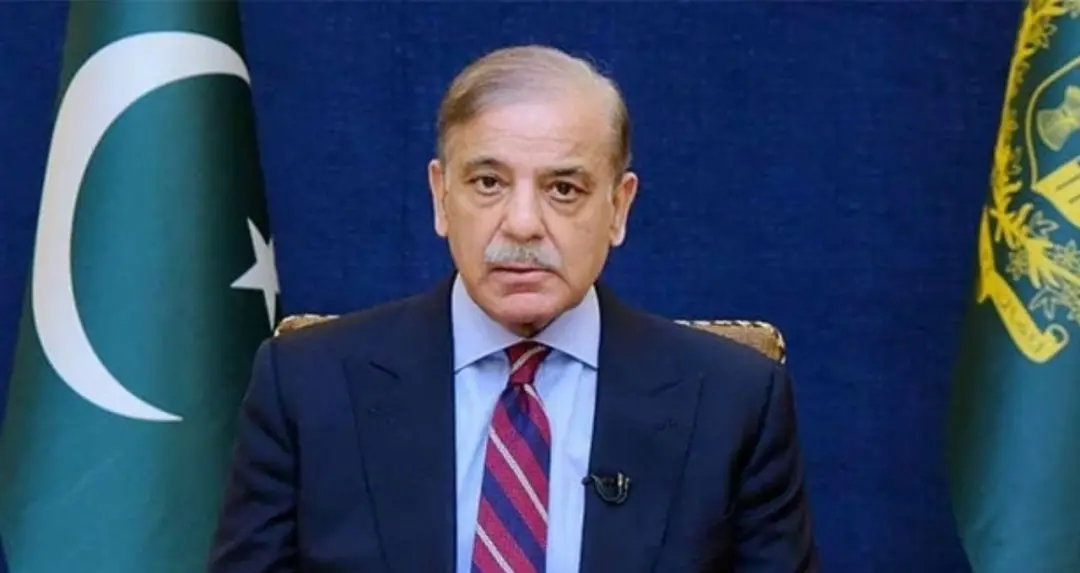
Pakistan Prime Minister Shehbaz Sharif has warned India over the Indus Waters Treaty, saying any attempt to stop or reduce Pakistan’s share of water would receive a “befitting response”. He also said Pakistan’s policy on Kashmir would not change.
Addressing an event in Islamabad, Shehbaz Sharif said Pakistan would not accept any compromise over its share of water. He warned that if an attempt was made to stop Pakistan’s water or reduce its flow, the country would respond.
Shehbaz Sharif said Pakistan’s policy on Kashmir would remain unchanged. He claimed that the sacrifices of Kashmiris would not be in vain and said Pakistan would continue to support their rights.
Shehbaz also praised Pakistan Army chief Field Marshal Asim Munir. He claimed that under Munir’s leadership, Pakistan confronted and defeated India. India and Pakistan have presented differing claims regarding the military conflict between the two countries in May 2025.
Shehbaz Sharif again referred to US President Donald Trump and said he played an important role in stopping the military confrontation between India and Pakistan in May 2025. According to Shehbaz, Trump’s initiative made a ceasefire between the two countries possible in time.




India has maintained a different position on the claim. According to the Indian side, military officials from the two countries communicated directly regarding the cessation of military action, and no third-country mediation was accepted for the ceasefire. India and Pakistan have continued to give different public accounts of the issue.
Shehbaz Sharif also highlighted Pakistan’s relations with China, describing China as an important and trusted friend of Pakistan. He said Beijing had stood firmly with Pakistan during difficult circumstances and described the relationship between the two countries as being higher than the Himalayas.
China and Pakistan have longstanding economic, defence and infrastructure ties. The China-Pakistan Economic Corridor is also an important part of their broader strategic partnership.
Shehbaz Sharif also mentioned Palestine and Afghanistan in his speech. He said Pakistan would continue to support the rights of the Palestinian people.
He also appealed to Afghanistan’s interim government not to allow its territory to be used for terrorist activities against Pakistan or other countries.
Pakistan and Afghanistan have experienced tensions in recent years over security and cross-border terrorism. Islamabad has long demanded that Kabul take action against militant groups operating from its territory.
The dispute over the Indus Waters Treaty between India and Pakistan intensified after the terrorist attack in Pahalgam in April 2025. Following the attack, India decided to keep the Indus Waters Treaty in abeyance. India viewed the decision in the context of Pakistan’s policy of supporting cross-border terrorism.

India has said that the question of restoring the treaty to normal operation does not arise until Pakistan takes credible and concrete steps against cross-border terrorism. Pakistan, meanwhile, has repeatedly said that the Indus Waters Treaty is an international agreement and that India cannot suspend it unilaterally.
The Indus Waters Treaty was concluded between India and Pakistan in 1960 with the assistance of the World Bank. The agreement established provisions concerning the use and control of the waters of the six major rivers of the Indus river system.
Under the treaty, India received primary usage rights over the eastern rivers Ravi, Beas and Sutlej, while Pakistan received the larger share of the use of the western rivers Indus, Jhelum and Chenab. The treaty also permitted both countries certain specified uses under particular circumstances.
The arrangement has been the subject of several disputes between India and Pakistan over the past several decades. Pakistan has repeatedly raised objections to various Indian hydroelectric projects, while India has maintained that its rights are provided for under the treaty.
The dispute over the Indus waters comes as several parts of Pakistan face water shortages and problems related to water availability. In areas including Sindh and Balochistan, shortages of water have affected agriculture, drinking water and irrigation systems.
Available reports have referred to water shortages in some major canal systems in Sindh. Shortfalls of approximately 64.1 percent in the North West Canal, around 38 percent in the Rice Canal and approximately 82 percent in the Dadu Canal have been mentioned. These figures can vary according to the period of assessment and local water availability.
Sukkur Barrage plays an important role in Sindh’s irrigation system. It is among the key water sources for the region’s agriculture and canal network. Declining water levels have been associated with pressure on farmers, crops and the regional economy.