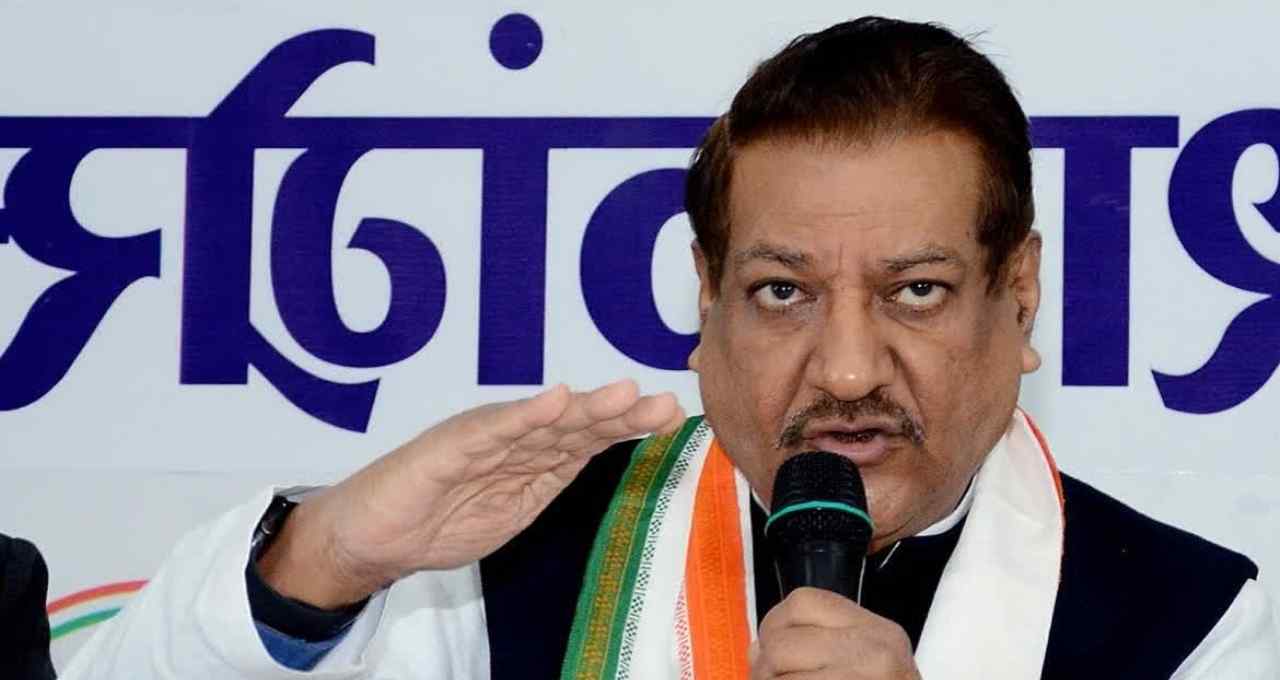
Congress leader Prithviraj Chavan's statement regarding Venezuela has sparked a political controversy. Comparisons to the Prime Minister and the use of terms like "kidnap" have drawn criticism on social media and from the BJP. The party is facing the challenge of controlling its leaders' statements.
New Delhi: A statement made by former Maharashtra Chief Minister and senior Congress leader Prithviraj Chavan has ignited a new debate in the country's politics. Referencing recent events in Venezuela, Chavan raised a question that has elicited b reactions across social media and political circles. Not only the general public appeared upset by his statement, but the opposition party BJP also launched a b attack on the Congress.
Mention of Venezuela
During a recent conversation, Prithviraj Chavan referred to the US military action in Venezuela and the ensuing political turmoil. In this context, he questioned whether something similar could happen in India. He even suggested whether former US President Donald Trump could "kidnap" the Prime Minister of India. This statement by Chavan became the root of the controversy.
Strong Reactions on Social Media




Immediately after the statement surfaced, social media was flooded with reactions. Many users labeled it as absurd and irresponsible. People argued that comparing India, a sovereign and nuclear power, in such a manner is not only wrong but also damages the country's image. Screenshots and videos of Chavan's statement quickly went viral on platforms like Twitter and Facebook.
Users Deemed the Statement Impractical
Several social media users stated that considering India's democratic system and military strength, such a statement is incomprehensible. Some commented that the statement was fear-mongering and detached from facts. Many users questioned the Congress leadership, asking if the party could present itself as a serious political alternative with such statements.
Reactions from Former Officials
The controversy on social media was not limited to the general public. Former DGP of Jammu and Kashmir Police, S P Vaid, also reacted to the statement. He termed it shameful for the country and stated that leaders who have held responsible positions should not make such statements regarding India's sovereignty and security.
Statement Linked to Tariff Issues
In fact, Prithviraj Chavan's statement came in the context of trade tensions between the US and India. Earlier, Congress President Mallikarjun Kharge had questioned Prime Minister Narendra Modi regarding the heavy tariffs imposed by the US on India. Building on this, Chavan stated that trade with any country with a 50 percent tariff is not feasible.
Accusation of Weaponizing Trade
Chavan said that tariffs are no longer just an economic policy but are being used as a political weapon. He argued that if the US continues to adopt a policy of pressure, India will have to explore new markets. He also stated that efforts in this direction are already underway, but the situation is serious.
Statement Increased Political Temperature
However, had the comments been limited to tariffs and trade, the controversy might not have escalated to this extent. But comparing Venezuela to India and using terms like the Prime Minister's "kidnap" were deeply resented by political opponents and the general public. This is why the political temperature suddenly rose after the statement surfaced.
Sharp Attack from BJP
The BJP has bly attacked the Congress and Prithviraj Chavan over the entire matter. BJP leaders said that the statement exposes the Congress's thinking regarding foreign policy and national security. They accused Congress leaders of damaging the country's international image by making irresponsible statements.
Increased Difficulty for Congress
This controversy has created an uncomfortable situation for the Congress as well. On the one hand, the party wants to question the policies of the central government, while on the other hand, such statements raise questions about the party's own strategy. Political analysts believe that the Congress needs to exercise more control over its leaders' statements so as not to get sidetracked from the issues and create unnecessary controversies.