Indian equity markets began the trading week on a weak note, with benchmark indices opening sharply lower on Monday amid weak global cues, rising geopolitical tensions, and a cautious investor approach.
In early trade, the BSE Sensex declined by more than 800 points to around 73,400, while the NSE Nifty fell over 250 points to trade near 23,100. Broader markets also remained under pressure, with most sectoral indices trading in negative territory.
Selling pressure was visible across the market from the opening bell as investors reduced exposure to riskier assets. Market breadth remained weak, with declining stocks significantly outnumbering advancing shares. Information technology, metals, automobiles, and financial services stocks recorded notable declines. Profit-booking in large-cap stocks also added pressure on the benchmark indices.




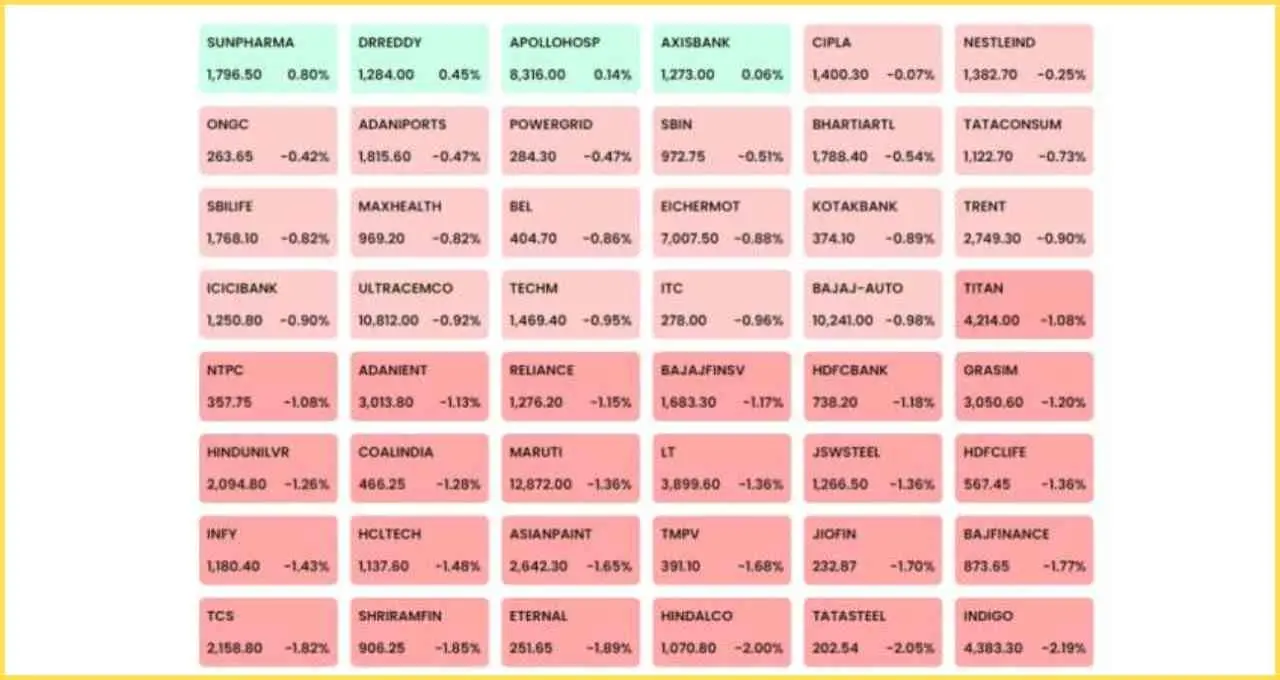
Among individual stocks, Wipro declined by more than 4 percent in early trade. Selling pressure was also seen in Tata Steel, Hindalco, Infosys, Tata Consultancy Services (TCS), HCL Technologies, Bajaj Finance, Mahindra & Mahindra, and InterGlobe Aviation (IndiGo). Weakness in metal and financial stocks further contributed to the decline in the Sensex and Nifty.
According to analysts, a combination of global and domestic factors weighed on market sentiment.
Rising geopolitical tensions in the Middle East have increased concerns among global investors. Any major regional conflict could affect energy supplies and global economic activity.
Higher crude oil prices also remained a key concern. As one of the world’s largest oil importers, India could face pressure on its import bill and inflation if crude prices rise further, affecting investor sentiment.
Uncertainty in international markets and a risk-averse investment strategy also influenced domestic equities. Global investors shifted toward safer assets, impacting investment flows into emerging markets.
Foreign Institutional Investor (FII) selling was also seen as a major factor behind the market weakness. Analysts noted that when global investors adopt risk-reduction strategies, volatility in Indian equity markets can increase.
Market experts said that global economic indicators, crude oil prices, geopolitical developments, and foreign investor activity are likely to influence the direction of Indian equity markets in the near term.