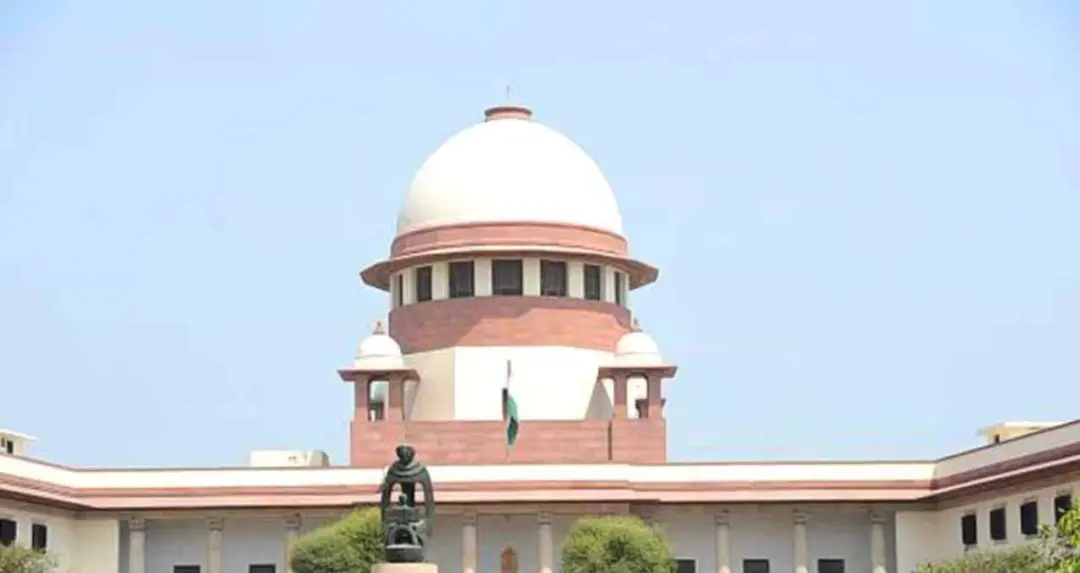
The Supreme Court of India has expressed serious concern over the inclusion of a chapter titled “Judiciary in Corruption” in the Class 8 textbook published by the National Council of Educational Research and Training (NCERT).
During proceedings on Wednesday, Chief Justice Surya Kant stated that the image of the judiciary as a constitutional institution would not be allowed to be compromised. He indicated that the Court may take suo motu cognisance of the matter.




The issue arose in the course of the hearing, following which the Court made its observations. The Chief Justice said that both the Bar and the Bench were concerned about the subject. He added that judges of various High Courts across the country were also disturbed. He stated that he would personally look into the matter and that the law would take its course.
The controversy relates to a revised edition of the Class 8 Social Science textbook issued by NCERT. A new section titled “Judiciary in Corruption” has been introduced in the revised edition. The earlier version of the textbook did not contain a separate chapter under that title and primarily focused on the structure, role and constitutional significance of the judiciary.
The newly added chapter discusses the concept of judicial corruption. While the stated objective of the textbook is to familiarise students with the functioning of institutions and the challenges they face, the Court questioned the manner in which the subject has been presented. The Court observed that if such content is not presented in a balanced and careful manner, it may affect the credibility of the institution.
Chief Justice Surya Kant stated that, as the head of the institution, he had discharged his duty by taking note of the matter. He remarked that the development appeared to be a “well-thought-out step,” while declining to make further comments. He stated that there would be no compromise with the dignity and independence of the judiciary.
He said that a few days’ time should be given and that the Court was examining the matter seriously.
The issue was first raised before the Court by Senior Advocate Kapil Sibal. He submitted that teaching “judicial corruption” to Class 8 students was a matter of concern and questioned the context and balance in which the subject was being taught at that age.
Senior Advocate Abhishek Manu Singhvi also objected, stating that the textbook reflected selectivity. He submitted that challenges in other sectors had not been presented in the same manner as in the case of the judiciary. Justice Bagchi observed that the textbook appeared to be against the basic structure of the Constitution.
The matter has led to wider discussion regarding the manner in which institutional challenges are presented in educational material.