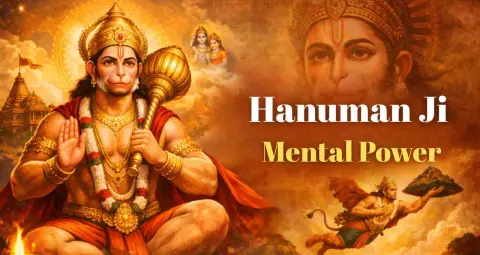
The burning of Lanka is a major episode in the Ramayana, wherein Hanuman set the entire city ablaze to destroy the arrogance and tyranny of Ravana. He ensured the safety of Vibhishana’s devout home and Ravana’s palace, highlighting the importance of dharma (righteousness) and devotion.
Lanka Dahan Story: The episode of Lanka Dahan in the Ramayana demonstrates Hanuman’s act of setting Lanka on fire to end Ravana’s arrogance and oppression. This event occurred in Lanka when Hanuman was searching for Mother Sita. He protected Vibhishana’s devout home and spared Ravana’s palace from the flames. The purpose of this action was to shatter the demons’ ego and ensure Mother Sita’s safety. This episode underscores the power of devotion, dharma, and justice.
The Story of Hanuman and the Burning of Lanka
The episode of Lanka Dahan in the Ramayana is considered one of the most thrilling and instructive parts of the Indian epic. This event demonstrates that devotion and dharma always hold the highest place in the destruction of ego and injustice. Hanuman, who traveled to Lanka in search of Mother Sita, set the entire city ablaze to challenge Ravana’s arrogant rule and break his pride.
When Hanuman reached Lanka, he met Mother Sita in the Ashoka Vatika. During this time, he felt hungry and began to eat fruits from the surrounding trees. This activity, involving uprooting some trees, reached Ravana. Ravana sent his son, Akshay Kumar, to stop Hanuman, but Hanuman defeated Akshay Kumar. Subsequently, Meghanada launched the Brahmastra at Hanuman, which Hanuman easily handled, demonstrating his power.




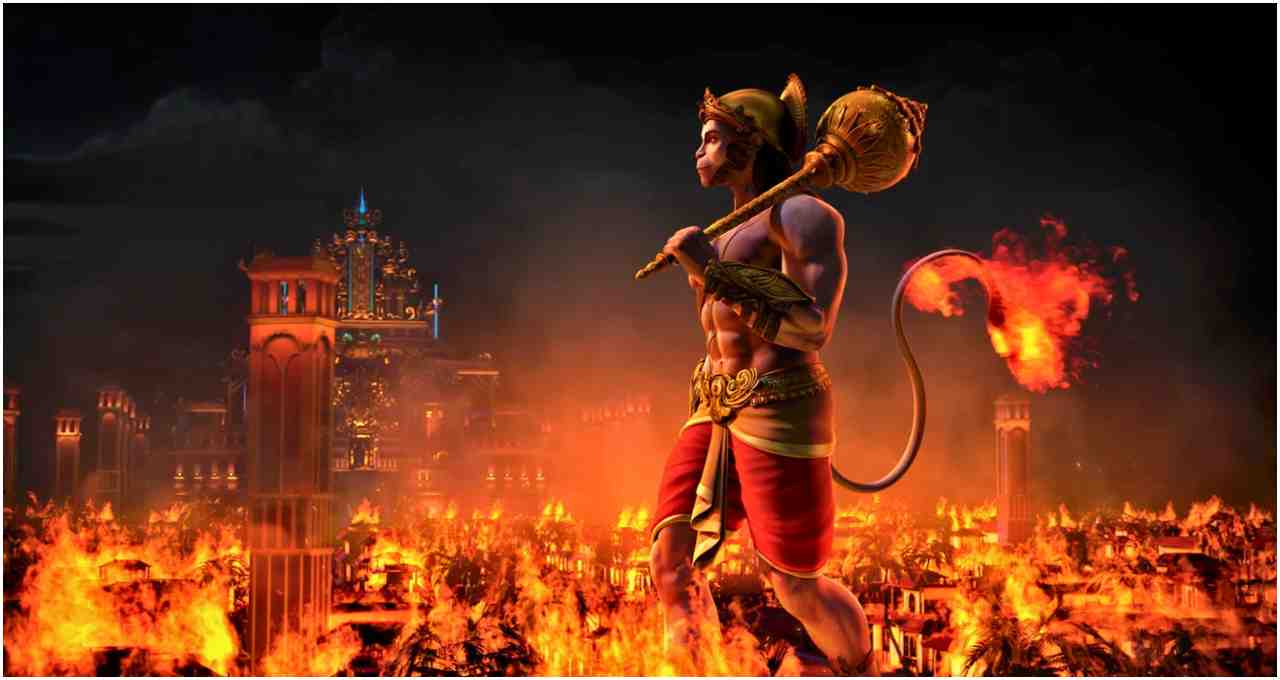
Hanuman’s Tail on Fire and the Burning of Lanka
Hanuman was captured in Ravana’s court, and his tail was set on fire. In response to this insult, Hanuman set the entire city of Lanka ablaze. This fire was not only a symbol of the city and the demons’ arrogance but also a message that injustice and tyranny can be destroyed by the power of dharma and devotion.
However, one question remains a mystery to people even today: Why didn’t Hanuman burn down Ravana’s palace?
Respect for Vibhishana’s Devotion
Hanuman observed that there was one building in Lanka where the name of Ram was being chanted. This building belonged to Ravana’s younger brother, Vibhishana. Vibhishana was a true devotee of Lord Rama, and in scriptures, a devotee’s home is considered equivalent to a temple of God. Therefore, Hanuman kept Vibhishana’s building safe.
Vibhishana’s building was very close to Ravana’s palace. Hanuman took care to protect the entire area so that no harm came to Vibhishana’s devotion and home. Thus, he clearly demonstrated that protecting devotion and dharma is the highest priority in any conflict.
Protecting Mother Sita
Ravana’s palace and the Ashoka Vatika were quite close. If Hanuman had completely set the palace on fire, the flames could have reached the Ashoka Vatika, endangering Mother Sita. Hanuman’s main objective was not to completely destroy Lanka but to break Ravana’s pride and ensure Mother Sita’s safety.
Therefore, Hanuman set fire to Lanka, except for the palace. This strategy shows that his power was used not only for destruction but also for the protection of justice and devotion.
Destruction of Ego
The burning of Lanka is not considered merely physical destruction. It symbolizes Ravana’s ego and evil tendencies. By reducing the entire Lanka to ashes, Hanuman conveyed the message that the power of tyranny and arrogance cannot always prevail. This message remains relevant today that evil can be overcome by the power of dharma and devotion.
This event of Hanuman also teaches us that power and strength should always be used wisely and purposefully. Hanuman maintained balance in his actions and ensured that innocent and righteous people did not suffer any harm.
Lanka Dahan in the Modern Context
Even today, the episode of Lanka Dahan is important not only from a religious perspective but also as a lesson in ethics and leadership. It shows that the destruction of ego and tyranny in any organization or society is necessary, but it must be done with discretion and justice.
People narrate this episode as a story to educate children and explain moral values. This event is not only a symbol of power and devotion but also demonstrates how courage and loyalty can bring about positive change in society.