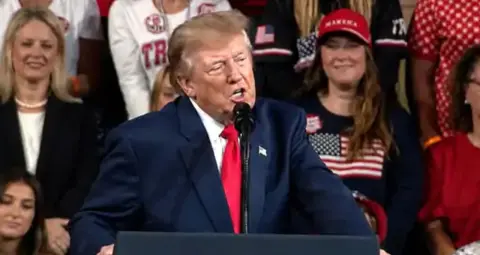
Amid rising tensions in the Middle East, signs of unease have emerged in relations between the United States and Israel over Israeli military operations in Lebanon. According to reports, US President Donald Trump expressed b displeasure during a phone conversation with Israeli Prime Minister Benjamin Netanyahu regarding Israel’s ongoing military actions in Lebanon.
Trump is reported to have raised concerns over escalating airstrikes in southern Lebanon and civilian casualties. The US administration is concerned that the operations could increase regional instability and affect ongoing diplomatic engagement with Iran.
The developments come at a time when tensions involving the United States, Israel, Iran and Lebanon remain active on multiple fronts.
US officials said the Trump administration is particularly concerned about reports indicating that a large number of civilians have been affected during Israeli strikes in Lebanon. Sources said Washington is also concerned that extensive infrastructure damage is being caused in pursuit of individual military targets. The United States believes this could intensify regional tensions and weaken global support for Israel.
The Israeli government, however, said its military operations are being conducted in response to security requirements and are intended to limit the capabilities of armed groups.




The situation became more complex after Iran indicated that it could withdraw from ongoing diplomatic engagement with the United States if military operations in Lebanon continue. Iranian Foreign Minister Abbas Araghchi said regional conflicts cannot be viewed separately and that developments in Lebanon form part of a broader security equation.
Analysts said disruption in dialogue between Iran and the United States could affect efforts related to nuclear issues and regional security.
Despite tensions, discussions between the United States and Iran have not come to a complete halt. According to media reports, contacts between the two countries continue and efforts are underway to move negotiations forward.
President Trump indicated that significant progress may be seen in the coming days and said diplomatic solutions could prove more durable and effective than military options.
Experts said that if both sides reach an agreement, regional tensions could ease and global energy markets may also receive relief.
Amid regional tensions, Iran claimed it launched ballistic missiles toward US military bases in Kuwait, though US and allied defence systems intercepted them before impact.

The incident heightened security concerns across the Gulf region. The United States has increased security measures at its military facilities and strengthened coordination with allied countries.
Tensions also continue around the Strait of Hormuz, one of the world’s most important energy corridors. Iran-backed officials warned that maritime routes could come under increased pressure if regional conflict persists. Experts said any disruption in the strait could affect global oil supply and the wider economy.
For this reason, the United States and its allies are taking additional measures to ensure the security of commercial shipping.
Growing tensions in the Middle East are also affecting global energy markets. Concerns over oil supplies have prompted several countries to begin using strategic reserves.
Analysts said prolonged disruption to maritime trade routes could result in a sharp increase in crude oil prices, though coordinated international efforts have so far prevented major market disruption.
Meanwhile, the Lebanese armed organisation Hezbollah agreed to accept a US-mediated ceasefire proposal. The proposal calls for halting airstrikes and retaliatory attacks in southern Beirut and other sensitive areas.
Lebanese officials said that if the arrangement proves successful, efforts could be made to expand it across the country.
Prime Minister Benjamin Netanyahu said military operations in southern Lebanon would continue as planned. Israeli defence officials also said security threats have not been fully eliminated and military action remains necessary, indicating continuing challenges for any ceasefire effort.
The international community has continued to call for restraint. The European Union urged all parties to reduce tensions and pursue diplomatic solutions, while Japan and Saudi Arabia also stressed the need to preserve regional stability.
Several countries said that if the current crisis escalates further, it could affect global trade, energy supply and international security.