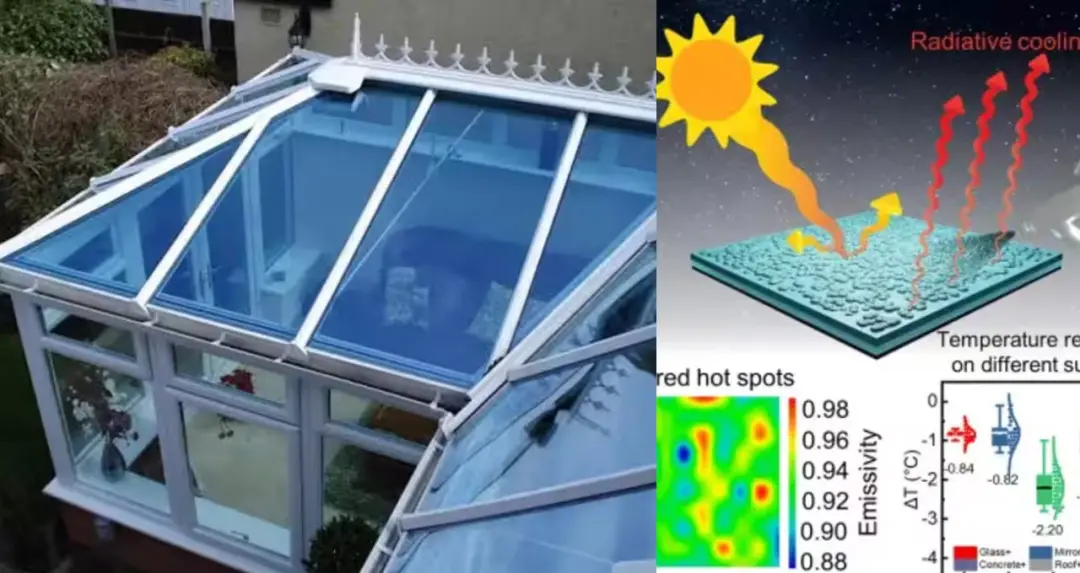
The University of Illinois researchers have developed a passive cooling coating that can be applied to roofs as a film and can reduce roof temperatures by up to 22 degrees in direct sunlight. The technology was also field-tested on metal roofs in Houston, where treated surfaces were recorded at temperatures up to 22 degrees lower than the surrounding temperature.
Roofs of homes and buildings absorb heat directly from sunlight during summer, increasing indoor temperatures and contributing to the use of air conditioners and coolers and higher electricity consumption. To address this challenge, researchers at the University of Illinois developed a cooling coating that can be applied to roof surfaces as a film.
The technology does not require an external power supply, battery or machinery. The coating reflects sunlight while helping release heat from the surface through infrared radiation, allowing the roof to remain considerably cooler than the surrounding environment.




The technology was tested beyond laboratory conditions through a field trial on public infrastructure in Houston. The research team specifically examined the performance of the coating on metal roofs.
According to the available report, treated metal roofs exposed to sunlight were recorded at temperatures up to 22 degrees lower than the surrounding temperature.
Aman Mehta, a former University of Illinois student and principal engineer, also worked on the project. According to Mehta, the film does not require any additional power supply to function. Its primary operation is to reflect solar energy and reduce the heat transferred from the roof toward the building.
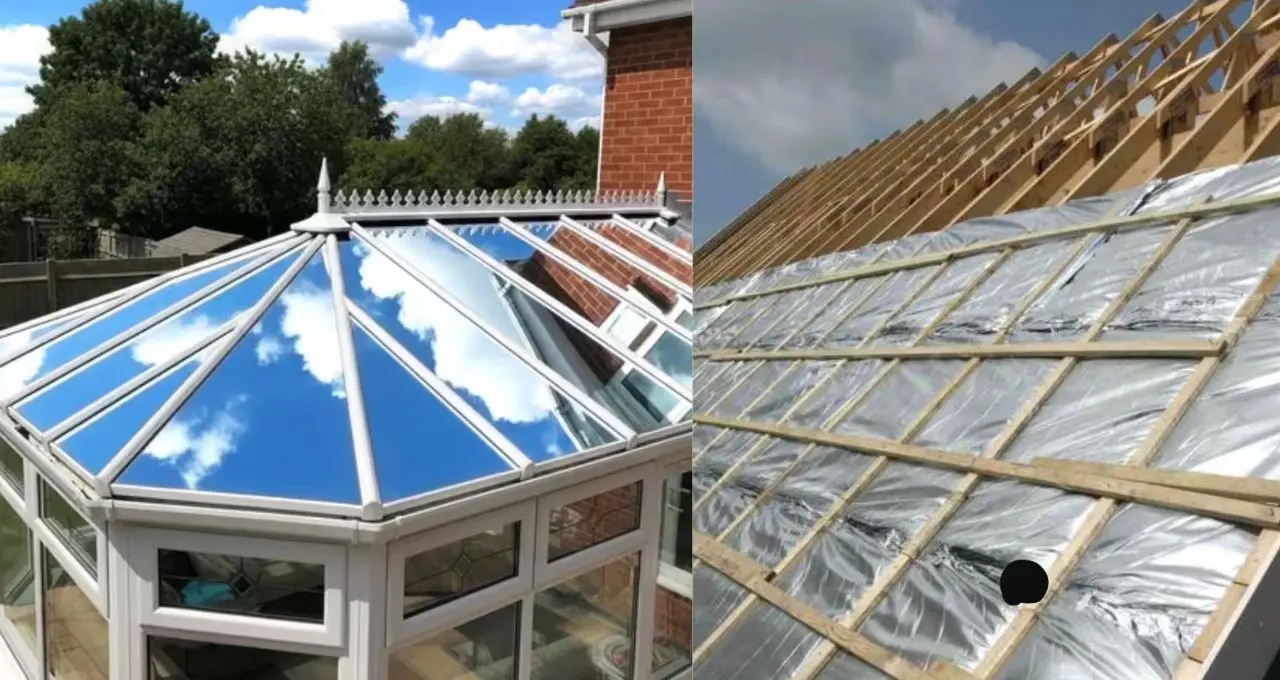
The cooling system is based on passive daytime radiative cooling technology, which operates on principles of optics and thermodynamics. A porous polymer film can reflect up to about 96% of sunlight.
The remaining heat at the surface is sent outside the atmosphere as long-wavelength infrared radiation. This process is a key part of the technology and helps reduce the amount of direct solar heat absorbed by the roof, keeping its surface temperature lower.
As a result, less heat can be transferred into the building. Over time, such technology could help reduce dependence on air conditioning and the electricity used for cooling.
The coating also faces practical challenges. The accumulation of dust, dirt and other pollutants on a roof can affect its reflective capability.
To address this issue, the researchers developed a self-cleaning composite designed to reduce the likelihood of dirt remaining on the surface.
The cost of the coating and its ability to remain durable under different weather conditions over long periods are currently important considerations. The coating may be more expensive than conventional white paint.
If the technology is developed at a larger scale and at lower cost, it could be used in hot-climate regions to keep buildings cooler and reduce energy demand.