
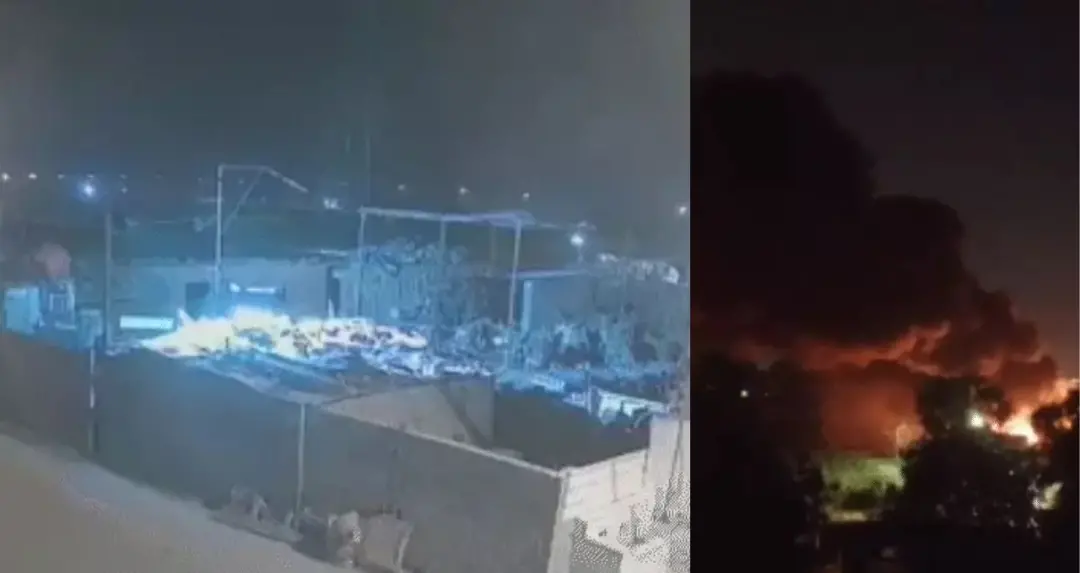
The security situation in the Middle East has escalated after the United States and Saudi Arabia conducted joint airstrikes on Iran-backed militia positions in Iraq, followed by Iran's claim that it launched ballistic missiles in response. The developments have heightened tensions across Iraq, Jordan, Saudi Arabia and the Strait of Hormuz, while increasing concerns over oil supplies, maritime trade and regional security.
According to the United States Central Command (CENTCOM), US and Saudi forces carried out precision airstrikes on multiple Iran-backed militia sites in eastern Iraq. The US military said the targeted locations were being used to prepare drone and missile attacks against American troops and Saudi energy infrastructure.
US military officials said the operation was conducted in response to multiple drone attacks reported across the region during the previous 72 hours. They stated that the strikes targeted alleged weapons storage facilities, logistics centres and operational sites.
Hours after the airstrikes, Iran's Islamic Revolutionary Guard Corps (IRGC) claimed it launched multiple ballistic missiles toward a US military base in Jordan and other sites associated with US Central Command.



The US military said all incoming missiles were intercepted before reaching their targets and that no American military installations sustained damage. The Iranian side described the missile launches as a response to the US military operation and warned that its response would continue if the strikes continued.
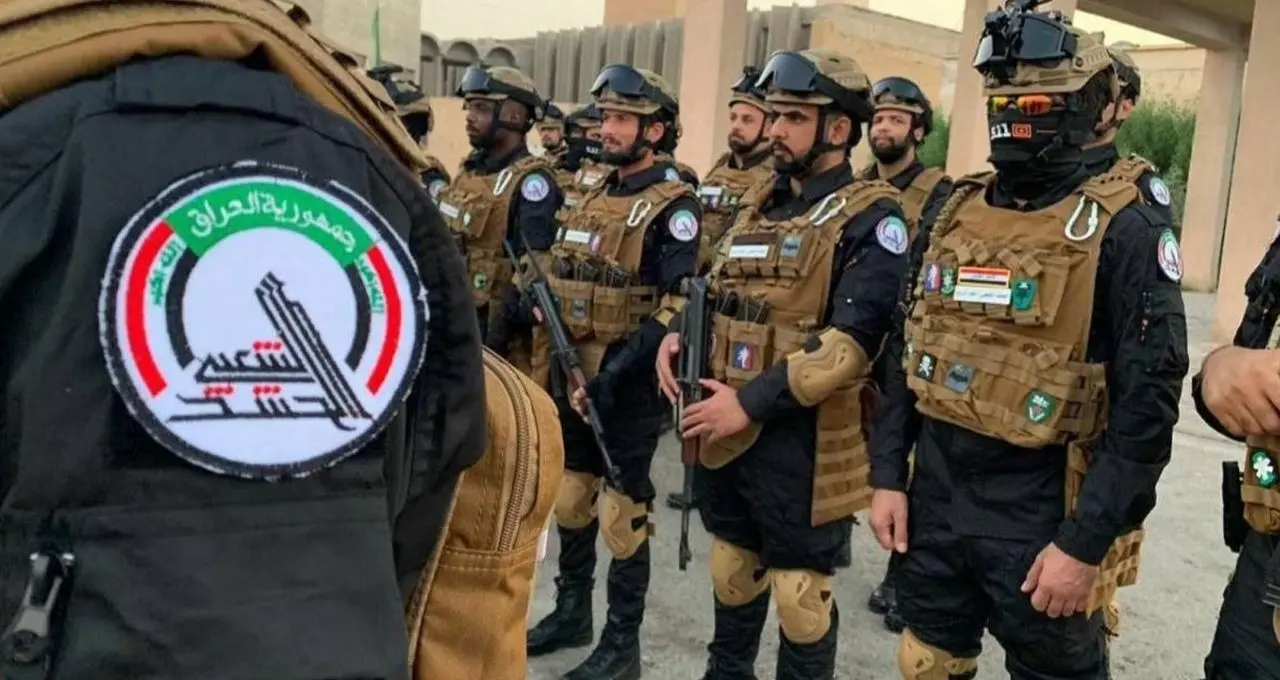
Iraq's Popular Mobilization Forces (PMF) said several of its headquarters were targeted in the US-Saudi airstrikes. According to the organisation, eight fighters were killed and four others injured in strikes in Nineveh province.
The PMF described the attacks as a violation of Iraq's sovereignty and its official security institutions, calling them a "dangerous provocation." It added that a full assessment of the damage and casualties was still underway.
Iraq's state news agency reported that two personnel were injured in an airstrike on a PMF headquarters in Basra. The injured were admitted to hospital, and security agencies are investigating the incident.
Amid the heightened tensions, the IRGC claimed it intercepted three oil tankers in the Strait of Hormuz. The Iranian side said the vessels continued to use what it described as an unsafe route despite warnings.
The IRGC also warned that vessels complying with US directives could face action. The statement has raised concerns over global energy supplies and maritime trade, as the Strait of Hormuz is one of the world's most significant oil shipping routes.
Saudi Arabia said its air defence systems successfully intercepted several drones approaching energy facilities in the country's Eastern Province. Meanwhile, Yemen's Houthi rebels claimed they launched a ballistic missile targeting a Saudi oil tanker in the Red Sea.
The United Kingdom's maritime security agency also reported an explosion near a tanker in the Red Sea, although the incident has not been independently verified.
Following a meeting at the White House, Israeli Prime Minister Benjamin Netanyahu said he had a very positive discussion with US President Donald Trump. Netanyahu said both leaders agreed that Iran should not be allowed to develop nuclear weapons.
Ukrainian President Volodymyr Zelenskyy also met the US President to discuss air defence systems, defence cooperation and diplomatic efforts related to the Russia-Ukraine war.
Amid reports of potential diplomatic contacts between the United States and Iran, international crude oil prices eased. However, experts said that any further escalation in the Strait of Hormuz or the Red Sea could disrupt energy supplies and push oil prices higher.
Recent days have seen increased drone and missile activity in Iraq, Jordan and Saudi Arabia. Houthi rebels have claimed responsibility for several incidents, while the perpetrators of some attacks have not been identified.
Experts said that if military operations and retaliatory strikes continue, the risk of a broader regional conflict in the Middle East could increase. They added that global powers may intensify efforts to reduce tensions and pursue diplomatic solutions.


