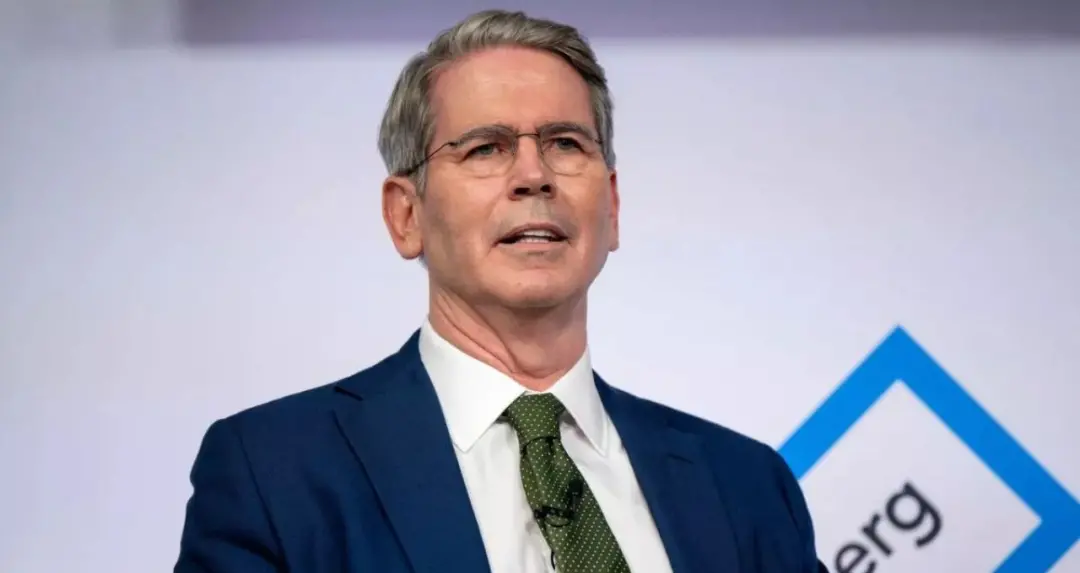
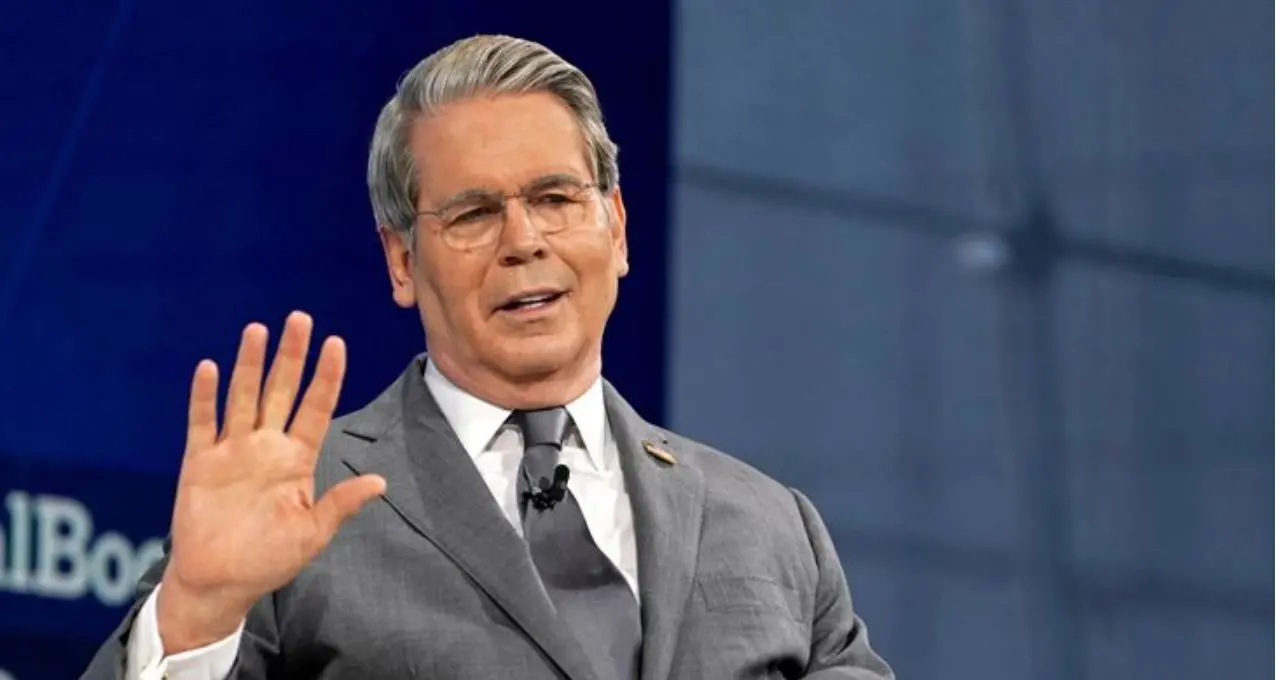
U.S. Treasury Secretary Scott Bessent compared Canada to a small dog that repeatedly barks at and bothers a larger dog. He accused Canadian Prime Minister Mark Carney of rejecting a better trade agreement offered by the United States, highlighting renewed tensions between the two countries.
Bessent made the remarks in an interview with Fox News. He cited the example of his former German Shepherd to describe the current trade dispute with Canada.
He said that while walking in a park, a small dog repeatedly barked at his German Shepherd. According to Bessent, the German Shepherd ignored the smaller dog for a long time but eventually lost patience. Bessent said the situation reminded him of the current circumstances involving Canada.
Bessent also accused Canadian Prime Minister Mark Carney of rejecting a better trade agreement. Officials from the two countries held three days of trade talks from August 19 to 21, but the discussions did not result in an agreement.
Carney said the United States had changed the terms of the agreement during the final stage of negotiations. The U.S. side, meanwhile, said Canada had been offered a good proposal but did not agree to it.
The disagreement further deepened the trade dispute between the two countries.
Bessent also claimed that the current trade war with Canada would have only a minor impact on prices in the United States. His remarks came amid continued exchanges between the two countries over tariffs.
Bessent has previously criticized Carney, alleging that the Canadian prime minister was more concerned about his political image than about what was best for Canada's economy.




After the two countries failed to reach a trade agreement, U.S. President Donald Trump imposed a 50% tariff from August 22 on about $20 billion worth of Canadian goods, equivalent to approximately ₹1.9 lakh crore.
The tariff was reported to cover about 5% of the total value of Canadian goods sent to the United States. Canadian Prime Minister Mark Carney described the U.S. action as an attack on Canada.
He said Canada was in a war-like situation because it had been attacked.
The United States and Canada have long had differences over several trade issues, including automobiles, dairy products, alcohol and lumber.
The United States has alleged that some Canadian trade policies do not provide U.S. companies with equal opportunities. Canada, in turn, has sought relief from various tariffs imposed by the United States.
The United States has long complained that Canadian trade policies do not provide American automobile companies with equal opportunities in the Canadian market.
The United States wants Canada to open its economy further to American cars and other U.S. products. Canada, in response, sought tariff relief from the United States on steel, aluminum, automobiles and lumber.
The United States, however, did not agree to remove those tariffs.
Canada has long maintained various rules and restrictions to protect its dairy industry from foreign competition.
The United States wants its milk, cheese and other dairy products to have greater access to the Canadian market. Canada, however, has refrained from making major concessions regarding its domestic dairy sector.
The issue has remained a key point of disagreement in negotiations between the two countries.
The United States has also objected to restrictions on the sale of American alcohol in some parts of Canada. The U.S. side considers the restrictions discriminatory toward its products and wants American alcohol to have greater access to the Canadian market.
The two countries have also been involved in a long-running dispute over softwood lumber. The United States has continued to impose various trade restrictions and duties on lumber imported from Canada.
Canada announced retaliatory action in response to the U.S. 50% tariff. Prime Minister Mark Carney said Canada would respond to the U.S. tariffs dollar-for-dollar.
The move further increased trade tensions between the two countries. The United States and Canada are among each other's largest trading partners. Prolonged tariffs could affect businesses and consumer prices in both countries.
Disagreements between the United States and Canada are not limited to tariffs. Political and border-security issues have also been sources of tension.
Donald Trump has repeatedly spoken about making Canada the 51st U.S. state. Trump has argued that the United States provides Canada with significant economic benefits through trade.
He has also claimed that if Canada became part of the United States, several disputes related to trade imbalances and tariffs could end.
Canada has not accepted the idea, and Canadian leaders have emphasized the country's sovereignty.
Trump repeatedly referred to former Canadian Prime Minister Justin Trudeau as a "governor" in a mocking manner. The remark was regarded in Canada as disrespectful toward the country's sovereignty.
The United States and Canada also have disagreements over border security. The Trump administration has raised concerns about the movement of illegal migrants across Canada's border and the trafficking of dangerous drugs such as fentanyl.
The United States has called on Canada to strengthen border monitoring and take stricter measures to prevent illegal migration and drug trafficking.
The current dispute between the United States and Canada comes as the two countries maintain extensive economic and commercial ties. Their differences over tariffs, market access and border security remain central issues in their bilateral relationship.