The Uttarakhand High Court’s proposed relocation from Nainital to Haldwani has reached another stage, with the court reserving its judgment after hearing arguments from all parties in a case concerning the land identified for the relocation. The petitioners have questioned whether the proposed site falls within a forest area and an elephant movement zone, while the state government has maintained that the land is not an elephant corridor.
The proposed relocation of the Uttarakhand High Court from Nainital to the Gaulapar area of Haldwani has been under discussion for a long time. In July 2026, the Supreme Court removed a major legal hurdle related to the relocation process by setting aside an earlier High Court order that had called for a referendum to seek the views of lawyers and the general public before the relocation.
The Supreme Court said decisions concerning such infrastructure and administrative matters should be taken at the administrative level rather than through judicial proceedings.
Following the Supreme Court’s decision, the process moved forward regarding the land identified for the proposed new High Court complex in Haldwani. The apex court also directed the state government to make the land available to the High Court and complete the related formalities.
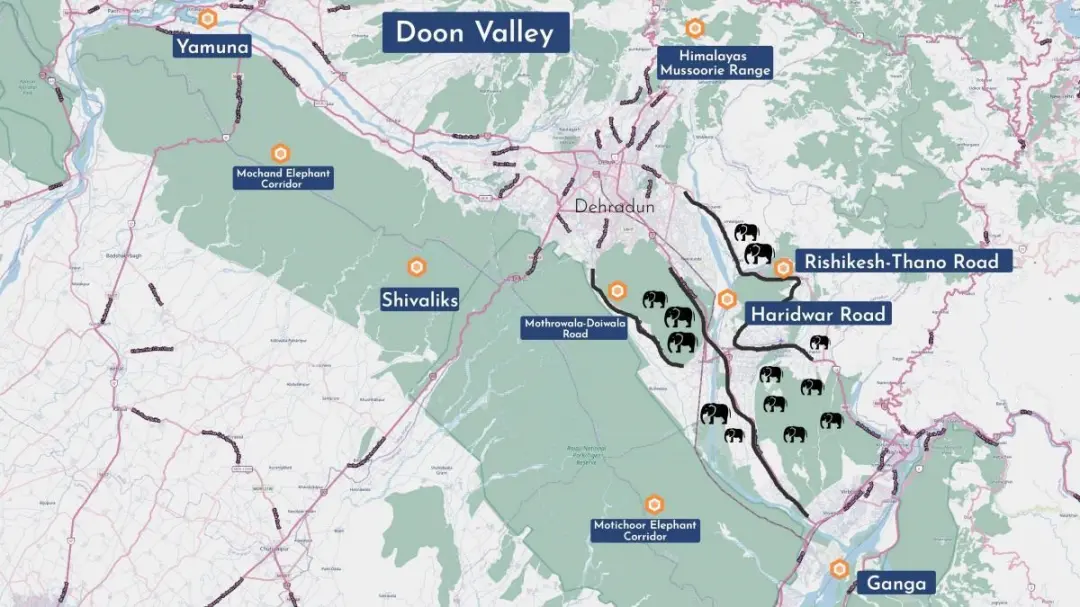
New questions were subsequently raised over the environmental aspects of the proposed site. The petitioners argued that the area where the new High Court complex is proposed is environmentally sensitive and that the movement area of wildlife, particularly elephants, could be affected.




The petitioners used these grounds to challenge the relocation process. The state government, however, disputed the claims and said it was incorrect to describe the proposed land as an elephant corridor.
During the hearing, the parties presented their respective arguments concerning the nature of the land, aspects related to forest areas and the movement of wildlife.
The case also concerns the requirement of a large tract of land for construction of the High Court complex. Environmental clearances and compliance with forest laws are therefore among the issues raised in relation to the proposed site.
The main question before the High Court is whether the environmental objections raised against the proposed site are substantiated and whether the state government’s claim that the land is not part of an elephant corridor is correct.
Arguments in favour of shifting the High Court from Nainital have for a long time included lack of space, traffic, parking and connectivity problems at the existing location. These issues were also presented by the state government before the Supreme Court.
The Supreme Court’s order also referred to difficulties faced by litigants and lawyers and aspects related to better connectivity.
Those opposing the relocation have raised concerns of their own. They have said that the relocation is not merely a matter of constructing a building and could affect Nainital’s judicial identity, local economy and environment.
Questions concerning the environmental character of the proposed land form part of this wider dispute.
During the Supreme Court proceedings, it emerged that around 26 hectares of land had been identified for the proposed High Court complex in the Gaulapar area.
The Supreme Court directed the state government to proceed with the process of making the land available to the High Court.
In environmental matters, general claims alone are not sufficient to determine whether land constitutes an elephant corridor or a wildlife movement area. Forest department records, wildlife movement, relevant government notifications and expert reports play an important role.
The court’s judgment is therefore also expected to clarify these aspects.
The issue has emerged amid continuing challenges concerning the balance between development projects and environmental protection in Uttarakhand. The state requires modern infrastructure, while the environmental impact of large-scale construction in hilly and forest areas remains a consideration.
Several legal and administrative disputes have previously arisen over the relocation of the High Court from Nainital. In 2024, the Uttarakhand High Court had provided for a referendum on the relocation issue, but the Supreme Court later set aside that order.
The apex court said decisions concerning High Court infrastructure should be taken at the administrative level through coordination between the High Court and the state government.
The reservation of the judgment in the latest hearing marks a new stage in the dispute. The court’s decision will determine whether the environmental objections concerning the proposed site affect the relocation process or whether the arguments presented by the state government are accepted.
The parties are now awaiting the court’s decision. The next stage will depend on the judgment, including whether construction of the proposed High Court complex in Haldwani can proceed on the identified land or whether an alternative arrangement will have to be considered in relation to environmental issues.
The relocation process had become clearer after the Supreme Court’s July decision, but a new legal challenge has emerged over the environmental character of the proposed land. The state government maintains that the land is not an elephant corridor, while the petitioners have raised questions concerning wildlife and environmental aspects.