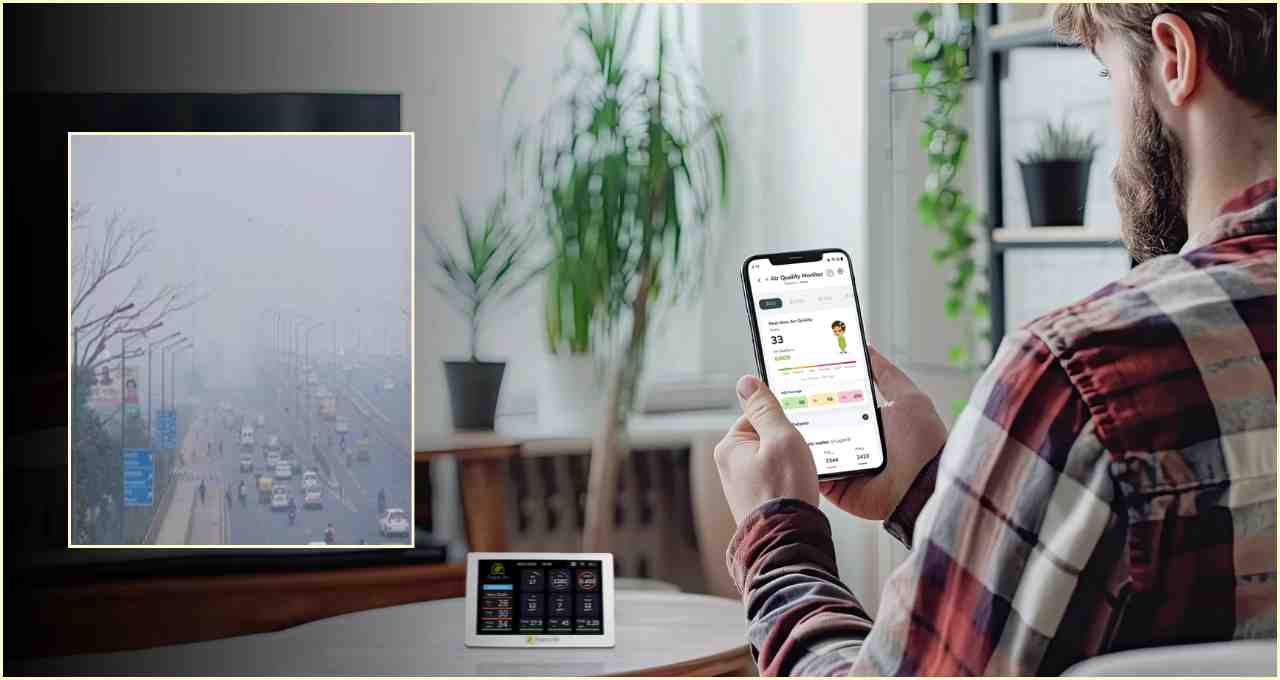
Amid rising air pollution in Delhi-NCR, people are checking AQI on their smartphones, but each phone shows a different reading. This is because different brands obtain air quality data from various providers. iPhone relies on BreezoMeter, Samsung on Weather.com, while Xiaomi depends on AccuWeather.
AQI Data Smartphones: The level of air pollution in Delhi and surrounding areas is continuously rising, leading people to check the Air Quality Index (AQI) on their phones before leaving home. However, each smartphone brand displays different figures because all companies use distinct data sources. Samsung, OnePlus, and Oppo get data from Weather.com, while Apple uses BreezoMeter and Xiaomi relies on AccuWeather. This is why the air quality level appears slightly different on every phone.




Different Smartphone Brands Use Different Data Sources
Phones from companies like Samsung, OnePlus, Realme, and Oppo obtain air quality data from The Weather Channel (Weather.com). This platform generates AQI readings by combining data from government monitoring centers and global satellite data. Samsung users see real-time pollution data based on their GPS location. Since OnePlus, Realme, and Oppo also gather information from the same source, their AQI figures are often similar.
Apple's Data Comes From an Israeli Company
The AQI readings displayed by Apple iPhone's Weather app and Siri come from BreezoMeter, an Israeli company. This company measures the concentration of pollutants like PM2.5 and PM10 using machine learning models and satellite data. BreezoMeter's system combines wind direction, temperature, and other environmental factors to provide accurate figures. This is why iPhone's air quality readings often appear slightly different from Android devices.
Google and Xiaomi's Data Sourcing
- Google Pixel: Google uses its own data aggregation system for its Pixel devices and Weather service. It collects and combines data from various government agencies and private sources. However, Google's service mostly displays city-level data, not hyper-local AQI readings.
- Xiaomi, Redmi, and Poco: All these devices obtain air quality data through AccuWeather. AccuWeather gathers weather and pollution data from government stations worldwide and updates it regularly. Consequently, the AQI data shown on Xiaomi devices typically reflects the average level of a city or district.
Why AQI Readings Differ Across Phones
If you've noticed, the air quality level appears slightly different on phones from every brand. This happens because all companies rely on different providers' models and data sources. Some acquire data from hyper-local sensors, while others represent the average level of larger cities.
Therefore, when you check the AQI on your phone, it doesn't necessarily show the exact level of your home or street, but rather an estimated average based on sensor data from your area.