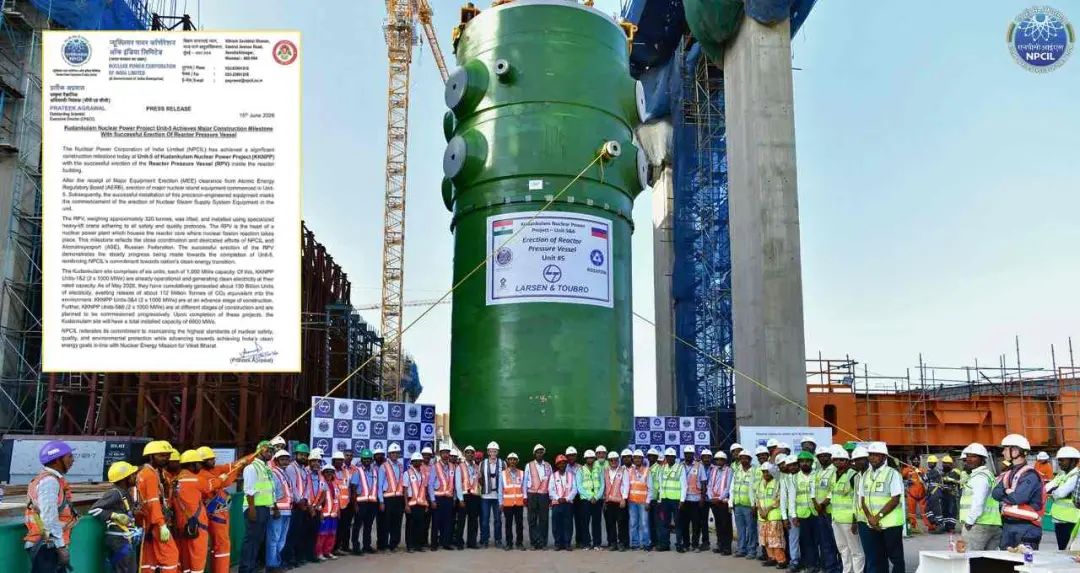
The Reactor Pressure Vessel (RPV) has been successfully installed in Unit 5 of the Kudankulam Nuclear Power Project (KKNPP) in Tamil Nadu, marking a new milestone in India’s nuclear energy programme. The RPV, weighing approximately 320 tonnes, was installed as part of the India-Russia collaborative nuclear power project.
The Reactor Pressure Vessel is a critical component of a nuclear power plant. It houses the reactor core, where energy is generated through the process of nuclear fission. The equipment is manufactured under stringent safety standards and precise engineering requirements. The 320-tonne RPV installed in Kudankulam Unit 5 was positioned inside the reactor building using a specialised heavy-lift crane.


The Kudankulam Nuclear Power Plant is a key project under the intergovernmental nuclear cooperation framework between India and Russia. The project is regarded as an example of technological partnership between the two countries and plays a role in India’s energy security strategy. Multiple reactor units are being developed under the project to increase the country’s electricity generation capacity.
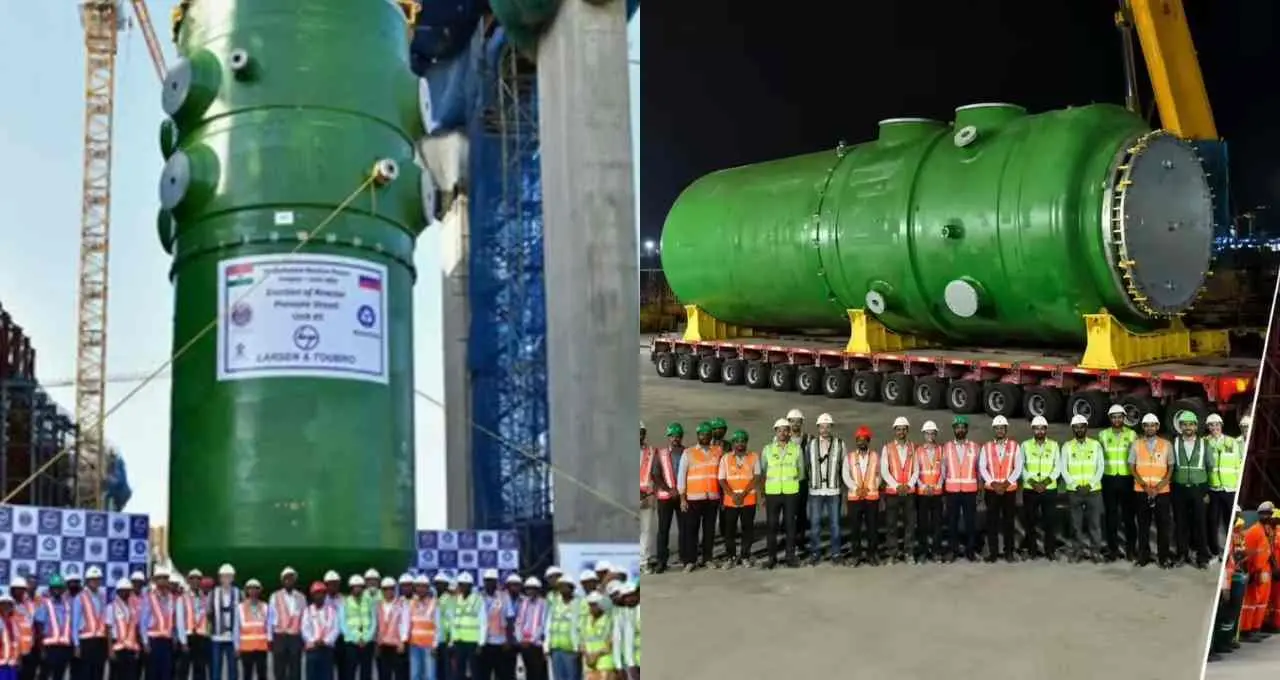
According to the Department of Atomic Energy (DAE) and project officials, installation of the Reactor Pressure Vessel will be followed by the installation of other major components associated with the Nuclear Steam Supply System (NSSS) in Unit 5. Subsequent work will include integration of various piping systems, cooling systems and safety equipment within the reactor, which are required for plant operations.
According to the Department of Atomic Energy, the development supports the objectives of promoting clean energy generation, reducing dependence on fossil fuels, strengthening energy security, ensuring long-term and stable electricity supply, and maintaining technological excellence and safety standards.
The installation of a 320-tonne component inside the reactor building involved a complex engineering process. The work included the use of advanced heavy-lift cranes, installation with micro-level precision, compliance with international safety standards, and quality control and testing procedures.
The development reflects ongoing progress in India’s nuclear engineering infrastructure. Work on other units of the project is also continuing. In April 2026, Unit 3 entered the “Spillage to Open Reactor” stage, during which the main cooling system and safety pipelines were cleaned.