
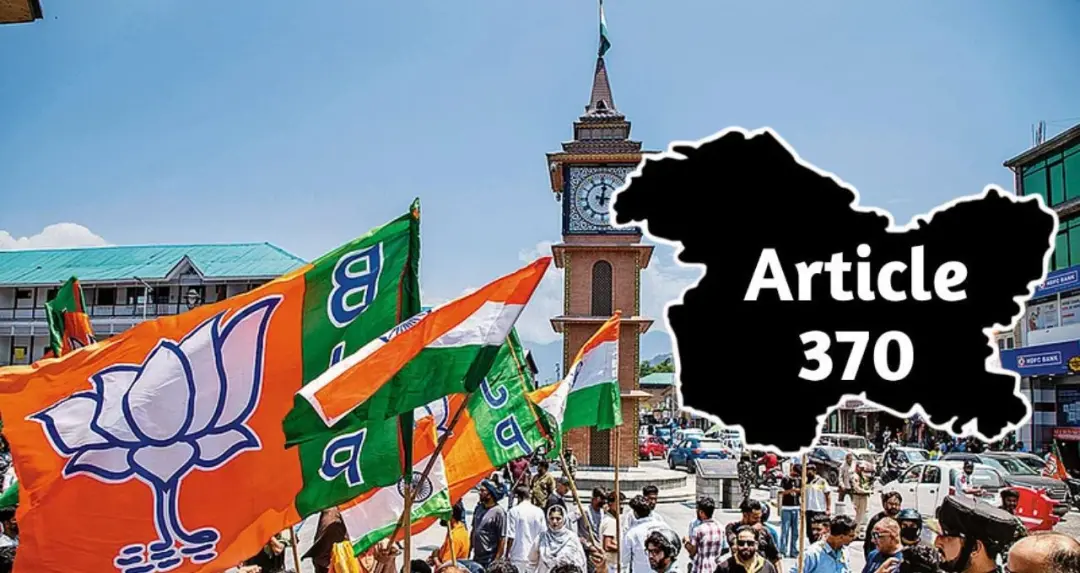
Seven years after the abrogation of Articles 370 and 35A, political activity intensified across the Union Territory of Jammu and Kashmir on Wednesday. The Bharatiya Janata Party (BJP) announced celebrations to mark the anniversary, describing the decision as a historic achievement, while the Congress, National Conference (NC), and People's Democratic Party (PDP) said they would observe the day as a "Black Day."
In view of the possibility of protests, the Jammu and Kashmir Police implemented extensive security measures and issued an advisory prohibiting public protests, rallies, processions, or assemblies without prior permission.
Advisories issued by district police headquarters across Jammu and Kashmir stated that no protest, rally, procession, or public gathering could be held without prior approval from the competent authority. The police said strict legal action would be taken against anyone found violating the directions.


Security agencies deployed additional personnel to maintain peace and law and order. Security patrols were intensified in several sensitive areas, including the Jammu-Srinagar National Highway. The administration appealed to residents to avoid rumours, maintain communal harmony, and immediately report any suspicious activity to the police.
On August 5, 2019, the Government of India rendered Articles 370 and 35A of the Constitution inoperative, ending the special status of Jammu and Kashmir. Under the same decision, the erstwhile state was reorganised into the two separate Union Territories of Jammu and Kashmir and Ladakh. The Central Government and the BJP described the decision as a step towards national integration, equal rights, and development. Several regional and national opposition parties, however, said the move affected Jammu and Kashmir's constitutional identity and special rights.
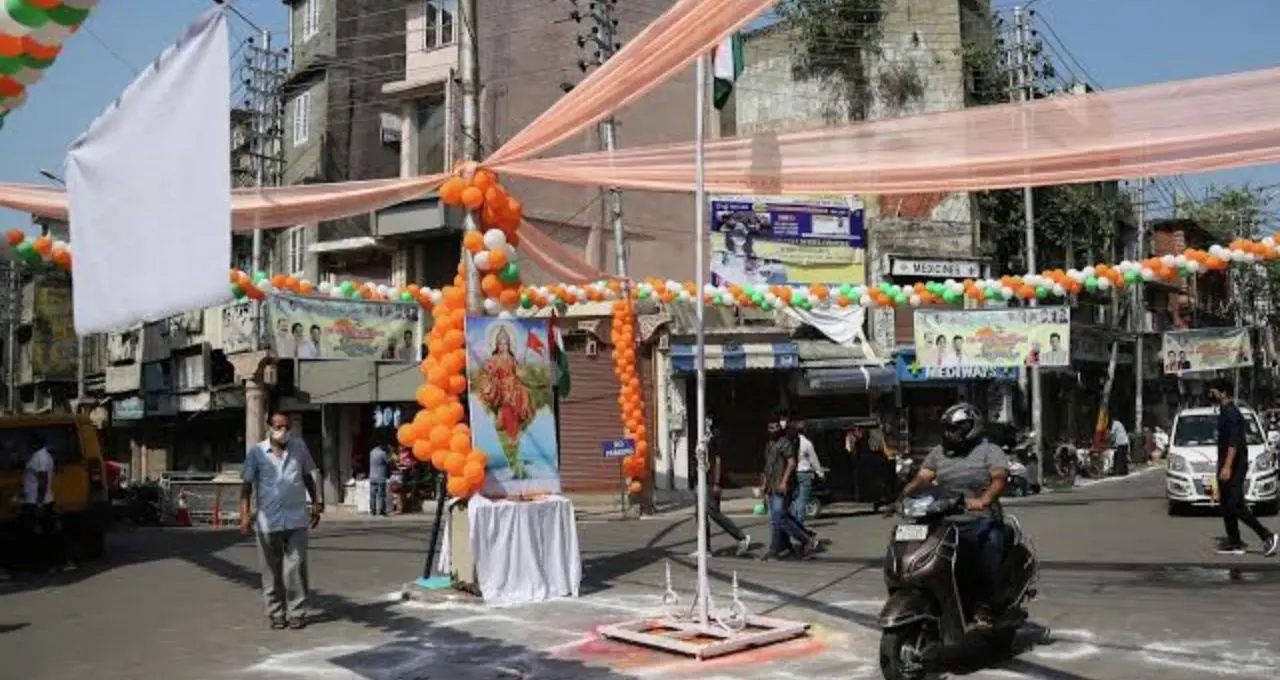
The BJP announced that it would observe the seventh anniversary as a symbol of development and integration. According to party leaders, sweets would be distributed across the Union Territory, and people would be informed about development works, investment, infrastructure projects, and administrative reforms undertaken over the past seven years. The BJP headquarters in Jammu was specially decorated for the occasion.
Party leaders said the removal of Article 370 had created new investment opportunities in Jammu and Kashmir and enabled Central Government schemes to reach people more effectively.
The National Conference, Congress, and the People's Democratic Party announced that they would observe the anniversary as a "Black Day." The opposition parties alleged that the special status of Jammu and Kashmir was revoked along with its statehood, which has not yet been restored.
The National Conference reiterated its demand for the restoration of full statehood to Jammu and Kashmir. Party leaders said the Central Government had assured that statehood would be restored but had not taken any concrete steps in that direction.
The PDP included the restoration of Article 370 and the release of political detainees among its principal demands. The Congress is also organising protest programmes at the regional and district levels and plans to raise issues related to the rights of the region and political representation.
The decision to abrogate Article 370 remains one of India's most significant recent constitutional and political developments. Seven years later, it continues to be the subject of political debate, administrative policy discussions, and issues relating to regional identity. Supporters describe the decision as the foundation for development, investment, and national integration in Jammu and Kashmir, while critics view it as a major change to the region's special constitutional framework. On the anniversary, the issue once again featured prominently in national and international political discussions.


